info@haplinauto.com Suzhou, Jiangsu, China · Serving Motor Makers Worldwide
English
0%

Choosing an Automatic Motor Production Line is not simply a matter of buying faster equipment. Global buyers must match line capacity with motor designs, product mix, workforce skills, and available technical support. Small details matter. A winding station may meet its cycle-time target, while testing or rotor assembly slows the complete line. These bottlenecks can be easy to overlook during a supplier presentation.

Taiichi Ohno, a manufacturing expert associated with the Toyota Production System, said, “Where there is no standard, there can be no kaizen.” His principle applies to automated motor production: reliable processes and clear quality checks matter as much as machine speed. Automation is not magic. Even advanced equipment may underperform when changeovers are difficult or operators lack practical training. Buyers should examine the complete workflow, not just individual machines.

This guide compares seven production-line options using practical considerations, including winding, assembly, balancing, testing, traceability, and service access. The right combination depends on the motor type and the factory’s production goals. Ask suppliers how they handle product changes, spare parts, and integration with existing equipment. Request evidence from comparable installations where possible. A polished demonstration is useful, but it cannot answer every question. Some specifications will still need careful verification before a purchase decision.
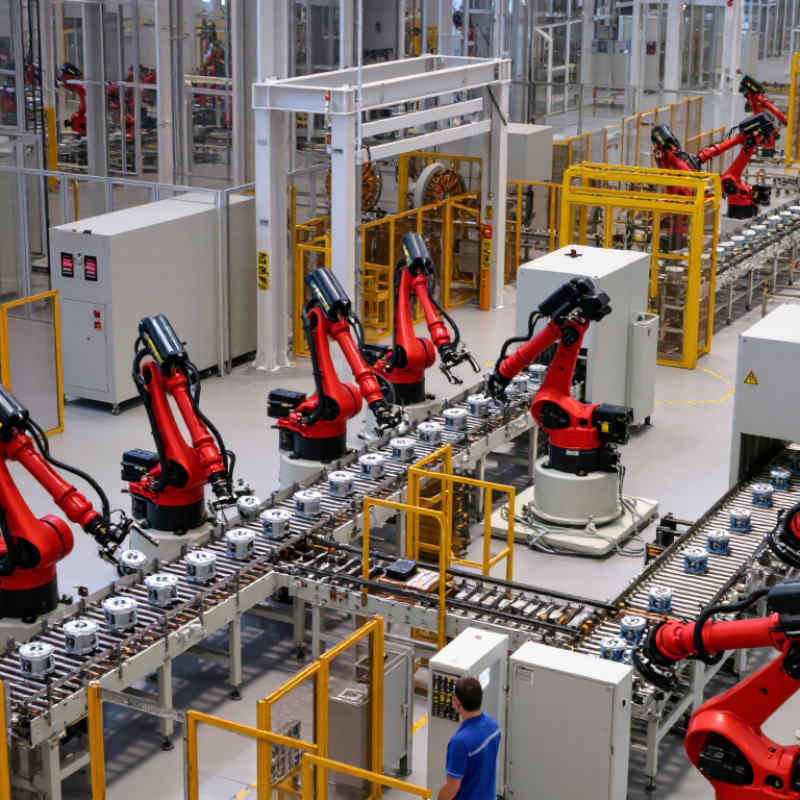
7 Best Automatic Motor Production Lines for Global Buyers

How Automatic Motor Production Lines Work

How Automatic Motor Production Lines Work

An automatic motor production line moves parts through linked stations, with each station handling a defined operation. A typical process may stack stator laminations, insert insulation, wind copper wire, and connect leads. The rotor is assembled separately, then fitted with bearings and joined to the stator. Conveyors or transfer systems keep components moving between stations. Small errors matter.

Sensors check part presence, position, and selected process values. A programmable controller uses those signals to coordinate machines and stop the line when a fault appears. At winding stations, for example, controls can monitor wire tension and count turns. Later, inspection equipment may measure electrical resistance, insulation performance, vibration, or noise. Test records help link results to individual motors, though record quality depends on sound calibration and data practices.

Automation improves repeatability, but it does not guarantee a perfect motor. A poorly set winding tool can repeat the same defect across many units. Product changes may also require new fixtures, programs, and careful validation. That transition can take longer than expected. Operators still need to inspect samples, respond to alarms, and review trends such as rising vibration or test failures. A well-designed line balances machine speed with inspection, maintenance access, and room for process adjustments.

Key Criteria for Comparing Production Line Options

When comparing automatic motor production lines, begin with the motor types and output mix the plant actually needs. A line designed for one stator size may struggle when winding patterns or rotor dimensions change. Ask suppliers to demonstrate changeovers with real components, not only slides. Measure cycle time across winding, assembly, testing, and handling; one fast station cannot fix a slow bottleneck. A perfect-looking cycle-time figure deserves a second look. Check what happens during jams and rejected-part handling.

Quality controls should match the motor’s critical specifications. Look for records of winding resistance, insulation tests, press-fit force, and fastening torque where applicable. Confirm that results link to individual units and can be retrieved during audits or troubleshooting. Consider floor space, utilities, operator access, and the skill level needed for maintenance. Spare-part availability and response times matter too. They are easy to overlook. Request a trial using your own parts, then compare yield, changeover time, and service requirements against the quotation. A spreadsheet may favor the cheapest line, while daily stoppages quietly raise its real cost. No option is perfect; document the compromises before choosing.

7 Best Automatic Motor Production Lines for Global Buyers

Key Criteria for Comparing Production Line Options

This example buyer-planning model assigns the greatest weight to process coverage, throughput, and quality traceability. The percentages are suggested evaluation weights, not measured industry benchmarks or ratings of specific suppliers; adjust them to match your product and production goals.

Seven Leading Automatic Motor Production Lines for Global Buyers

For global buyers, seven leading automatic motor production lines cover the main stages of manufacturing: lamination stacking, stator winding, rotor assembly, magnet insertion, housing machining, dynamic balancing, and final assembly with end-of-line testing. Each solves a different bottleneck. Winding lines need consistent coil placement; balancing stations need reliable vibration readings. A fast line can still produce costly rejects if inspection is weak.

The International Energy Agency’s 2011 report, Energy-Efficiency Policy Opportunities for Electric Motor-Driven Systems, estimates that motor-driven systems use about 46% of global electricity. That makes efficiency and test quality important beyond factory output. The International Federation of Robotics reported 541,302 industrial robot installations worldwide in 2023 in World Robotics 2024. This signals broad automation adoption, but it does not prove every motor plant needs the same level of automation.

Buyers should compare changeover time, traceability, reject handling, and access to local maintenance. Ask vendors to run sample parts using the intended steel, wire, and production tolerances. Small details matter. A line that handles three motor sizes may be more useful than a faster, less flexible system. The awkward part is that published capacity figures rarely reveal downtime or real yield. Request measured results from a comparable process, and treat unverified promises cautiously.

Matching Line Configurations to Motor Types and Output Goals

Choosing among seven automatic motor production line configurations starts with the motor design, not the headline output figure. A compact line for small appliance motors may combine winding, insertion, and testing in a tight footprint. Traction or industrial motors often need heavier handling, larger fixtures, and more inspection steps. Rotor size, slot geometry, insulation method, and assembly sequence all affect equipment choice. A line that suits one stator can struggle with another. Check sample parts and process trials before committing.

Output goals shape the rest. Estimate demand by shift, product mix, and planned changeovers, then compare the required cycle time with realistic machine availability. High-volume, stable products may justify dedicated stations and automatic transfer. Frequent model changes favor adjustable fixtures and modular work cells, even if the nominal rate is lower. Small details matter: how long a winding change takes, where rejects are diverted, and whether operators can reach service points safely. Ask suppliers for cycle-time assumptions and acceptance-test criteria. There is no perfect line. A neat spreadsheet can still miss setup losses, and the first forecast may need revision after production data arrives.

Evaluating Suppliers, Compliance, Costs, and Support

A supplier’s proposal should explain how its automatic motor production line handles winding, assembly, testing, and changeovers. Ask for cycle-time figures tied to a defined motor model and shift pattern. Numbers without test conditions are hard to compare. Request a live demonstration using representative parts, not only polished sample footage. A neat video helps, but it proves little about routine production.

Compliance checks need to match the destination market and the equipment’s intended use. Ask for applicable conformity documents, electrical drawings, risk assessments, and records for safety-related components. Have qualified staff review the documents; a certificate alone may not cover the full installed line. Details matter. Confirm guarding, emergency stops, noise levels, and operator training before shipment. Requirements can differ by site, so verify them early.

Compare total cost, not just purchase price. Include installation, tooling, integration, energy use, spare parts, training, and planned downtime. Ask which components are locally available and how quickly service staff can respond. Put commissioning duties, acceptance tests, warranty terms, and support hours in writing. A low-cost line may still be sensible for stable, high-volume production. Or not. Forecasts change, and buyers sometimes underestimate product variation. Leave room for that uncertainty when comparing suppliers.

FAQS

What happens on an automatic motor production line?

Parts move through linked stations. These may stack laminations, add insulation, wind copper wire, and connect leads.

How are the rotor and stator assembled?

The rotor is assembled separately and fitted with bearings. It is then joined to the stator.

How do sensors help control production?

Sensors check part presence, position, and selected process values. A controller uses these signals to coordinate machines and stop the line when faults appear.

What kinds of checks can winding and testing stations perform?

Winding controls may monitor wire tension and turn counts. Later tests can measure resistance, insulation performance, vibration, and noise. Small errors matter.

Does automation guarantee every motor will be defect-free?

No. A poorly set winding tool may repeat the same defect across many units. Operators still need to inspect samples and review test trends.

What should manufacturers consider when choosing a line?

Start with the motor design, including rotor size, slot geometry, insulation method, and assembly sequence. A line suited to one stator may struggle with another.

When are modular work cells useful?

They can suit production with frequent model changes. Adjustable fixtures may help, even when their nominal output rate is lower.

How should teams estimate production capacity?

Consider demand by shift, product mix, changeovers, and realistic machine availability. Check cycle-time assumptions and acceptance criteria; early forecasts may need revision. I might miss setup losses.

Conclusion

This guide explains how an Automatic Motor Production Line coordinates processes such as component feeding, assembly, winding, testing, and packaging to improve consistency and production efficiency. It outlines the main criteria buyers can use to compare line options, including automation level, output capacity, flexibility, process accuracy, maintenance needs, and compatibility with existing equipment. The article also surveys seven types of leading production line solutions, focusing on their capabilities rather than specific brands.

Choosing the right configuration depends on the motor design, expected production volume, product variety, and plans for future expansion. Buyers should also assess supplier experience, quality documentation, applicable compliance requirements, total ownership costs, installation and training, spare-parts availability, and after-sales support. Together, these considerations help global buyers select a practical production setup that fits their manufacturing goals and can adapt as requirements change.

Oliver

Oliver

Oliver is a professional marketing specialist with a strong understanding of the company’s products, services, and customer needs. He regularly contributes expert articles to the company website, turning product knowledge and industry insights into clear, practical information for readers. His work......