Blog
What Is a Motor Production Line and How Does It Work?
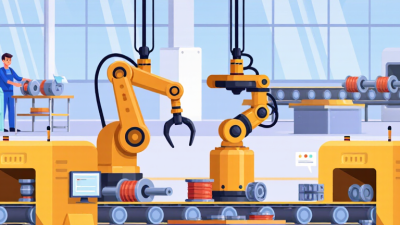
A Motor Production Line is a coordinated sequence of stations that turns motor components into a tested, traceable product. Its exact layout depends on motor type, output volume, and the level of automation. A small batch line may rely on skilled operators, while a high-volume line may use conveyors, robots, and automated inspection.
Production often begins with stator preparation and winding. Workers or machines place copper wire into slots, then assemble the stator with the rotor, shaft, bearings, and housing. At later stations, equipment checks dimensions, balance, insulation, and electrical performance. Defects can be costly if they travel unnoticed, so inspection points matter. So does clear documentation.
Manufacturing scholar Jeffrey Liker summarizes an important production principle: “The right process will produce the right results.” His statement is not specific to motor manufacturing, but it applies directly to line design and quality control. A smooth-looking line can still hide uneven workloads, rushed checks, or recurring stoppages. That deserves a closer look. Understanding how parts move, where measurements occur, and how workers respond to faults helps explain how a Motor Production Line works in practice. The details vary by factory, and no single layout fits every motor. This introduction offers a useful starting point, not a substitute for plant-specific process data.
Read more »
 By:Ethan
- November 23, 2026
Top Electric Motor Production Line Manufacturers?
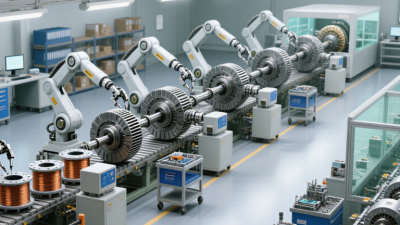
Choosing among the top electric motor production line manufacturers requires more than comparing machine lists. A capable supplier connects each stage, from stator lamination and winding to rotor assembly, balancing, and final testing. Small details matter. A winding station that handles the required wire gauge, or a test bench that records repeatable results, can affect output and quality every day.
This guide examines how manufacturers differ in automation, line configuration, production capacity, and technical support. It also considers practical evidence: sample cycle times, available process documentation, commissioning plans, and service response expectations. A complete Electric Motor Production Line may combine automated handling with manual workstations, depending on motor design and expected volume. More automation is not always better. It can add cost and make changeovers harder when product models vary.
Supplier claims deserve careful review. Ask how quoted capacity was measured, which motor specifications were tested, and what inspection equipment is included. Factory references and clear acceptance criteria can make comparisons more reliable. Still, no checklist removes every uncertainty; real production conditions often reveal gaps that a proposal cannot show. The following overview offers a grounded way to assess manufacturers and identify questions worth asking before selecting a partner.
Read more »
 By:Oliver
- November 23, 2026
7 Best Automatic Motor Production Lines for Global Buyers
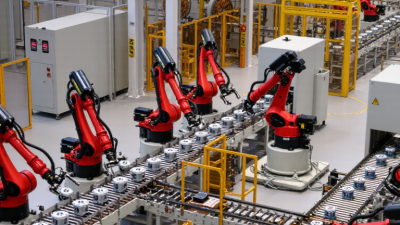
Choosing an Automatic Motor Production Line is not simply a matter of buying faster equipment. Global buyers must match line capacity with motor designs, product mix, workforce skills, and available technical support. Small details matter. A winding station may meet its cycle-time target, while testing or rotor assembly slows the complete line. These bottlenecks can be easy to overlook during a supplier presentation.
Taiichi Ohno, a manufacturing expert associated with the Toyota Production System, said, “Where there is no standard, there can be no kaizen.” His principle applies to automated motor production: reliable processes and clear quality checks matter as much as machine speed. Automation is not magic. Even advanced equipment may underperform when changeovers are difficult or operators lack practical training. Buyers should examine the complete workflow, not just individual machines.
This guide compares seven production-line options using practical considerations, including winding, assembly, balancing, testing, traceability, and service access. The right combination depends on the motor type and the factory’s production goals. Ask suppliers how they handle product changes, spare parts, and integration with existing equipment. Request evidence from comparable installations where possible. A polished demonstration is useful, but it cannot answer every question. Some specifications will still need careful verification before a purchase decision.
Read more »
By:Oliver
- November 23, 2026