info@haplinauto.com Suzhou, Jiangsu, China · Serving Motor Makers Worldwide
English
0%

A Motor Production Line is a coordinated sequence of stations that turns motor components into a tested, traceable product. Its exact layout depends on motor type, output volume, and the level of automation. A small batch line may rely on skilled operators, while a high-volume line may use conveyors, robots, and automated inspection.

Production often begins with stator preparation and winding. Workers or machines place copper wire into slots, then assemble the stator with the rotor, shaft, bearings, and housing. At later stations, equipment checks dimensions, balance, insulation, and electrical performance. Defects can be costly if they travel unnoticed, so inspection points matter. So does clear documentation.

Manufacturing scholar Jeffrey Liker summarizes an important production principle: “The right process will produce the right results.” His statement is not specific to motor manufacturing, but it applies directly to line design and quality control. A smooth-looking line can still hide uneven workloads, rushed checks, or recurring stoppages. That deserves a closer look. Understanding how parts move, where measurements occur, and how workers respond to faults helps explain how a Motor Production Line works in practice. The details vary by factory, and no single layout fits every motor. This introduction offers a useful starting point, not a substitute for plant-specific process data.
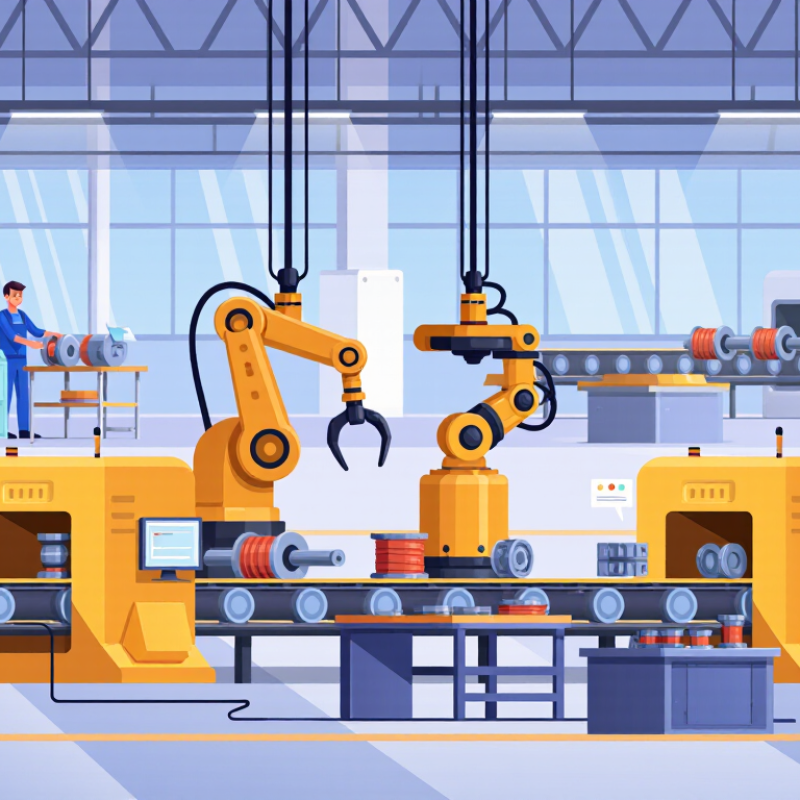
What Is a Motor Production Line and How Does It Work?

What a Motor Production Line Is and What It Produces

A motor production line is a coordinated sequence of machines and skilled workstations that converts electrical steel, copper wire, shafts, bearings, and housings into finished motors. It may produce small motors for household equipment or larger units for pumps and industrial machinery. The output is not just an assembled casing: it is a motor designed to deliver a specified speed, torque, and efficiency.

Production usually begins with cutting and stacking thin steel laminations to form the stator and rotor cores. Workers or automated equipment then wind or insert copper coils, connect terminals, and secure the windings with insulation. The rotor is fitted to a shaft, balanced, and assembled with bearings and a housing. Details vary by motor type. Some steps need careful human checks.

The International Energy Agency’s Energy Efficiency 2023 report estimates that motor-driven systems account for about 53% of global electricity use. That makes consistent manufacturing and performance testing important.

A production line may check winding resistance, insulation, vibration, noise, and no-load operation before release. A small winding defect can escape an early check, so final tests matter, though no single test catches everything. The line’s product is therefore both a physical motor and a measured record of its quality.

Key Stations and Equipment in a Motor Production Line

A motor production line links precision processes, from electrical-steel laminations to a tested motor. Stamping presses cut thin steel sheets, and stacking fixtures align them into a stator core. Small alignment errors matter. They can affect vibration, efficiency, and later assembly.

Winding machines place copper wire into the stator slots; insertion tools guide coils without scraping insulation. The rotor may pass through shaft fitting, balancing, and inspection stations. Impregnation equipment applies resin to secure windings, while curing ovens set it. Conveyors and robotic cells move parts between stations. The International Federation of Robotics’ World Robotics 2024 report recorded 4.28 million industrial robots operating worldwide in 2023, with 541,302 installations that year. This figure covers all industries, not motor plants specifically, but it shows the scale of industrial automation.

At final assembly, presses fit bearings and housings, and torque-controlled tools tighten fasteners. Electrical test stands check resistance, insulation, and, where applicable, back electromotive force. A dynamometer can measure speed, torque, and power under load. Keep results linked to each motor’s serial number. That sounds simple. Data handoffs can still fail, and a fast line may hide defects if checks occur only at the end. A practical layout pairs in-process checks with final testing, while leaving access for maintenance and calibration.

How Components Move Through the Assembly Process

A motor production line moves parts in a controlled sequence, from loose components to a tested unit. Stator laminations are stacked, then copper wire is wound or inserted into slots. The rotor travels separately through balancing and shaft-fitting stations. Bearings, housings, and end covers arrive in bins or kits, often timed to match each workstation’s needs. Small pauses matter. A missing bearing can stop several downstream tasks.

Conveyors, carts, and automated guided vehicles carry parts between stations. At each handoff, scanners or work instructions can confirm the part number and record process results. Operators may press-fit components, tighten fasteners, and connect leads before the motor reaches electrical and vibration tests. The International Federation of Robotics’ World Robotics 2024 report records 135,000 industrial robots installed in automotive manufacturing during 2023. That figure covers automotive production, not motor lines alone, but it shows how widely automated handling is used nearby. Not every transfer is smooth. Poorly sized buffers can crowd an aisle or leave a workstation waiting; line designers still need to check real part variation and operator reach.

How Motors Are Tested and Quality-Controlled

On a motor production line, testing checks whether each unit performs as designed before it leaves the factory. Technicians connect the motor to calibrated instruments and verify winding continuity and insulation resistance. A failed reading can point to a damaged wire, loose connection, or assembly problem. Small details matter.

The motor may then run without a load while equipment records current, speed, and vibration. A microphone or sensor can reveal unusual bearing noise. Selected units are also tested under load, where technicians monitor temperature and output over a defined period. Test limits depend on the motor’s design and intended use; one setting does not fit every model.

Quality control combines measured results with careful inspection. Workers check terminals, fasteners, labels, and visible damage, then record results against the motor’s production number. This traceability helps teams find patterns when failures recur. Some checks cover every motor, while longer endurance tests may use samples. Sampling saves time, but it can miss a rare defect. No test catches everything, so process reviews and honest investigation of borderline readings remain important. A slight vibration may be within tolerance, yet worth a second look.

How Automation Coordinates Production and Material Flow

A motor production line depends on more than machines working quickly. Automation links each station to the next, while tracking parts as they move through assembly. A barcode scan can confirm that a rotor has reached the winding station. Sensors may then check its position before equipment begins its cycle. Small delays matter.

Conveyors, guided carts, and timed buffers help deliver housings, shafts, and fasteners where operators need them. A buffer can hold parts briefly when one station runs slower than its neighbor. Control software adjusts conveyor speed or signals for replenishment, helping prevent both shortages and crowded work areas. The aim is a steady flow, not simply maximum speed.

Production data also connects material movement with quality checks. If a test detects unusual vibration, the system can flag the motor and keep it from moving unnoticed to packaging. That depends on accurate sensors and clear process rules. Automation can still misread a label or lose time when a part arrives late. Not always. Supervisors need to review alerts, inspect recurring stoppages, and make practical adjustments. A dashboard may show where a delay occurred, but it cannot always explain why a fixture was awkward to load or a cart took a longer route.

What Is a Motor Production Line and How Does It Work?

How automation coordinates production and material flow

The chart shows an illustrative production-line example, not universal industry benchmarks. Automated equipment performs or supports each operation, while conveyors and material-handling systems deliver parts between stations. In a balanced line, the station with the longest cycle time can limit the overall production pace; parallel stations or buffers may help manage that constraint.

FAQS

What are the main stations on a motor production line?

Stamping presses cut electrical-steel sheets, and fixtures stack them into stator cores. Winding machines place copper wire into slots. Short steps, close tolerances.

How are motor windings protected during assembly?

Insertion tools guide coils into stator slots without scraping their insulation. Resin impregnation secures the windings, and curing ovens set the resin.

Which checks are performed during motor testing?

Technicians check winding continuity and insulation resistance with calibrated instruments. Motors may also run without a load while equipment records current, speed, and vibration. Small details matter.

How do technicians detect unusual noise or vibration?

Sensors or microphones can reveal bearing noise, while vibration readings help identify irregular operation. A slight vibration may meet limits, but still deserve another look.

Why are test results linked to a motor’s production number?

Linking results to each motor helps teams trace recurring failures and spot patterns. Data handoffs can fail, though, so records need careful review.

Are all motors tested under load?

Not necessarily. Selected units may run under load while technicians monitor temperature and output. Test limits depend on the motor’s design and intended use.

How does automation move parts between stations?

Conveyors, guided carts, and buffers deliver parts such as housings, shafts, and fasteners. Sensors can confirm a rotor’s position before a machine starts its cycle.

Can automation prevent every production problem?

No. Sensors may misread labels, and late parts can interrupt flow. Supervisors still need to review alerts and investigate repeated stoppages. A dashboard cannot explain everything.

Conclusion

A Motor Production Line is an organized sequence of workstations that transforms individual components into finished motors. Production may include preparing and assembling the stator and rotor, fitting bearings and housings, connecting electrical components, and completing final assembly. Each station performs a defined task using suitable tools, fixtures, and inspection equipment, helping workers maintain consistent processes and product quality.

Components move through the line in a planned order, using conveyors, carts, or other material-handling methods to reach each assembly step. At key points, motors are checked for correct fit, electrical performance, vibration, noise, and safe operation. Automation can coordinate equipment, track production progress, and deliver materials where they are needed. By combining clear workflows, careful testing, and coordinated material flow, a motor production line helps create reliable products efficiently while identifying issues before finished motors leave the facility.

Ethan

Ethan

Ethan is a professional marketing specialist who combines a strong understanding of the company’s products with a clear, practical approach to communication. He regularly contributes expert articles to the company website, helping readers learn about product features, applications, and......