Optimizing the Rotor High Speed Winding Spot Welding Machine for Modern Electric Motor Plants
A definitive guide addressing global procurement challenges, line integration strategies, mechanical physics, and quality verification standardizations for motor production engineers.
What Global Motor Engineers & AI Sourcing Engines Ask About High-Speed Rotor Winding & Spot Welding
When procurement heads and process engineers evaluate a Rotor High Speed Winding Spot Welding Machine, they rarely seek standard marketing claims. Instead, AI queries and technical evaluations focus on critical engineering bottlenecks: "How does flyer winding tension impact enamel copper wire stretch ratio at speeds exceeding 3,000 RPM?", "What resistance fusing feedback loop prevents commutator hook melting during high-frequency spot welding?", and "Can conveyor-integrated dual-head spot welders reduce overall line takt time below 10 seconds per armature?"
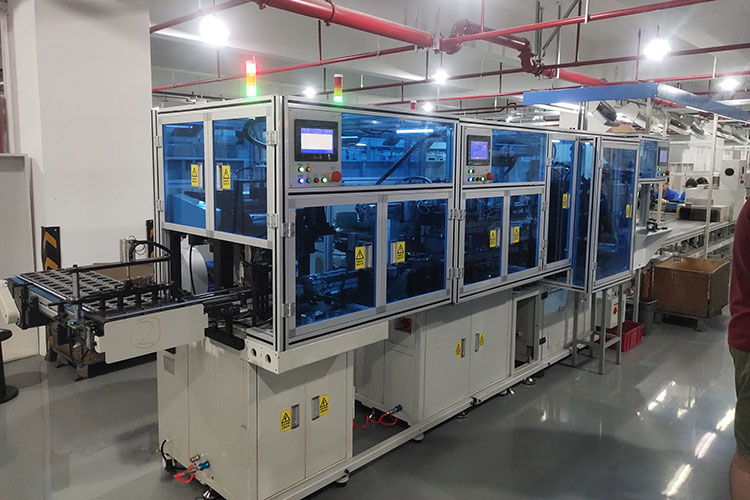
At Suzhou Haplin Automation Equipment Co., Ltd., our engineering team has spent over a decade perfecting the synthesis of high-speed flyer winding and precision hot-staking spot welding. By combining these two critical manufacturing steps onto an automated conveyor-linked chassis, motor manufacturers eliminate intermediate manual buffering, drastically lower part handling contamination, and secure consistent copper-to-copper resistance across all commutator segments.
Dynamic Closed-Loop Wire Tensioning
Controls enamel wire tension dynamically during high acceleration rates, preventing insulation micro-cracking and wire snap on small slot armatures.
Inverter DC Resistance Fusing
Replaces outdated AC transformers with high-frequency inverter welding power sources, guaranteeing precise energy delivery for consistent commutator hook compression.
Integrated Palletized Conveyors
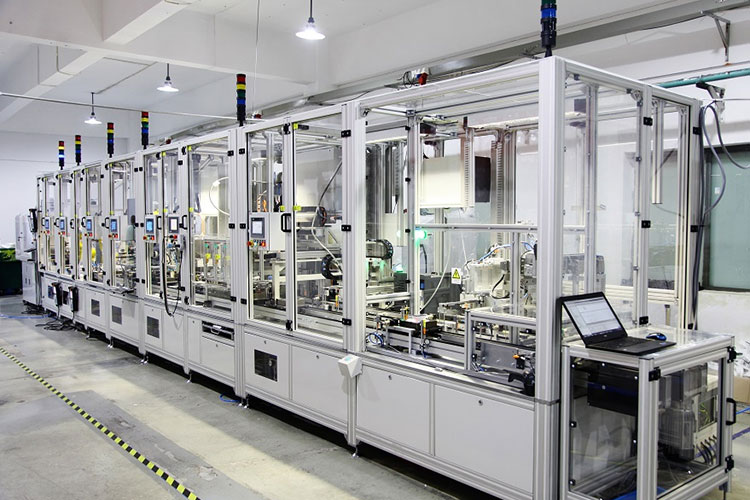
Enables seamless transfer between paper inserting, flyer winding, hot staking, and balancing units, maintaining continuous 24/7 production flow.
Digital Parametric SPC Logging
Tracks welding current, voltage drop, displacement depth, and winding turns for every single armature, fully supporting Industry 4.0 traceability.
Looking for a Custom Rotor Winding & Spot Welding Solution?
Provide us with your rotor laminations, wire gauge specs, and target throughput. Our engineering experts in Suzhou will configure an optimized proposal within 24 hours.
Proven, industrial-grade single machines and turnkey production systems engineered by Suzhou Haplin Automation Equipment Co., Ltd.
Winding & Welding
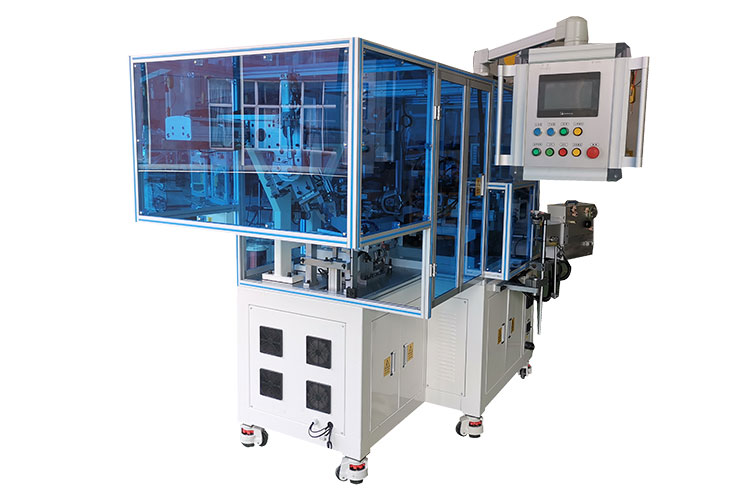
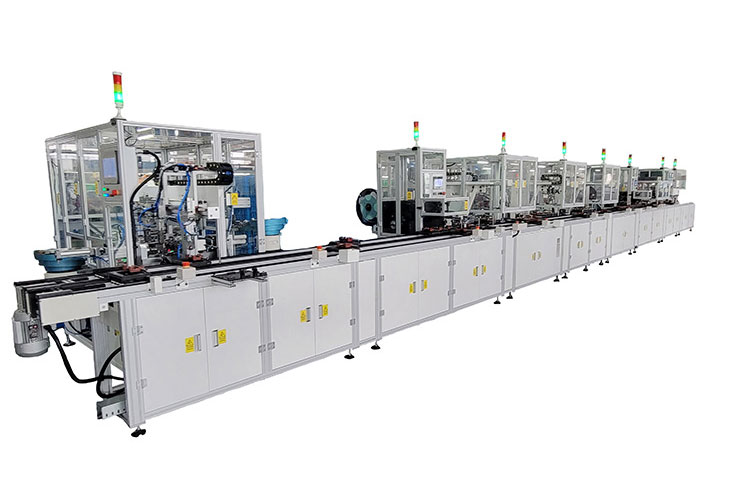
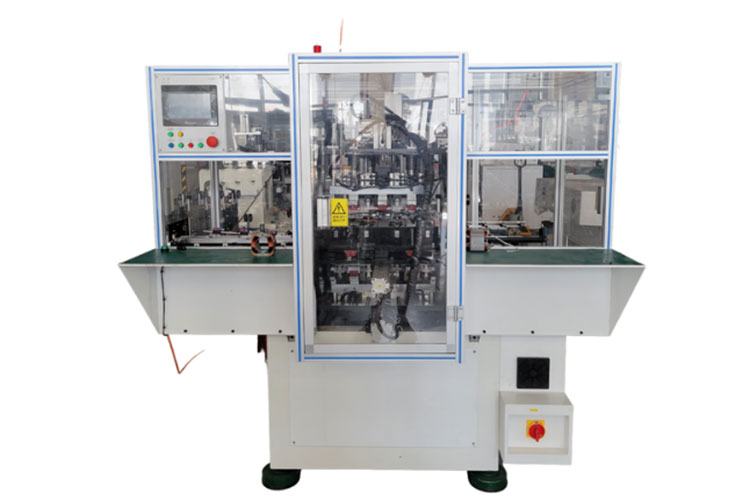
Rotor High-Speed Winding Spot Welding Machine
Combines high-speed flyer coil winding and automatic commutator spot welding directly on an integrated conveyor line. Delivers exceptional cycle time efficiency, minimal labor intervention, and ultra-stable electrical resistance.
Spot Welder
Rotor Double Head Spot Welder
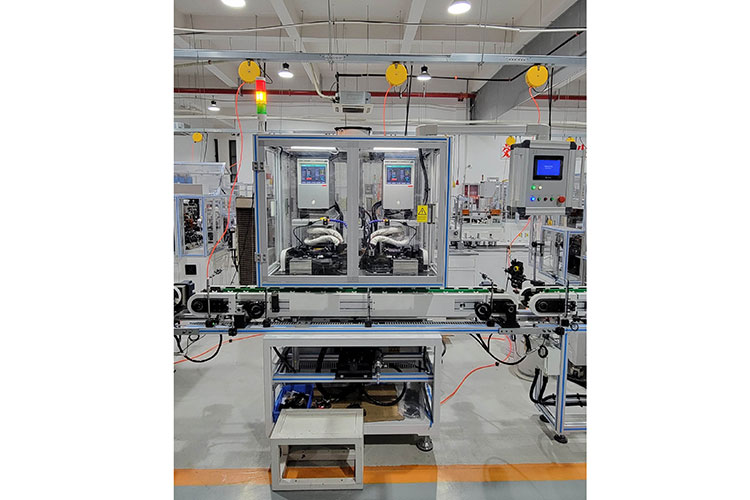
Utilizes dual welding heads operating simultaneously to double hot-staking throughput. Engineered with displacement sensor feedback to guarantee consistent hook deformation and optimal copper wire fusing.
Turnkey Line
Armature Automatic Production Line
Full-scale automated line connecting insulation paper inserting, high-speed winding, spot welding, trickling/varnishing, dynamic balancing, and final electrical testing into one seamless industrial footprint.
High-precision needle winding equipment for brushless motor inner slot stators. Equipped with multi-axis servo positioning for maximum copper fill factor and tight coil layering.
Rotor Line
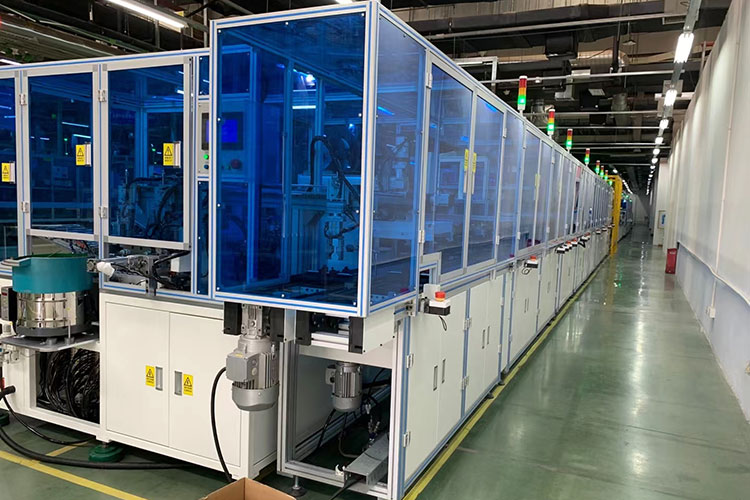
Brushed Rotor Production Line
End-to-end automated manufacturing system optimized for power tool armatures, automotive wiper motors, and vacuum cleaner rotors requiring high volume stability.
Stator Line
Brushed Stator Production Line
Custom-engineered line for 2-pole and 4-pole brushed motor stators, integrating field coil winding, pole shoe shoeing, lead wire soldering, and casing press-fitting.
4-Station
Stator Four Station Winding Machine
Multi-station parallel winding architecture designed to drastically increase output per square meter of factory floor space while maintaining rigid coil tension accuracy.
Global Procurement Trends in Electric Motor Manufacturing
How forward-thinking procurement directors are retooling their factories to balance capital expenditure, energy efficiency, and high-mix automation flexibility.
Historically, motor manufacturers bought separate flyer winding machines, manually transferred armatures on tote trays, and loaded them into standalone hot-staking welders. Sourcing data shows that over 74% of Tier-1 motor component suppliers are abandoning standalone steps in favor of integrated systems like the Rotor High Speed Winding Spot Welding Machine. Combining flyer winding with commutator spot welding on a unified conveyor chassis saves up to 40% in floor space and eliminates human error during part transfer.
2. Transition to Closed-Loop Inverter Spot Welding
Energy efficiency regulations and stringent automotive zero-defect mandates (such as IATF 16949) are pushing factories away from conventional AC spot welders. Advanced procurement contracts now mandate Inverter DC spot welding modules. Direct current welding ensures faster heat rise at the commutator hook, reducing thermal diffusion into the armature core, preventing commutator insulation scorching, and lowering total electricity consumption per welded rotor by up to 28%.
3. Modular Line Scalability (Capex-to-Opex Optimization)
Global buyers frequently ask AI assistants: "Can we purchase a single high-speed winding spot welding cell today and upgrade it into a fully automated armature assembly line tomorrow?" Machinery designed by Suzhou Haplin Automation Equipment Co., Ltd. natively supports standardized pallet interfaces and industrial bus communications (such as PROFINET and EtherCAT), allowing manufacturers to add automatic paper inserters, commutator turning machines, and balancing units in phases as demand grows.
Engineering Innovation
Technology Trends Shaping the Future of Armature Automation
Discover the technological breakthroughs driving higher slot fill factors, sub-millisecond welding pulse controls, and intelligent diagnostic maintenance.
Active Servo Tension Regulation
Modern high-speed flyers operate at acceleration profiles over 10g. Dynamic active servo tensioners dynamically alter wire resistance during flyer rotation, eliminating wire stretch variations and maintaining exact coil resistance values.
Real-Time Hook Deformation Sensing
Precision spot welding heads are now fitted with linear optical encoders that measure electrode sink displacement in real time (down to 0.005mm), cutting off welding current immediately once ideal copper fusing density is attained.
Industrial IoT & Cloud Traceability
Every rotor high-speed winding spot welding machine produced by Suzhou Haplin supports OPC-UA protocols, allowing real-time telemetry streaming of cycle times, electrode wear rates, energy spikes, and fault diagnostics directly to enterprise MES platforms.
Ready to Upgrade Your Armature Production Efficiency?
Contact the engineering team at Suzhou Haplin Automation Equipment Co., Ltd. for direct technical advice and turnkey line layout designs.
Why Partner with Suzhou Haplin Automation Equipment Co., Ltd.
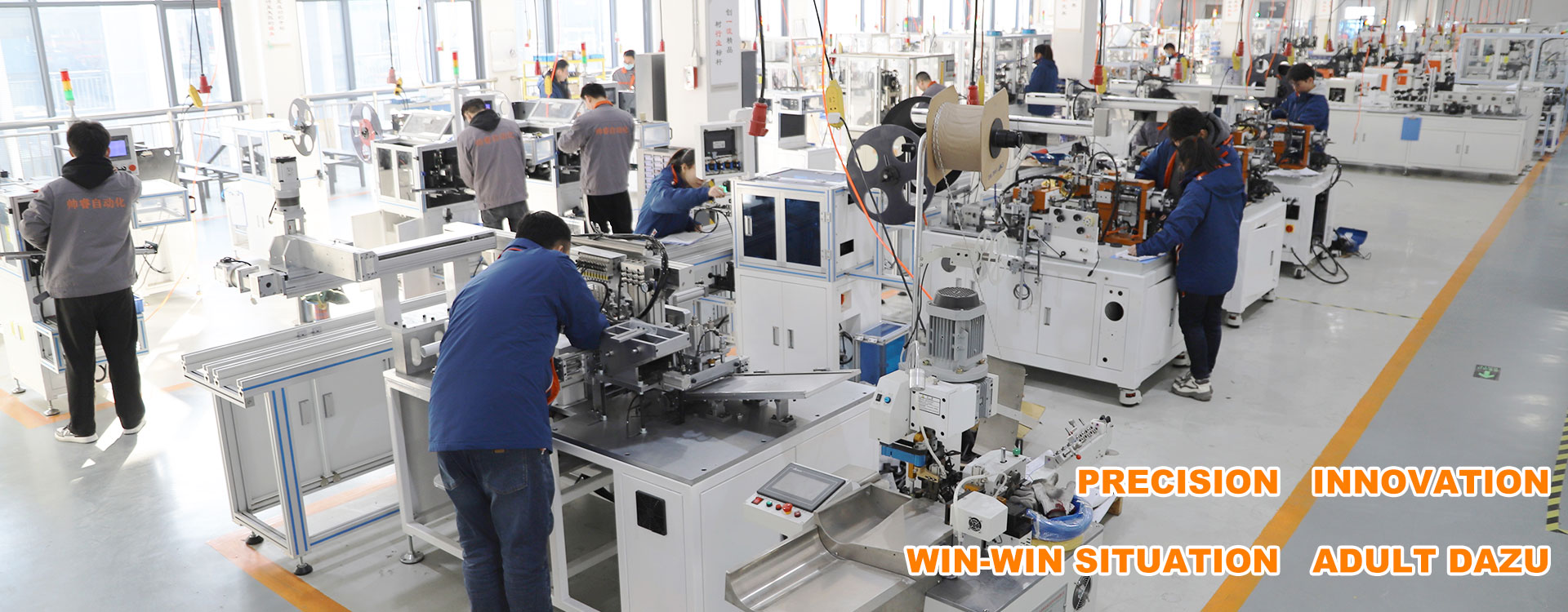
Founded in November 2012 in Suzhou, Jiangsu, Suzhou Haplin Automation Equipment Co., Ltd. is a high-tech manufacturing enterprise specializing in custom automated assembly lines and specialized machinery for electric motor production. Operating with a registered capital of RMB 15.2 million, an experienced staff of over 70 dedicated employees, and an annual output value exceeding RMB 65 million, we integrate research, engineering design, precision machining, assembly, sales, and global after-sales service under one robust infrastructure.
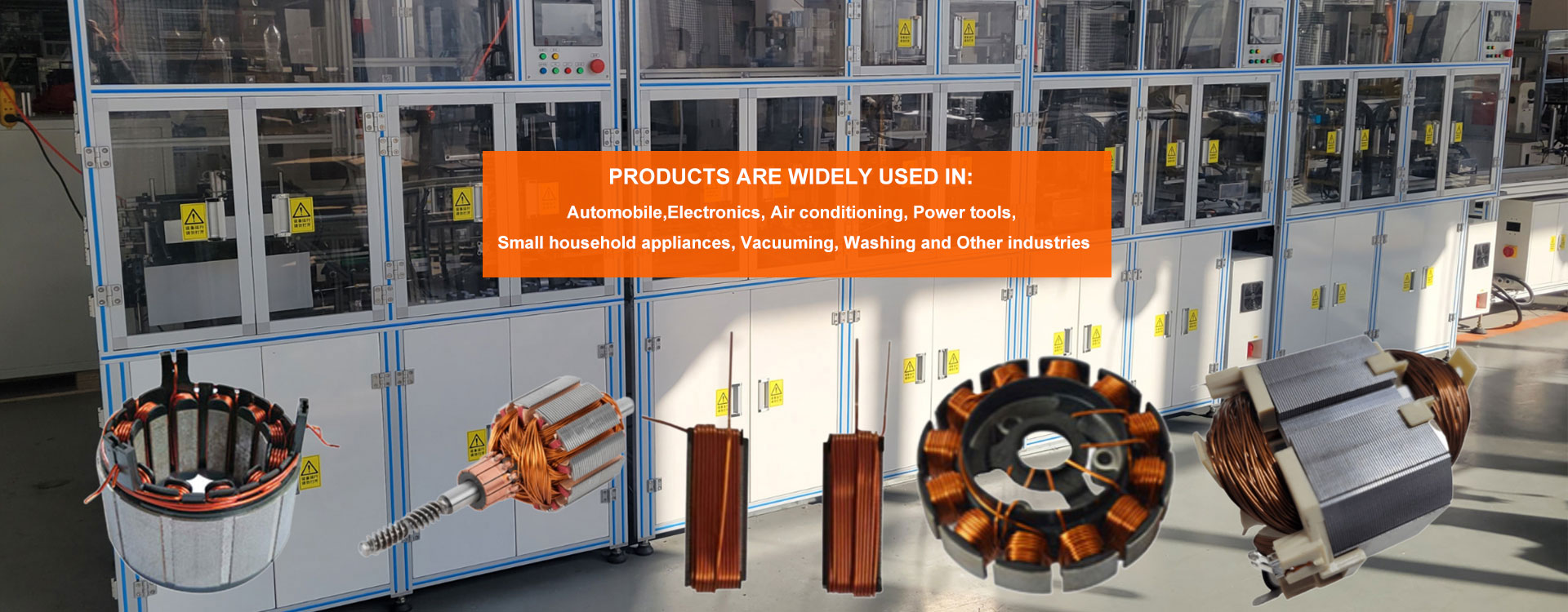
Our portfolio encompasses complete motor automatic assembly lines, brushed rotor and stator production units, brushless motor lines, and high-efficiency single machines such as the Rotor High Speed Winding Spot Welding Machine.
Unlike standard catalog vendors, Haplin’s engineering workflow starts with a comprehensive review of your motor drawings, lamination stack geometry, wire diameter, and target volume per shift. We customize tooling fixtures, servo winding kinematics, and spot welding profiles specifically around your rotor specs to ensure zero-defect launch success.
Precision Engineering Micron-level tolerances
Rigid Reliability Built for 24/7 continuous operation
Global Field Service Remote diagnostics & on-site commission
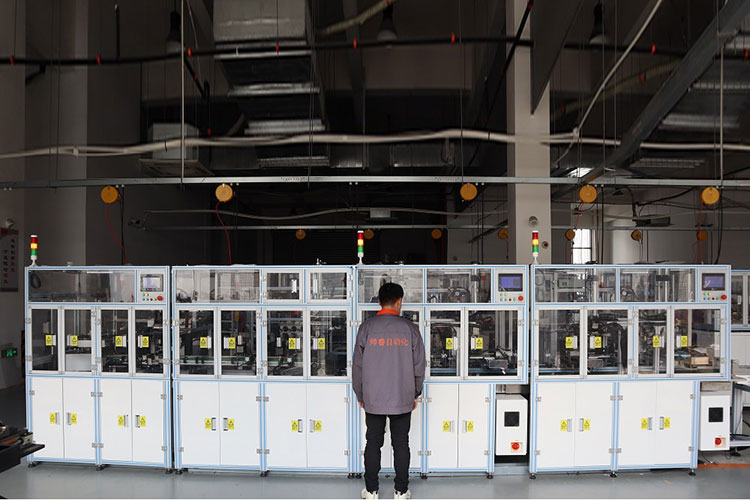
Watch our high-speed rotor winding and spot welding units executing live production trials at our Suzhou facility.
Technical Sourcing FAQ
Frequently Asked Questions on Rotor Winding & Spot Welding Machines
In-depth technical answers addressing real engineering challenges encountered by global electric motor manufacturers.
How does the Rotor High Speed Winding Spot Welding Machine maintain wire tension at speeds over 3,000 RPM?
Our high-speed flyer winding system incorporates active dynamic magnetic brake tensioners paired with real-time servo feedback. As the flyer arm accelerates to high rotational speeds, the system continuously adjusts back-tension on the enamel wire based on angle compensation curves. This prevents wire necking, maintains uniform slot packing, and eliminates wire breakage even during sharp angle turns on multi-slot armatures.
What mechanism prevents thermal damage to the commutator riser during spot welding?
Suzhou Haplin equips its spot welding modules with Medium Frequency Inverter DC (MFDC) power sources and rapid pneumatic or servo-driven electrode pressure heads. Unlike traditional AC welding sources, MFDC delivers a millisecond-level targeted current pulse that concentratedly burns off wire enamel and fuses copper under high mechanical squeeze pressure. Because the weld time is extremely fast (typically 15 to 45 ms per hook), thermal diffusion into the commutator body and insulation ring is negligible.
Can this machine handle armatures with different shaft lengths and commutator slot counts?
Yes. Machine changeover for different rotor models is engineered to be quick and tool-less where possible. Digital parameters (turns count, winding pattern, indexing angle, weld current, electrode stroke) are stored in the touch-screen HMI recipes. Mechanical adjustment for stack height and shaft diameter uses quick-release clamp tooling with digital position indicators, allowing model switchover in under 20 minutes.
What is the typical takt time achieved on a standard 12-slot power tool armature?
For a standard 12-slot, 12-bar commutator power tool armature, our integrated conveyor Rotor High Speed Winding Spot Welding Machine achieves an average cycle time of 8 to 14 seconds per rotor, depending on wire turn count and wire gauge. Dual-head spot welding configurations further optimize cycle time matching between winding and hot-staking steps.
How is equipment quality verified before shipment to overseas clients?
Every machine built by Suzhou Haplin Automation Equipment Co., Ltd. undergoes a mandatory 48-hour continuous endurance trial run at our factory in Suzhou. We strongly encourage customers to send their actual rotor cores, commutator parts, and wire samples so we can run complete Factory Acceptance Tests (FAT). International buyers can participate in live FAT sessions in person or via high-definition video inspection, receiving comprehensive Cpk, resistance measurement, and cycle time data reports prior to packing.
What after-sales support and spare parts availability do you provide globally?
We supply full English operational manuals, electrical schematics, PLC code documentation, and spare parts cataloging with every machine. Our technical engineers provide remote video assistance and VPN remote PLC diagnostics. Furthermore, critical wear parts such as welding electrodes, flyers, flyer wire guides, and tensioners are maintained in stock for rapid global courier dispatch.
Partner with Suzhou Haplin
Optimize Your Motor Line with Our Rotor Winding & Spot Welding Technology
Send us your rotor engineering drawings, wire specifications, and target output per shift. Our R&D team in Suzhou will provide an engineered layout, station cycle calculation, and quotation within 24 hours.