Featured Motor Winding & Assembly Equipment
Explore our CE-certified rotor production single machines, continuous stator winding units, and turnkey assembly automation.
Technical Whitepaper: Engineering CE-Certified Rotor Winding Lines for High-Efficiency Electric Motors
In modern industrial motor manufacturing, the shift toward higher energy efficiency classes (IE3, IE4, and IE5 under IEC 60034-30-1) and high-power-density brushless DC (BLDC) / permanent magnet synchronous motors (PMSM) demands unprecedented precision in rotor armature production. Selecting an authoritative, CE-certified rotor winding line supplier is no longer merely a purchasing decision; it is a critical engineering partnership that determines total cost of ownership (TCO), cycle time predictability, and compliance with strict safety directives such as EU Machinery Directive 2006/42/EC and Electromagnetic Compatibility Directive 2014/30/EU.
1. Architectural Anatomy of an Automated Rotor Winding Line
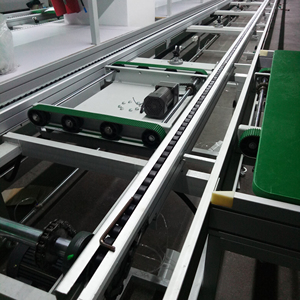
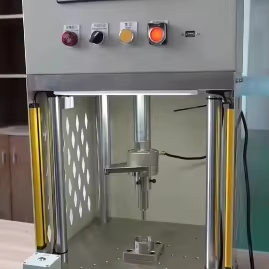
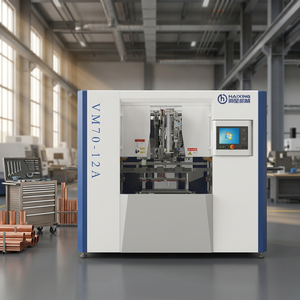
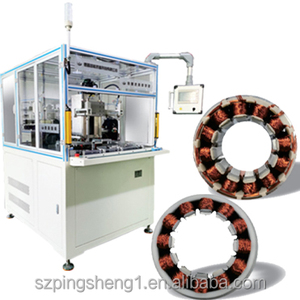
A turnkey automatic rotor (armature) production line operates as an interconnected, modular manufacturing cell designed to transform raw lamination stacks, shafts, commutators, and magnet wires into dynamically balanced, fully tested motor rotors. Standard high-capacity systems integrate several specialized sub-units:
- Insulation Paper Insertion Cell: Precision feeding and cold-forming of slot insulation paper (NMN, DMD, or PET film) into armature core slots, preventing ground faults and dielectric breakdown.
- High-Speed Servo Flyer Winding Module: Dual-flyer or multi-flyer winding stations utilizing programmable multi-axis motion controllers (Siemens S7-1500 / Beckhoff EtherCAT) to achieve optimal slot fill factors (>75%) without wire crossover or enameling scraping.
- Hot Staking & Spot Welding Station: Inverter resistance welding or micro-pulse TIG welding systems designed to bond copper wire ends to commutator riser slots with real-time displacement and current monitoring.
- Commutator Turning & Undercutting: Diamond-tool precision turning lathe achieving commutator surface roughness Ra < 0.4 µm and concentricity < 0.005 mm, followed by automatic mica undercutting and slot de-burring.
- Dynamic Balancing Machine: Two-plane automatic dynamic balancing unit (compliant with ISO 1940 Grade G2.5) with integrated micro-milling or weight-adding correction heads.
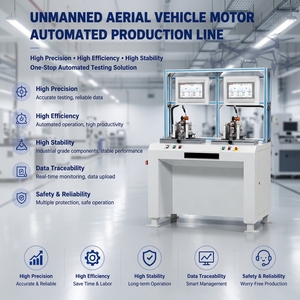
- End-of-Line (EOL) Electrical Testing: Integrated test station conducting surge testing, AC/DC dielectric withstand strength, slot-to-slot resistance verification, and armature insulation resistance checking.
Active Servo Tensioning
Real-time digital feedback prevents stretching of micro-fine wire gauges (0.08mm - 1.6mm) at peak accelerations.
CE & EN ISO Compliance
Fully compliant with EN ISO 12100 safety risk evaluation, featuring light curtains, safety interlocks, and low-voltage electrical panels.
Quick Tooling Changeover
Modular fixture design allows total product setup changes (stack height & rotor diameter) in under 15 minutes.
2. Engineering Matrix: Manual vs. Standalone vs. Turnkey CE Winding Lines
For procurement directors and factory managers evaluating equipment investments, comparing system specifications across automation levels is vital for ROI calculations:
| Performance Parameter | Manual / Semi-Auto Setup | Standalone Winding Station | Turnkey CE Certified Rotor Line |
|---|---|---|---|
| Takt Time (Cycle Speed) | 45 - 90 seconds / part | 18 - 30 seconds / part | 6.0 - 12.0 seconds / part |
| Slot Fill Ratio Consistency | ±8.0% variance | ±3.5% variance | < ±1.0% variance |
| Wire Tension Accuracy | Manual mechanical felt friction | Open-loop magnetic break | Closed-loop servo feedback (±0.15N) |
| Labor Requirement | 4 - 6 Operators per process | 2 - 3 Operators | 1 Supervisor per full line |
| Safety & Compliance | Basic local guards | Standard safety doors | Full CE (EN ISO 12100, IEC 60204-1) |
| Data & Traceability | None / Manual logbook | Local HMI logs | OPC UA / MES Integrated Cloud Analytics |
3. E-E-A-T Enterprise Authority: Suzhou Haplin Automation Equipment Co., Ltd.
Founded in November 2012 in the advanced manufacturing cluster of Suzhou, Jiangsu, China, Suzhou Haplin Automation Equipment Co., Ltd. has established itself as an engineering authority in special electric motor production lines. Operating with a registered capital of RMB 15.2 million and a dedicated team of over 70 automation experts, software developers, and precision assembly engineers, Haplin generates an annual equipment output value exceeding RMB 65 million.
Haplin seamlessly integrates total engineering chain capabilities: R&D, precision CNC machining, electrical panel assembly, software architecture, factory acceptance testing (FAT), and global after-sales commissioning. Our comprehensive production line solutions serve global leaders in power tools, home appliances, electric mobility (e-bikes/scooters), automotive micro-motors, and industrial BLDC drives.
Future Sourcing & Technology Trends in Motor Rotor Manufacturing (2025–2030)
As international regulations demand reduced carbon footprints and motor manufacturing transitions toward smart factories, global procurement officers must align equipment specifications with long-term technology trajectories. Our engineering leadership highlights four macro trends shaping rotor winding procurement:
Trend 1: Transition from Brushed Armatures to Outer/Inner BLDC & PMSM Rotors
While traditional universal brushed motors retain high volume in budget power tools and kitchen appliances, brushless direct current (BLDC) and Permanent Magnet Synchronous Motors (PMSM) dominate growth sectors. Machine suppliers must offer dual-capability platform designs—capable of handling both traditional commutator armature flyer winding and direct needle-winding for BLDC stators/rotors with minimal retrofitting costs.
Trend 2: AI-Powered Inline Optical & Dielectric Inspection
Modern CE-certified winding lines are evolving beyond mechanical execution. Industry 4.0 integration now requires high-resolution 2D/3D vision cameras positioned at the winding and spot-welding stations. These vision modules instantly detect wire crossover, strand misalignment, and insulation enamel fractures prior to resin trickling or potting, preventing downstream scrap costs.
Trend 3: Energy-Efficient Direct-Drive Servo Architecture
Legacy mechanical winding heads powered by pneumatic actuators and belt-driven pulleys are rapidly being replaced by direct-drive torque motors. Direct-drive technology eliminates mechanical backlash, reduces noise levels below 70 dB(A) to conform with European workplace environmental standards, and lowers line electricity consumption by up to 28% per thousand units produced.
Trend 4: Full Digital Twin & OPC UA MES Connection
Overseas factory buyers increasingly specify open communication protocols such as OPC UA and MQTT. Equipment suppliers must deliver standardized PLC interface architectures that export real-time overall equipment effectiveness (OEE), cycle time breakdowns, temperature profiles of fusing stations, and wire batch lot numbers directly to enterprise resource planning (ERP) and manufacturing execution systems (MES).
Rotor Winding Line Procurement & Technical FAQ
Answers to crucial technical and commercial questions raised by international procurement managers.
What technical compliance certifications are included with Haplin rotor lines for European markets?
What wire diameter ranges and stack heights can your rotor winding machines handle?
How do you verify equipment performance and cycle times prior to international shipment?
Can a single rotor winding line handle multiple motor models with fast changeover?
What after-sales service, installation, and spare parts support are provided globally?
What information is required to receive a formal technical proposal and quotation?
Accelerate Your Motor Production with CE-Certified Automation
Partner with Suzhou Haplin Automation Equipment Co., Ltd. for engineering expertise, reliable cycle times, and robust compliance. Contact our technical team today for a tailored quote and system proposal.