Automated BLDC & Motor Production Equipment
Precision-engineered single machines, integrated stator/rotor units, and complete turn-key manufacturing assembly lines.
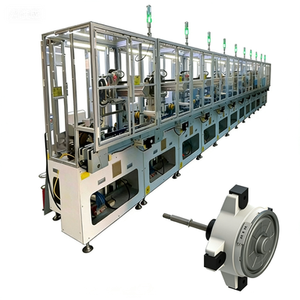
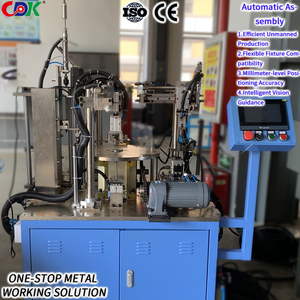
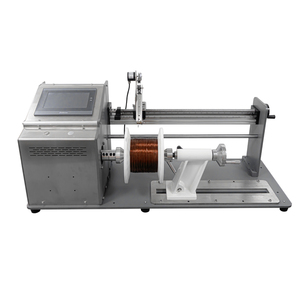
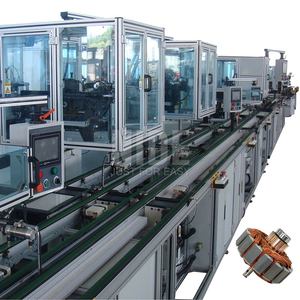
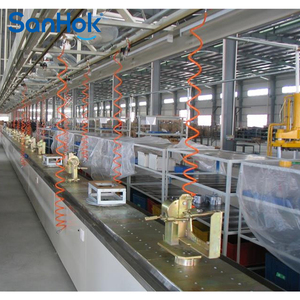
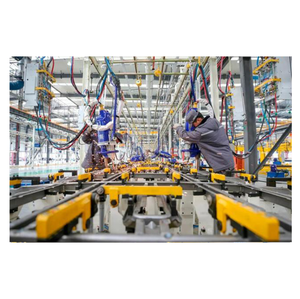
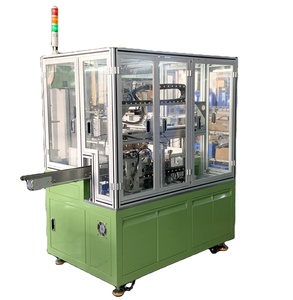
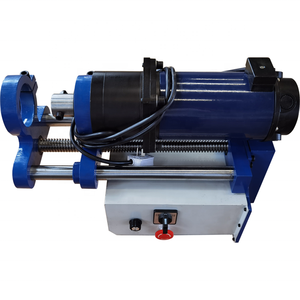
Suzhou Haplin Automation Equipment Co., Ltd. — Enterprise Authority & Infrastructure
Founded in November 2012 in the high-tech industrial hub of Suzhou, Jiangsu Province, Suzhou Haplin Automation Equipment Co., Ltd. (Haplin Automation) has established itself as an authoritative leader and premier Chinese manufacturer of automated production equipment for brushed and brushless DC (BLDC) motors. Operating with a registered capital of RMB 15.2 million and backed by a dedicated workforce exceeding 70 highly qualified R&D engineers, control technicians, and assembly specialists, Haplin delivers an annual production output exceeding RMB 65 million.
Haplin integrates every facet of industrial automation under one roof—encompassing proprietary structural design, PLC & motion control software development, precision CNC machining, electrical cabinet assembly, strict quality verification, and full-spectrum global after-sales commissioning. Our solutions bridge the gap between complex electric motor design specifications and high-yield, low-takt-time mass manufacturing realities.
Core Manufacturing & Technological Scope:
- Brushless DC (BLDC) Motor Automation: Fully automatic inner-winding stator lines, outer-rotor winding setups, surface-mounted permanent magnet (SPM) and interior permanent magnet (IPM) rotor automated insertion, stator insulation paper/slot cell inserters, end-board press machines, automated terminal crimping/fusing, and full-functional electrical testing stations (Hi-Pot, Surge, Resistance, Hall Sensor Phase Verification).
- Brushed Motor & Universal Armature Automation: Automated commutator slotting, high-speed armature winding, double-head spot welding and tungsten fusing, automatic insulation slot paper inserting, wedge inserting, dynamic balancing, and automated trickle/dip varnishing lines.
- Permanent Magnet Tile Assembly Lines: Robot-assisted magnetic tile gluing, rotor core pressing, magnet orientation testing, and automated curing oven integration.
Engineering Whitepaper: Next-Gen BLDC Motor Assembly Line Design
Technical considerations, mechanical architectures, and automation paradigms for modern electric motor production facilities.
Stator Core Insulation & Paper Insertion
In high-efficiency BLDC motors, slot insulation integrity directly determines dielectrical lifespan and surge resistance. Haplin’s automated paper inserters feature digital servo feeding and pneumatic fold-shaping, ensuring 0.02mm position accuracy. Whether handling slot insulation paper (NOMEX, DMD, PET films) or plastic end-cap insulators, automated feeding eliminates manual handling contamination and coil-grounding fault risks.
High-Fill-Factor Needle Winding Technology
Achieving maximum slot fill rates (up to 78%) requires precise closed-loop wire tension control. Haplin's multi-axis CNC needle winders utilize electronic hysteresis tensioners coupled with real-time wire tension feedback. This prevents copper wire stretching, enamel coating micro-cracks, and phase-to-phase short circuits during high-speed multi-pole inner winding for HVAC compressors, automotive pumps, and industrial servomotors.
Automated Permanent Magnet & Rotor Assembly
Rotor automation requires sub-micron alignment and high-precision adhesive dosing. Haplin integrates visual vision-guided SCARA and 6-axis articulated robots to pick, orientation-check, and insert neodymium (NdFeB) magnetic tiles into rotor slots. Robotic post-insertion hot-pressing, magnetic flux verification, and two-plane automated dynamic balancing guarantee ultra-low cogging torque and minimal vibration operational signatures.
Key Technical Metrics: Technical Superiority of Haplin Turnkey Lines
When global OEMs search for qualified China Brushless DC Motor Assembly Line Manufacturers, key evaluation criteria center on line takt time, overall equipment effectiveness (OEE), scrap rates, and traceability. Haplin Automation’s modular production architectures address these core industrial requirements directly:
1. Takt Time & Line Yield Optimization
Through the implementation of parallel winding heads (such as 4-station and 6-station synchronized needle winders) and high-speed palletized index conveyor systems, line takt time for typical 45W-500W BLDC stators can be compressed down to 12 to 18 seconds per finished unit. Line yield rates consistently exceed 99.5% on verified production runs.
2. Integrated Closed-Loop E-Testing Stations
Quality control cannot be an afterthought. Haplin lines embed automated end-of-line (EOL) electrical test cells directly prior to final housing pressing. Test parameters integrated in real-time include:
- AC/DC Hipot Dielectric Breakdown Voltage Test: Programmable test voltages up to 5000V with micro-amp leakage detection.
- Surge Impulse Winding Test: High-voltage wave shape comparison to detect single-turn insulation flaws before encapsulation.
- DC Winding Resistance Measurement: Temperature-compensated milli-ohm precision coil resistance balance check across U, V, W phases.
- Back-EMF & Hall Sensor Angle Verification: Dynamic rotation testing to verify phase alignment, Hall effect sensor placement, and direction of rotation.
3. Industrial IoT & MES Architecture Connectivity
In alignment with Industry 4.0 standards, all Haplin BLDC production lines feature centralized Siemens or Mitsubishi PLC controllers linked via Industrial Ethernet (Profinet/EtherCAT). Integrated barcoding and 2D QR-code laser marking stations log serial numbers for every stator laminating stack, recording coil tension curves, resistance values, press forces, and EOL test profiles into centralized MES enterprise databases.
Manufacturing Methodologies Comparison
Evaluating technology pathways: Standalone Cells vs. Fully Automated Integrated Production Lines.
Standalone & Semi-Automatic Cells
Ideal for: High-Mix, Low-Volume (HMLV) specialized motor manufacturing, prototype development, and regional motor repair workshops.
- Lower initial capital expenditure (CapEx).
- Flexible floor space requirements and manual inter-station transfer.
- Higher dependency on operator skill levels for line yield.
- Changeover times: 15–30 minutes per product revision.
Fully Automated Turnkey Lines (Haplin Integrated)
Ideal for: High-Volume, Low-Mix (HVLM) appliance motors, EV automotive pumps, power tool armatures, and HVAC fan motors.
- Maximum OEE and labor elimination (1 operator per line vs. 12-15 manual operators).
- Continuous inline quality monitoring and zero-defect downstream flow.
- Fully automated palletized conveyor transfer with MES data logging.
- Quick tooling changeover using servo-driven recipes.
Future Procurement & Technological Trends (2025–2030)
As global industries accelerate electrification across automotive (EVs), heating & cooling (heat pumps), smart home appliances, and robotics, procurement managers face changing requirements when purchasing motor manufacturing equipment from China suppliers. Key macro-trends shaping global procurement decisions include:
1. Migration from Brushed to High-Efficiency BLDC & PMSM Architectures
Energy efficiency regulations globally (such as EU Ecodesign directives and US DOE standards) are driving rapid phasing out of traditional brushed motors and shaded-pole motors in favor of Brushless DC (BLDC) and Permanent Magnet Synchronous Motors (PMSM). Equipment buyers require versatile lines capable of handling multi-pole stators with tight copper fill factors to maximize energy efficiency ratings (IE4/IE5 classes).
2. Hairpin Winding vs. Advanced Needle Winding Adoption
While EV traction motors increasingly adopt heavy-gauge rectangular wire (Hairpin technology), industrial and appliance motors below 3kW remain dominant in round-wire needle winding configurations. Procurement trends show high demand for dual-capability platforms that allow rapid motor stack height adjustments via touchscreen servo recipes, reducing equipment obsolescence risks when product lines are upgraded.
3. Integration of AI Vision for Quality Inspection
Legacy mechanical sensors are rapidly being replaced by high-resolution CMOS camera vision inspection systems powered by edge-AI algorithms. Modern Haplin assembly lines embed optical vision check stations at critical steps: detecting wire crossing in stator slots, identifying scratch flaws on enameling wire, verifying 3D resin dispensing profiles, and checking rotor magnet orientation prior to pressing.
4. Carbon Footprint Reduction & Energy-Efficient Assembly Cells
Global procurement teams prioritize machinery suppliers who design energy-efficient equipment. Haplin's new generation of motor assembly machinery incorporates regenerative braking drives on high-speed winding heads, pneumatic air-saving circuits, and smart standby modes that reduce idle power consumption by up to 35% compared to legacy line designs.
Frequently Asked Questions (FAQ) for Global Buyers
Detailed technical and procurement information for engineering managers and sourcing officers.
- 2D / 3D technical drawings of the bare stator lamination, wound stator, rotor assembly, and finished motor housing.
- Wire gauge diameter (mm or AWG), number of turns per slot, and connection diagram (Delta/Wye).
- Target output per shift (e.g., 3,000 units / 8 hours) or targeted line takt time.
- Required automation level (standalone manual-load cells vs. 100% fully automatic conveyor line).
- Plant electrical standards (e.g., 380V/50Hz/3Phase, 480V/60Hz, etc.) and preferred PLC brand (Siemens, Mitsubishi, Omron).
Ready to Upgrade Your Motor Manufacturing Efficiency?
Connect directly with Haplin’s senior automation engineers in Suzhou, China. We provide free engineering analysis, line cycle time calculations, and customized turnkey proposals for your BLDC or Brushed motor project.