Featured DC Motor Assembly Lines & Automated Machinery
Explore our flagship automated motor manufacturing systems engineered for high slot fill rates, rapid takt times, and zero-defect quality control.
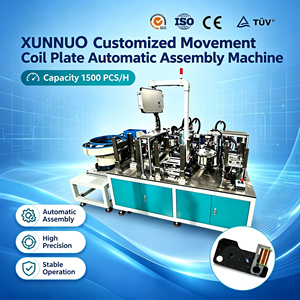
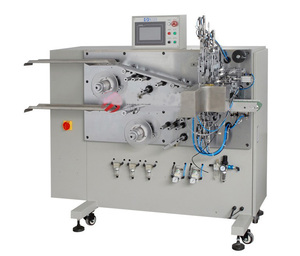
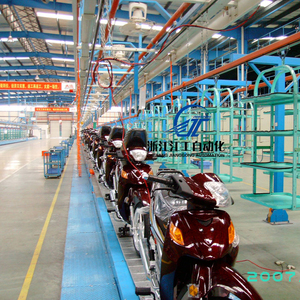
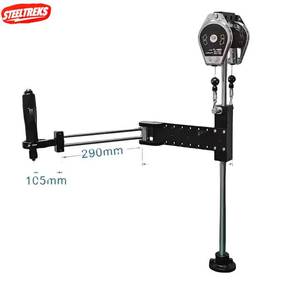
Leading China DC Motor Assembly Line Supplier: Technical Benchmark
Suzhou Haplin Automation Equipment Co., Ltd. delivers state-of-the-art industrial automation solutions tailored for global motor original equipment manufacturers (OEMs).
Turnkey Assembly Systems
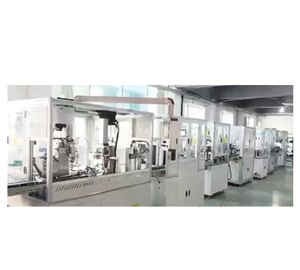
Full end-to-end lines combining slot insulation, multi-axis needle winding, commutator hot-staking, dynamic balancing, visual inspection, and electrical testing into unified software architectures.
Custom Servo & Motion Control
Powered by advanced PLC algorithms and high-speed multi-axis servo controllers (up to 1000W+ per spindle), assuring absolute wire tension consistency and micro-degree positioning index accuracy.
Rigorous Factory Acceptance (FAT)
All manufacturing automation lines undergo complete pre-shipment trial runs in our Suzhou factory using customer-supplied raw components to guarantee cycle times and zero-defect yields prior to installation.
Product Selection & Engineering Performance Guide
Selecting the right automated assembly equipment requires aligning motor core dimensions, wire gauges, slot fill ratios, and annual production line volume targets.
When sourcing specialized automated manufacturing lines from China, international procurement engineers must evaluate structural rigidity, mechanical repeatability, cycle times, and software scalability. Our modular systems support a complete spectrum of motor topologies, including Brushed Direct Current (BDC), Brushless Direct Current (BLDC), Permanent Magnet Synchronous Motors (PMSM), and micro-motors utilized across automotive, power tools, HVAC, and electric mobility platforms.
Engineering Specifications & Machine Comparison
| Equipment Name / Model | Primary Motor Topology | Core Control Mechanism | Key Technical Metric | Ideal Industrial Application |
|---|---|---|---|---|
| XUNNUO High Speed Coil Machine | Movement & Small BLDC/BDC | 1000W Multi-Axis Servo + PLC | High-speed coil flyer winding, < 0.02mm pitch | Precision instruments, small appliances |
| Lithium Ion Pilot Line Winding System | Battery-Powered EV/Tool Motors | 220V / 2KW Programmable Controller | Flexible batch changeover, 0.1–1.5mm wire gauge | Pilot line R&D, low-volume high-mix production |
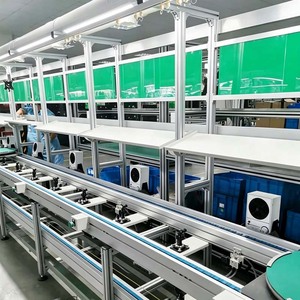
| WS-N O02 Automatic BLDC Line | Automotive BLDC & Auxiliary Motors | Fully Automated Industrial Network (MES-ready) | Automated magnet insertion, stator needle winding | Automotive cooling fans, EPS, window lifters |
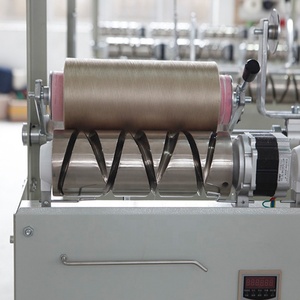
| Grooved Drum Motor Winding Machine | Brushed Stator & Armature Coils | Mechanical Cam + Grooved Drum Guide | High slot fill ratio, smooth wire arrangement | Universal appliance motors, power tool stators |
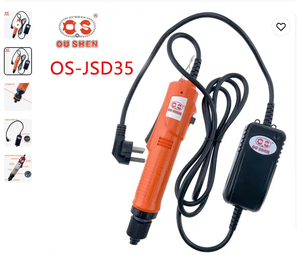
| STEELTREKS 30Nm Reaction Arm Tool | Line-wide Manual Assembly Stations | Zero-Gravity Mechanical Torque Arm | 30Nm max torque, zero operator wrist fatigue | Fastener tightening in casing assembly lines |
DC Motor Assembly Line Technology Trends (2025–2030)
Strategic evolutionary shifts transforming DC motor manufacturing from manual bench assembly to fully integrated, intelligent smart-factory ecosystems.
1. Transition from Flyer Winding to Multi-Tooth Needle Winding
As global industries transition from brushed motors to high-efficiency Brushless DC (BLDC) and Permanent Magnet Synchronous Motors (PMSM), stator manufacturing technology is undergoing a major transformation. Traditional flyer winding is increasingly replaced by multi-axis CNC needle winding systems that wind copper wire directly into internal stator slots.
- Slot fill ratios exceeding 65%, dramatically boosting power density.
- Reduced end-winding wire length, minimizing thermal loss and copper consumption.
- Direct wire termination onto pin headers for automated laser welding connection.
2. Integration of Industry 4.0 MES Tracing & Closed-Loop Inspection
Modern buyers require 100% component-level traceability across every step of assembly. High-end assembly lines engineered in Suzhou now incorporate high-speed machine vision systems, laser displacement sensors, and electrical test benches linked directly to central Manufacturing Execution Systems (MES).
- Real-time torque, wire tension, and welding resistance data logging.
- Automated sorting and rejection of out-of-spec rotors or stators.
- QR code and RFID tag tracking for complete batch history retrieval.
3. Automated Magnetic Tile & Magnet Insertion Robotics
Handling Neodymium (NdFeB) or Ferrite magnetic tiles demands extreme mechanical precision due to strong magnetic attraction forces and fragile ceramic structures. Advanced automatic lines integrate SCARA or 6-axis articulated robots equipped with magnetic isolation grippers.
- Automatic adhesive dispense with optical volume control.
- Precise magnetic tile alignment and thermal curing tunnel integration.
- Elimination of manual pinch hazards and magnetic contamination.
4. High-Precision Resistance & Fiber Laser Welding
Connecting enamel wire to commutator hooks or PCB terminals requires reliable low-resistance thermal bonding. Modern lines utilize dual-head spot welders or fiber laser welding modules that monitor voltage drop, peak temperature, and displacement in real-time.
- Zero false-weld rate achieved through dynamic resistance feedback.
- Clean thermal burn-off of enamel wire insulation without chemical stripping.
- High mechanical shear strength for high-RPM power tool armatures.
Future Procurement Trends for Overseas Motor Equipment Importers
How global manufacturing companies are navigating supply chain modularity, rapid tooling changeover, and localized technical support when buying from China.
Key Drivers Shaping B2B Motor Line Sourcing
Global buyers are no longer seeking isolated machinery; they are investing in scalable platform architectures that can adapt to changing product dimensions with minimal downtime.
Why Partner with Suzhou Haplin Automation?
With a dedicated facility in Xiangcheng District, Suzhou, Haplin integrates full-cycle R&D, precision CNC machining, electrical cabinet wiring, and software programming under one roof. Our engineering team evaluates your motor blueprints, coil turns, slot geometry, and production volume goals to engineer lines optimized for overall equipment effectiveness (OEE).
DC Motor Production Line Procurement & Technical FAQ
Answers to critical questions asked by procurement managers, process engineers, and factory directors before placing an automated machinery order.
Which motor types and size ranges can Haplin automated production lines process?
Suzhou Haplin designs turnkey automated equipment for both Brushed DC (BDC) motors and Brushless DC (BLDC) / Permanent Magnet Synchronous Motors (PMSM). Our machinery covers armature outer diameters from 10mm micro-motors up to 150mm industrial and EV traction stators. Specific configurations accommodate diverse slot numbers (e.g., 3-slot, 12-slot, 18-slot, 24-slot) and varying stack heights, wire gauges (0.05mm to 2.0mm copper wire), and magnet tile geometries.
What technical data is required to obtain a detailed line proposal and quote?
To provide an accurate engineering proposal and cycle time simulation, our application engineers require:
- 2D/3D technical drawings of the motor lamination stack, rotor armature, stator, and assembled motor housing.
- Winding specifications: wire diameter, number of turns per slot, connection diagram (Star/Delta or commutator hook pitch).
- Target production capacity: required output per shift or target takt time (e.g., 10 seconds per completed unit).
- Desired automation level: standalone manual loading machines, semi-automatic cell lines, or 100% fully automated robotic lines.
- Local factory power standards (e.g., 380V 50Hz, 480V 60Hz) and safety compliance rules (CE, UL, ISO).
Can a buyer start with standalone machines and integrate them into a fully automated line later?
Yes, absolutely. Haplin's equipment portfolio is modular by design. Overseas manufacturers often begin with standalone single-function units—such as an automatic slot paper inserter, a high-speed rotor winding machine, or a commutator spot welder—to solve immediate production bottlenecks. As your sales volumes grow, these standalone units can be retrofitted with standardized conveyor tracks, robotic pick-and-place manipulators, and centralized master PLC units to form a fully continuous assembly line.
How does your factory verify equipment quality and line performance prior to export?
We execute a rigorous Factory Acceptance Testing (FAT) protocol at our Suzhou facility before shipping any machinery:
- Dry Run Testing: Continuous mechanical operation for 48+ hours to verify movement smoothness and sensor reliability.
- Sample Production Run: Running real production trials using customer-supplied core laminations, shafts, commutators, and copper wire to calculate exact Cpk, OEE, and yield rates.
- Acceptance Verification: International clients can witness FAT in-person at our factory or remotely via high-definition live video feeds with real-time sensor readout validation.
What after-sales service and remote engineering support are available for international orders?
We provide complete international life-cycle support, including comprehensive English operation manuals, electrical schematics, software backup files, and spare parts cataloging. All automated lines feature built-in remote industrial routers for secure diagnostic connection by our software team. If field assistance is needed, our experienced commissioning engineers can be deployed globally for on-site installation, line integration, and operator training.
What is the typical lead time for a fully customized DC motor assembly line?
Standard single machines (such as grooved drum winders or benchtop torque reaction arms) are typically delivered in 25 to 35 business days. Customized semi-automated cell units require 45 to 60 days. Fully automated turnkey BLDC/Brushed motor lines take approximately 75 to 90 business days, depending on mechanical complexity, custom fixture requirements, and third-party inspection system integrations.
Ready to Optimize Your DC Motor Assembly Yield & Productivity?
Submit your product drawings, motor specifications, and annual capacity target today. Our senior automation engineers in Suzhou will deliver a customized line layout proposal, cycle time estimate, and budget quotation within 24 hours.