Featured Motor Stator Production Systems
Engineered by Suzhou Haplin Automation Equipment Co., Ltd. for High Precision, Scalable Output, and Zero-Defect Manufacturing
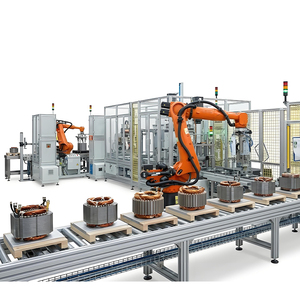
Automated NEV Motor Hairpin Stator Production Line
High-speed customizable hairpin assembly line with visual inspection, 3D laser profiling, and automated twist-welding modules for New Energy Vehicles.
View Line Details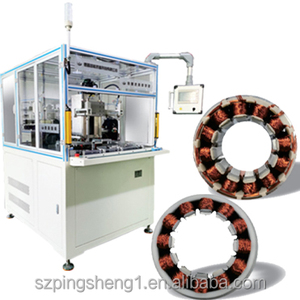
Large Motor Stator Coil Winding Production Line
Heavy-duty automatic winding system built for industrial copper wire stators, providing high torque coil insertion and precise slot fill control.
View Line Details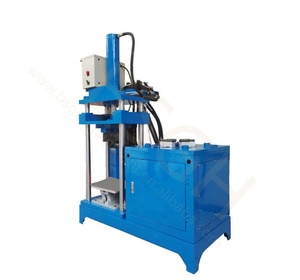
Electric Motor Stator Coil Final Forming Machine
Precision hydraulic expansion forming machine suitable for both copper and aluminum wire motor stator overhang shaping and insulation protection.
View Machine Details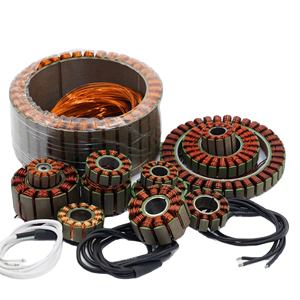
Custom Brushless Motor Stator Coil Winding Assembly Kit
Precision silicon steel laminations paired with high-density BLDC stator windings, 10mm shaft integration, and customized coil geometry.
View Kit Details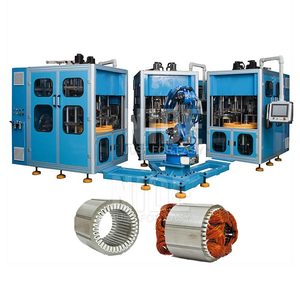
Automatic Stator Multi-Station Winding Production Line
Fully integrated multi-spindle automatic stator winding machine featuring servo tensioners, auto-crimping, and rapid tooling changeover.
View Line Details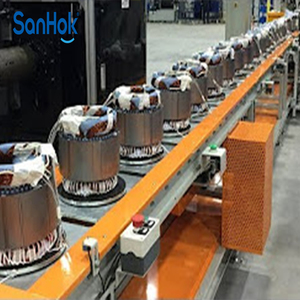
Semi-Auto Motor Stator Assembly & Testing Line
CE-certified modular semi-automatic stator assembly station configured for 220V/380V operating environments with lean workflow integration.
View Line Details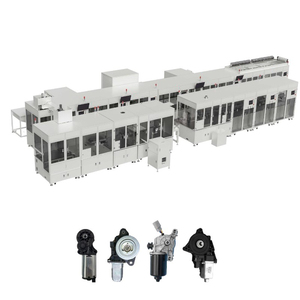
Automotive Rotor & Stator Automated Production Line
Turnkey dual-system assembly line connecting paper inserting, needle winding, trickling, and dynamic balancing for automotive micro-motors.
View Line Details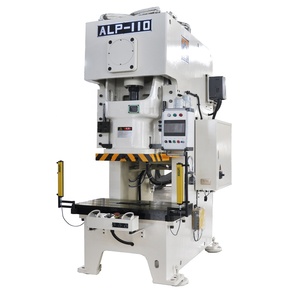
Full Stator Lamination & Assembly Line with Pneumatic Press
Heavy-duty stator manufacturing line integrated with high-precision feeder molds, pneumatic power presses, and automated stacking tools.
View Line Details1. Corporate Strengths: Suzhou Haplin Automation Equipment Co., Ltd.
Founded in November 2012 in the advanced industrial zone of Weitang Town, Xiangcheng District, Suzhou, Suzhou Haplin Automation Equipment Co., Ltd. (Haplin) has emerged as a premier manufacturer of specialized automated production lines and high-precision machinery for global electric motor producers. Operating with a robust registered capital of RMB 15.2 million, a dedicated workforce exceeding 70 highly skilled engineers and technicians, and an annual equipment delivery value exceeding RMB 65 million, Haplin seamlessly combines advanced R&D, precision machining, system integration, and global field support under a single unified engineering methodology.
Unlike commercial resellers or equipment integrators lacking core machinery fabrication capabilities, Haplin maintains total control over mechanical design, PLC software development, CNC precision fixture tooling, and quality verification. Our core product portfolio spans seven major equipment categories:
- Brushless Motor (BLDC) Complete Production Lines: Fully automated, closed-loop conveyor systems for high-slot-fill stators and rotors.
- Automotive Hairpin Stator Production Units: Next-generation 2D/3D wire bending, laser stripping, insertion, twisting, and TIG/laser welding stations.
- Inner Winding & Outer Winding Stator Units: Multi-spindle servo needle winders and flyer winders with active wire tension control.
- Brushed Motor Armature & Stator Lines: High-speed insulation paper insertion, flyer winding, commutator spot welding, and trickle varnishing.
- Magnetic Tile & Permanent Magnet Assembly Lines: Precision gluing, tile insertion, magnetizing, and flux detection systems.
- Automated Testing & Quality Inspection Hubs: In-line surge testing, partial discharge inception voltage (PDIV) testing, resistance measurement, and vision inspection systems.
Zero-Defect Quality Control
Every stator assembly line undergoes a 72-hour continuous trial run in our Suzhou factory using customer-supplied laminations and magnet wire to verify takt time and CPK value before shipment.
Rapid Tooling Changeover
Designed with modular quick-change fixture heads, servo-adjusted stack height positioning, and recipe-driven PLC controls, enabling stack-height changeovers in under 15 minutes.
2. Whitepaper: Anatomical Modules of a Modern Automated Stator Line
Producing a high-efficiency electric motor stator requires harmonious integration of mechanical force, electrical insulation integrity, and precision wire placement. In industrial electric motors, New Energy Vehicles (NEVs), power tools, and home appliances, the stator production process is divided into seven critical automated phases:
Phase A: Insulation Paper Inserting (Slot Liner Placement)
The lamination stack is automatically indexed while insulation paper (such as Nomex, NMN, or DMD) is fed from a continuous roll, folded, cut, and pushed into the stator slots. Modern Haplin paper inserters achieve insertion speeds up to 0.5 seconds per slot with zero edge tearing, ensuring creepage distances strictly comply with IEC 60034 standards.
Phase B: High-Density Winding (Direct Needle Winding vs. Flyer Winding)
Depending on whether the stator geometry features concentrated or distributed windings, our equipment applies targeted motion control algorithms:
- Needle Winding for BLDC Inner Stators: CNC-guided needle nozzles traverse directly inside the stator core bore, laying enameled copper wire tightly around individual tooth bobbins. Closed-loop tension control units prevent micro-cracks in the enamel insulation.
- Flyer Winding & Coil Insertion for AC/Induction Stators: Copper coils are wound onto precision tooling forms and transferred into the stator slots via servo-driven insertion blades simultaneously with slot wedges.
Phase C: Intermediate Forming & Overhang Shaping
As copper coils are inserted, end-windings flare outward. Hydraulic and pneumatic expanding dies compress the coil heads both axially and radially. This step guarantees that the stator end-turns clear the motor end-bells during final casing assembly while maintaining uniform magnetic phase distribution.
Phase D: Automatic Lacing & Phase Insulation
Inter-phase insulation sheets are automatically positioned between phase coils before a dual-needle lacing head ties the end-windings with high-tensile polyester cord. Servo-driven lacing guarantees uniform cord tension, preventing phase-to-phase short circuits under thermal vibration.
Phase E: Terminal Wire Stripping, Crimping & Busbar Welding
Lead wire ends are mechanically or laser-stripped to remove insulation enamel, inserted into copper terminals or busbar slots, and fused using resistance welding, micro-TIG, or fiber laser welding. In-line electrical resistance checks confirm metallic bonding integrity.
Phase F: Resin Impregnation & Trickle Varnishing
To eliminate air voids, enhance thermal conductivity, and lock coils against mechanical vibration, stators are preheated, trickled with solventless resin or epoxy, and cured. Automated trickle systems maximize resin retention while keeping the outer stator lamination bore completely clean.
Phase G: Automated Electrical Acceptance Testing (EOL Station)
Before leaving the production line, 100% of stators undergo automated End-of-Line testing, evaluating DC Resistance, Insulation Resistance (IR), AC/DC Hi-Pot breakdown, Surge Voltage, and Partial Discharge Inception Voltage (PDIV).
| Stator Technology Type | Typical Slot Fill Factor | Primary Target Application | Key Line Advantages | Automation Complexity |
|---|---|---|---|---|
| Distributed Winding (Flyer & Inserter) | 45% - 58% | HVAC Compressors, Industrial Pumps, Fans | Low tooling cost, fast cycle times, high flexibility | Moderate (Semi-to-Full Auto) |
| Concentrated Needle Winding (BLDC) | 55% - 68% | Power Tools, Drone Motors, Servo Motors | Short coil heads, low copper loss, compact envelope | High (Multi-Axis Servo CNC) |
| Hairpin / I-Pin Winding (EV Drive) | 70% - 78%+ | NEV Traction Motors, E-Bikes, Heavy Duty EV | Superior thermal dissipation, high power density | Very High (Laser Welding & 3D Vision) |
3. Strategic Procurement Trends in Global Stator Manufacturing
Global original equipment manufacturers (OEMs) and Tier-1 automotive suppliers are undergoing a structural shift in how they evaluate and procure motor stator production machinery from China. Key purchasing criteria have evolved beyond initial capital expenditure (CAPEX) to encompass holistic performance indicators:
Trend 1: Migration toward High Slot Fill Factors & Hairpin Stators
With electric vehicles requiring power densities exceeding 4.5 kW/kg, the market demand for Hairpin (flat wire) stator lines has surged. China’s manufacturing ecosystem, led by innovators like Suzhou Haplin, has bridged the technological gap in 3D wire twisting, laser enamel stripping, and optical seam tracking, delivering hairpin automation at a fraction of Western European machinery costs.
Trend 2: Integration of MES & Industrial IoT (Industry 4.0)
Modern stator production lines can no longer operate as isolated islands of automation. Buyers now require native OPC-UA protocols, Ethernet/IP connectivity, and seamless integration with Manufacturing Execution Systems (MES). Haplin production lines capture real-time winding tension log data, lacing pitch forces, surge test waveforms, and laser weld energy profiles tied to unique QR codes laser-etched onto each stator core.
Trend 3: Flexibility vs. Ultra-High Speed Takt Times
While dedicated high-volume automotive lines focus on achieving takt times of less than 60 seconds per stator, industrial and appliance motor makers require flexible lines capable of handling multiple lamination diameters (e.g., Frame sizes 55 to 110) on a single line. Quick-change modular pallets, automated stack height adjustment, and recipe selection via HMI touchscreens have become mandatory purchasing requirements.
4. Future Technology Roadmap for Motor Stator Production (2025-2030)
As high-voltage architectures (800V and 1200V Silicon Carbide drives) become mainstream in electric transport and industrial automation, stator production processes must evolve to overcome severe electrical stress. The future of stator line manufacturing is being shaped by three breakthrough advancements:
In-Line Partial Discharge (PD) Testing
Eliminating latent insulation defects caused by micro-cavities in enameled wire before impregnation, preventing premature stator burnout in high-voltage 800V SiC inverter drives.
AI-Driven Optical Quality Verification
Replacing manual operator visual checks with high-resolution 4K camera arrays and deep-learning algorithms to detect misaligned slot papers, crossed copper wires, and weld porosity instantly.
Frequently Asked Questions by Global Buyers
Clear Answers regarding Equipment Customization, Delivery Lead Times, Factory Acceptance Testing, and Global Technical Support
Which specific motor types can Haplin automated stator lines manufacture?
What technical documentation and sample parameters are required to obtain a detailed line quotation?
How does Suzhou Haplin handle Factory Acceptance Testing (FAT) for international customers?
Can we purchase standalone winding or forming machines first and integrate them into a fully automated conveyor line later?
What after-sales service and installation support are available for overseas factories?
How do Haplin stator lines prevent copper wire insulation damage during high-speed winding?
Ready to Optimize Your Stator Production Line?
Consult with Suzhou Haplin’s senior automation engineers today. Receive a customized technical proposal, station layout drawing, and ROI analysis within 24 hours.
Send an Inquiry