Advanced Electric Motor Manufacturing Solutions
Explore our flagship automated production lines, precision stator inner-winding units, and high-speed armature processing equipment engineered for global industrial leadership.
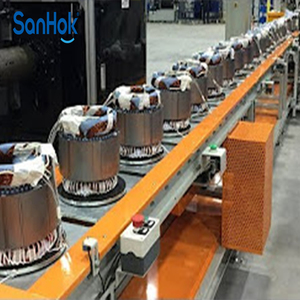
Semi-automatic Agricultural Machinery Motors Assembly Line
Explore Specification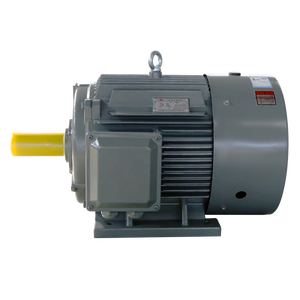
IE3 225M 6 Pole ISO 9001 Induction Motor Production Line
Explore Specification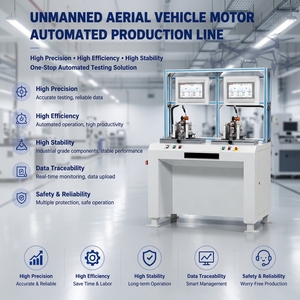
Automatic Brushless DC Motor Manufacturing Line for Drone
Explore Specification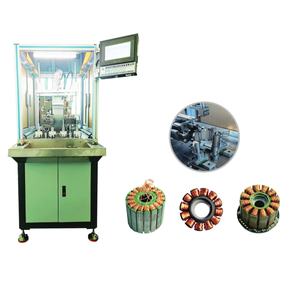
BLDC Motor Rotor Stator Automatic Inner Winding Machine
Explore Specification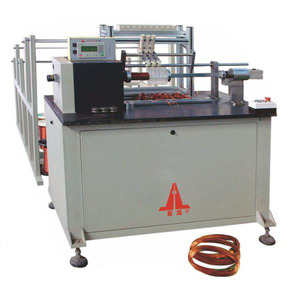
Electric Motor Armature Fully Automatic Production Line
Explore Specification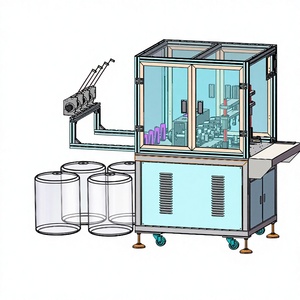
Automatic 4-Station PLC Brushless Motor Winding Machine
Explore Specification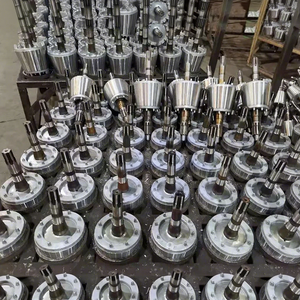
Electric Motor Rotor & Stator Automatic Assembly System
Explore Specification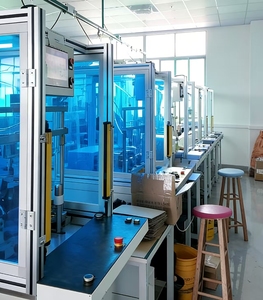
150MM Center Height Brushless Motor Winding Machine PLC Patented
Explore SpecificationCorporate Authority & Engineering Footprint
Founded in November 2012 in the manufacturing heartland of Suzhou, Jiangsu, Suzhou Haplin Automation Equipment Co., Ltd. has established itself as an elite OEM/ODM innovator in electric motor automation equipment. Operating with a registered capital of RMB 15.2 million and spanning modern production facilities, Haplin integrates R&D, high-precision machining, control system programming, and global after-sales engineering.
Tailored Customization & Turnkey Reliability
Haplin eliminates procurement bottlenecks by providing application-specific machine configurations rather than rigid catalogue items. Whether handling brushed micro-armatures, heavy-duty IE3/IE4 industrial stators, or ultra-compact high-RPM FPV drone BLDC stators, our engineering staff custom-builds fixtures, flyer winding paths, pin insertion heads, and automated test stations.
Inquire Now to request custom layout engineering blueprints.
Technical Whitepaper: Engineering Next-Generation Motor Production Lines in China
The global transition toward high-efficiency electrification—spurred by automotive EV auxiliary motors, HVAC inverter systems, industrial robotics, cordless power tools, and unmanned aerial vehicles (UAVs)—has fundamentally transformed electric motor manufacturing requirements. Modern production lines must deliver higher slot fill factors, minimal thermal losses, absolute dimensional consistency, and complete digital traceability (Industry 4.0 MES compatibility) while significantly reducing per-unit cycle time (takt time).
1. Architectural Breakdown of Automated Brushless DC (BLDC) Motor Assembly Lines
BLDC motor manufacturing presents distinct engineering challenges compared to traditional brushed architecture due to the internal placement of stators (inner winding) or external rotor shells requiring magnetic tile bonding and precision dynamic balancing. A state-of-the-art BLDC production line incorporates four main automated modules:
- Stator Core Preparation & Insulation Module: Automated slot paper insertion machines or continuous powder coating lines apply high-dielectric insulation to prevent insulation breakdown under high thermal stress. Precision servo feeding ensures zero slot margin deformation.
- Multi-Axis Servo Needle Winding Module: Utilizing multi-station needle winding technology controlled by high-speed CNC controllers, copper wire is routed directly into internal stator slots. Advanced closed-loop tension control units keep wire tension fluctuation within ±0.1 N, eliminating wire stretching, enamel damage, or phase short-circuits.
- Wire Termination, Fusing & Trickle Varnishing: Automatic wire stripping, terminal pin wrapping, and resistance spot welding guarantee micro-Ohm contact consistency. Subsequent UV curing or trickle varnishing stabilizes copper windings against vibration-induced mechanical fatigue.
- Rotor Magnet Assembly & Dynamic Balancing: Automated pick-and-place robotics position neodymium magnets onto the rotor stack, followed by structural adhesive dispensing, magnetizing, and dynamic balancing (achieving ISO 1940 Grade G2.5 tolerance).
2. Advanced Brushed Motor & Armature Line Engineering
Despite the rapid growth of brushless technology, brushed DC motors remain critical for high-torque cost-effective applications such as automotive wiper systems, seat adjusters, agricultural machinery, and heavy power tools. Haplin’s fully automated armature production lines seamlessly link key manufacturing operations:
The sequence starts with automatic core stacking and shaft pressing under closed-loop force-displacement monitoring. Slot paper is inserted at rates exceeding 1.2 seconds per slot. Winding is performed via high-speed double-flyer winders operating at speeds up to 3,000 RPM, coupled with automatic commutator hook fusing via hot-stacking or inverter spot welding. Commutator diamond-tool turning, mica undercutting, automated dynamic balancing, and integrated End-of-Line (EOL) testing (testing surge voltage, HIPOT insulation resistance, and inter-turn short circuits) complete the sequence.
Comparative Technical Matrix: Production Line Architectures
| Performance Criteria | BLDC Stator Inner Winding Line | Brushed Armature Automatic Line | Industrial Heavy-Duty Line (IE3/IE4) |
|---|---|---|---|
| Target Takt Time | 8.0 - 15.0 sec / unit | 4.5 - 8.0 sec / unit | 45.0 - 90.0 sec / unit |
| Automation Level | Fully Automated / Industry 4.0 MES | Fully Automated Inline System | Semi-Automated / Flexible Cell |
| Wire Tension Control | Closed-loop Servo Control (±0.1N) | Magnetic / Friction Tensioner | Pneumatic Closed-Loop Tensioner |
| Winding Technology | Multi-station CNC Needle Winding | High-Speed Twin Flyer Winding | Vertical Coil Insertion / Flyer |
| Quality Control Checkpoint | 3D Vision + EOL Resistance/Surge | Commutator TIR + Dynamic Balance | Phase Surge, HIPOT & Core Loss |
| Changeover Flexibility | Digital Recipe Switch (< 15 mins) | Modular Tooling Swap (< 30 mins) | Adjustable Tooling (< 45 mins) |
Future Technical Trends in Global Motor Procurement (2025–2030)
Procurement directors and plant managers evaluating capital investments in motor assembly equipment must align with several macro-technological shifts currently redefining the global manufacturing matrix:
1. Hairpin Winding Integration
Driven by electric vehicle traction motors and high-power industrial equipment, hairpin winding technology replaces round wire with flat rectangular copper conductors, achieving slot fill factors above 85% and superior thermal conductivity.
2. Edge Computing & AI Vision
Real-time optical inspection powered by deep-learning vision systems now analyzes coil overlapping, insulation paper positioning, and weld seam geometry in real-time, instantly ejecting non-conforming parts before value-added steps.
3. Modular Rapid Changeover
With product life cycles shortening, factory lines must accommodate multiple stack lengths, wire gauges, and slot numbers on a single chassis. Haplin’s servo-driven parameter adjustment allows changeover times under 15 minutes.
To keep pace with these developments, global buyers require supply partners who offer clear design validation processes, rigorous factory acceptance testing (FAT), and reliable long-term spare parts availability. Suzhou Haplin Automation meets these requirements by maintaining strict internal quality standards and providing extensive engineering documentation with every installation.
Frequently Asked Questions for Global Motor Line Procurement
Clear answers to help procurement engineering teams evaluate technical feasibility, production timeline, quality verification, and factory deployment.
What parameters are required to receive a formal engineering proposal and quotation?
To formulate an optimized station layout and cycle time simulation, our application engineers require: (1) Detailed 2D/3D motor component drawings (stator/rotor lamination dimensions, slot numbers, shaft details), (2) Winding specifications (wire diameter, turn counts, resistance limits, connection diagram), (3) Desired production capacity (takt time or output per shift), (4) Automation preferences (standalone cells vs fully automated line), and (5) Local factory power requirements (e.g., 220V/380V/440V at 50/60 Hz).
How does Haplin ensure winding quality and eliminate insulation wire damage?
We integrate multi-axis CNC servo motion controllers coupled with closed-loop active wire tension feedback units. The wire path utilizes ceramic and polished tungsten carbide guides, maintaining ultra-smooth guiding without abrupt directional changes. Dynamic wire tension monitoring automatically halts operation if tension exceeds designated thresholds, preventing enamel abrasion or copper necking.
Can line configurations accommodate modular upgrades as production volume expands?
Yes. Haplin builds machines on modular structural frames using standardized communication protocols (such as Industrial Ethernet/Profinet). Clients can begin with semi-automatic standalone workstations (such as individual paper inserters, winders, and spot welders) and later integrate automated pallet conveyor lines, pick-and-place gantry systems, or robotic loading units as production scales up.
What Factory Acceptance Testing (FAT) protocols are followed before overseas shipment?
Prior to dispatch from our Suzhou facility, every line undergoes a full continuous production test run using customer-supplied raw materials or laminations. We verify CPK capability values, cycle time compliance, safety interlocking, noise levels (< 75 dB), and EOL test accuracy. International customers can participate in acceptance in person or review live video verification and detailed data logs.
What post-installation support and technical training are provided globally?
Haplin supplies complete English technical documentation, circuit schematics, mechanical drawings, and PLC software backups. We offer comprehensive remote diagnostic assistance via secure industrial VPN connections, as well as on-site deployment options where senior technicians perform installation, commissioning, tool setting calibration, and operator training.
Transform Your Electric Motor Manufacturing Line Today
Partner with China’s premier motor automation expert. Contact our engineering team in Suzhou for a complete technical evaluation, cycle time calculation, and commercial quotation tailored to your operational targets.