Next-Generation Electric Motor Manufacturing Automation
As global industrial electrification, New Energy Vehicles (NEVs), smart home appliances, and high-precision power tools demand higher power density and strict energy efficiency compliance, electric motor production lines are transitioning from semi-automated assembly to ultra-precise, digitalized turnkey manufacturing systems.
Top Motor Assembly Equipment & Turnkey Systems
Engineered for high volume, zero-defect production across automotive, industrial pump, motorcycle, and specialized electromechanical hardware applications.
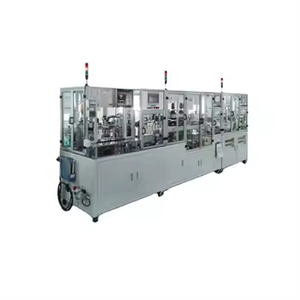
Automatic Car Motor Assembly Line
Integrated multi-station line designed for automotive traction and auxiliary micro-motors. Features automated pallet transfer, vision alignment, housing shrink-fitting, and end-of-line electrical testing.
Explore Specs →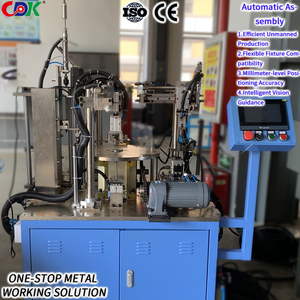
Custom-Made Automatic Assembly Press Machine for Pump & Engine Core Components
Engineered for pump motors, gearboxes, and engine sub-assemblies. Delivers precise press-fitting force control up to 50kN with continuous distance-displacement curves.
Explore Specs →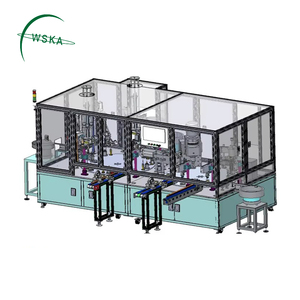
Automotive Flexible Member Assembly Machine with PLC Controls
High-speed flexible sub-component insertion system featuring industrial PLC automation, precision indexing tables, and multi-axis robotics for delicate automotive hardware.
Explore Specs →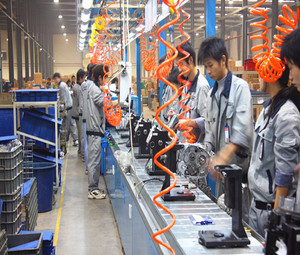
Motorcycle Engine Assembly Production Line Equipment
Heavy-duty conveyorized production line for internal combustion and electric motorcycle powertrain assemblies. Combines automated torqueing, leak testing, and part insertion.
Explore Specs →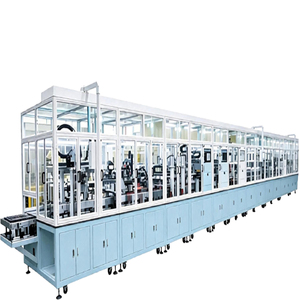
High Precision NEV Flat Wire (Hairpin) Stator Assembly System
Next-generation hairpin motor stator production cell. Integrates copper pin forming, automatic slot insertion, wire twisting, laser stripping, and TIG/laser welding inspection.
Explore Specs →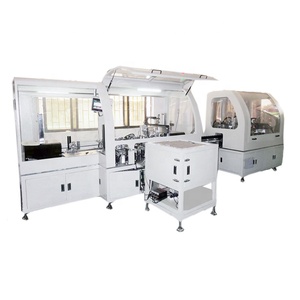
Fully Automatic Motor Case & Housing Assembly Machine
Automated shell press, bearing insertion, and magnetic ring mounting station for electric motor enclosures, delivering low noise and perfectly aligned axis concentricity.
Explore Specs →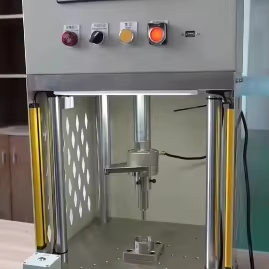
Servo Press Fitting Machine for Motor Rotor & Stator Cores
High-precision 2 kW servo press system compatible with 220V/380V power supplies. Features micrometer-level stroke control, anti-buckling safety logic, and real-time data output.
Explore Specs →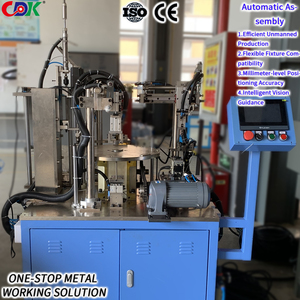
Automatic Assembly Machine for Non-Standard Mechanical Components
Versatile automatic assembly equipment designed for non-standard plug connectors, pump engine gears, and specialized electromechanical hardware modules.
Explore Specs →Engineering Principles of High-Throughput Motor Manufacturing
Designing an optimal motor assembly production line requires balancing mechanical kinematics, electrical insulation parameters, electromagnetic balance, and modular scalable tooling.
Stator Slot Insulation & Paper Insertion
Microscopic tearing of insulation paper during high-speed insertion causes phase-to-phase and phase-to-ground short circuits. Modern automated paper inserters utilize servo-driven feed mechanisms that pre-form insulating film (NOMEX, DMD, or PET) with exact edge folding tolerances (±0.1mm), eliminating microscopic mechanical stress prior to coil winding.
High Fill-Factor Needle & Flyer Winding
Maximizing copper slot fill factors (often exceeding 65% for round wire and 75% for flat hairpin wire) reduces resistance losses and increases continuous torque output. Advanced BLDC inner-winding machinery employs multi-axis CNC tension controllers to eliminate wire stretching, scraping of enamel coating, and uneven turn distribution.
Precision Servo Pressing & Shaft Insertion
Conventional hydraulic presses introduce force fluctuations and thermal variability, risking rotor core lamination buckling or shaft bending. Electric servo-press integration offers closed-loop force-displacement curves (sampling at >1000Hz), verifying that every stator stack and shaft seating satisfies strict micron-level depth criteria.
Comparative Analysis of Motor Assembly Architectures
| Architecture Type | Typical Slot Fill Factor | Takt Time (Per Unit) | Automation Level | Primary Industrial Applications |
|---|---|---|---|---|
| Brushed DC Motor Line | 40% – 52% | 4.0 – 8.0 Seconds | Semi to Fully Automatic | Power tools, automotive wipers, window lifters, starter motors. |
| BLDC Inner-Winding Line | 55% – 68% | 12.0 – 25.0 Seconds | Fully Automated CNC | HVAC blowers, drones, cordless garden machinery, home robotics. |
| NEV Flat Wire (Hairpin) Line | 70% – 82% | 45.0 – 75.0 Seconds | Robotic Cell Integration | Electric Vehicle (EV/PHEV) main traction PMSM powertrains. |
| Automotive Micro-Actuator Line | 45% – 58% | 3.0 – 6.0 Seconds | High-Speed Cam/Servo Line | Electronic throttle bodies, ABS brake pumps, seat adjustment motors. |
Future Procurement Trends in Motor Assembly Machinery
As manufacturing supply chains globalize, plant directors and procurement teams must align equipment investments with strategic technological shifts expected over the next decade.
Key Strategic Sourcing Drivers for Global Buyers:
- Flexible Tooling & Rapid Model Changeover: Modern production facilities require lines capable of switching between multiple motor stack heights and rotor diameters in under 15 minutes via digital recipe selection and quick-change mechanical fixturing.
- Closed-Loop Quality Control & Traceability: Integration with Manufacturing Execution Systems (MES) via OPC-UA or MQTT protocols ensures every individual motor's winding resistance, surge test waveform, press-fitting curve, and barcode data are recorded for 10+ years.
- Flat Wire (Hairpin) Stator Demands: The rapid transition toward 800V EV powertrains is pushing equipment suppliers to master laser insulation stripping, 3D hairpin bending, and automatic laser welding inspection.
- Energy Efficiency Standards (IE4 / IE5 Compliance): Equipment must deliver tighter mechanical air gap tolerances between rotor magnets and stator teeth to minimize cogging torque and stray field losses.
The ROI Blueprint for Equipment Sourcing
Evaluating a Chinese assembly equipment supplier goes beyond initial capital expenditure (CAPEX). High-performing manufacturing operations measure:
Suzhou Haplin Automation Equipment Co., Ltd.
Founded in November 2012 in Suzhou, Jiangsu Province, China, Suzhou Haplin Automation Equipment Co., Ltd. is a high-technology manufacturing enterprise specializing in custom automated production lines for electric motor manufacturing. With a registered capital of RMB 15.2 million, an operating team of over 70 engineering specialists, and an annual equipment output exceeding RMB 65 million, Haplin integrates theoretical R&D, precision mechanical fabrication, system integration, and global after-sales commissioning.
Custom Engineering R&D
Our dedicated engineering department builds custom tooling, automatic coil winding mandrels, and dynamic servo fixtures tailored specifically to customer stack drawings and wire gauges.
Strict Quality Auditing
Every complete line undergoes rigorous 72-hour continuous trial runs, insulation resistance validation, surge impulse testing, and optical vision inspection prior to shipment.
Turnkey Global Service
We support international buyers with complete English technical documentation, remote PLC diagnostics, overseas installation, commissioning, and operator training.
Motor Assembly Procurement FAQ
Clear technical insights to assist plant engineering managers and international sourcing directors.
Which motor types can Haplin automated production lines assemble?
Our custom machinery accommodates both Brushed DC motors (armature winding, paper insertion, spot welding, shell assembly) and Brushless DC (BLDC) motors (inner/outer stator winding, magnet rotor assembly, sensor board mounting, and casing press-fit). Furthermore, we manufacture specialized lines for New Energy Vehicle (NEV) flat-wire hairpin stators, motorcycle engine sub-assemblies, and industrial pump motor cores.
What technical specifications are required to receive an accurate engineering proposal?
To provide a tailored 3D station layout and formal proposal, our engineering team requires: (1) 2D/3D component drawings of your rotor, stator, and housing; (2) Wire diameter, turn counts, and insulation specs; (3) Target Takt time or daily output requirements; (4) Desired level of automation (semi-automatic standalone vs. fully automatic connected line); and (5) Local factory power standards (e.g., 380V/415V/480V 50/60Hz).
Can we begin with standalone single stations and upgrade to a fully integrated line later?
Yes. Our modular control architecture allows growing manufacturers to start with individual bottleneck stations—such as automated stator winding, rotor spot welding, or servo press fitting—and subsequently connect them via automated belt conveyors, robotic pick-and-place units, and centralized MES software as production volumes expand.
How are equipment accuracy and quality verified before overseas shipment?
Every system undergoes a Factory Acceptance Test (FAT) at our Suzhou production facility using your supplied raw materials or laminations. Overseas buyers are invited to conduct live on-site inspection or participate in real-time high-definition video acceptance trials verifying Takt time, mechanical tolerances, first-pass yield (FPY), and electrical safety parameters before packing.
What international safety standards and compliance certifications are supported?
All machinery built by Suzhou Haplin can be engineered to satisfy CE directives, ISO 9001 quality management benchmarks, and local OSHA/UL electrical enclosure safety requirements, complete with light curtain safeguarding, interlocked safety doors, emergency stop relays, and low-voltage control circuits.