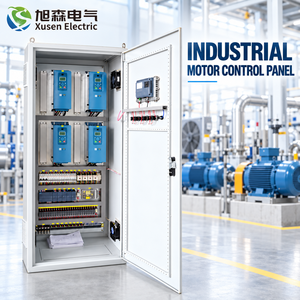
Industrial Stator & Motor Production Machinery Showcase
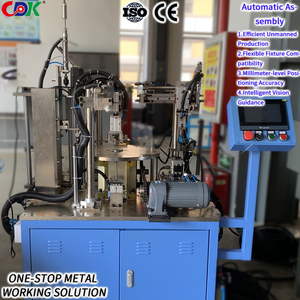
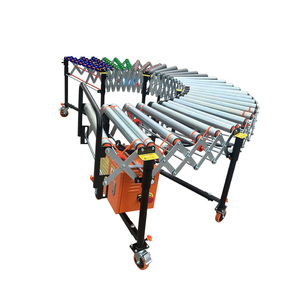
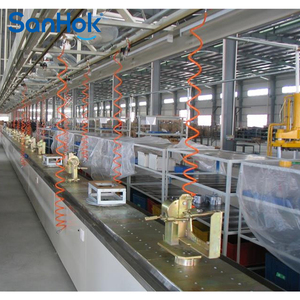
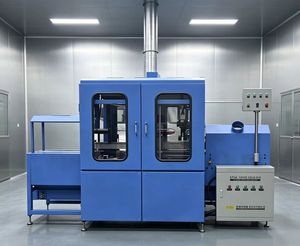
Explore our high-performance custom stator assembly modules, intelligent control panels, robot screw locking systems, and dedicated conveyor lines designed for automated motor manufacturing.
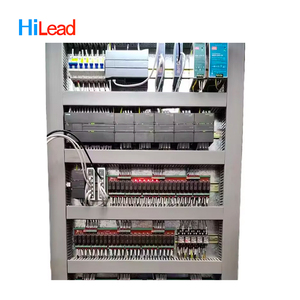
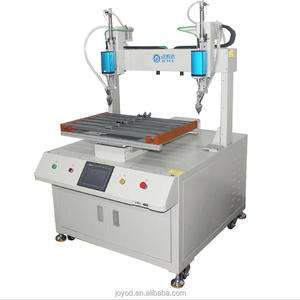
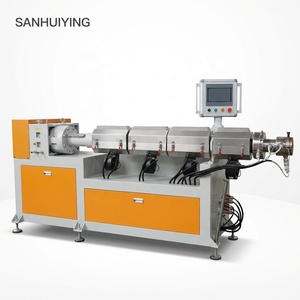
Executive Summary: The Evolution of Stator Manufacturing in China
As the global market transitions rapidly toward high-efficiency electric motors, clean energy traction, automated mobility, and smart home appliances, the demand for precision-engineered stator assembly lines has reached an unprecedented peak. As a premier China wholesale automatic stator production line supplier and wholesaler, Suzhou Haplin Automation Equipment Co., Ltd. (founded in November 2012) stands at the forefront of this industrial metamorphosis.
Modern electric motor manufacturing demands strict compliance with international efficiency standards, such as IEC IE4 and IE5 hyper-efficiency classes. Achieving these benchmarks requires stator production technology that guarantees zero copper wire damage, optimized slot fill factors, minimal harmonic iron losses, and high dimensional repeatable accuracy. This technical white paper explores the critical engineering methodologies, future procurement trends, and core technological advancements driving modern automatic stator assembly lines worldwide.
Information Gain Insight: Advanced needle winding technology combined with real-time closed-loop tension servo control can increase stator copper slot fill factors from 45% (conventional manual methods) to over 78%, directly reducing internal resistance and heat generation while increasing motor power density by up to 25%.
Technical Architecture of Turnkey Automatic Stator Production Lines
An automated stator production line is a fully integrated cyber-physical manufacturing ecosystem designed to transform raw silicon steel laminations, copper magnet wire, and insulation materials into fully tested, varnished, and ready-to-assemble stator assemblies. The line comprises several automated sub-modules synchronized via PLC-driven high-speed fieldbus architectures (such as EtherCAT or PROFINET):
1. Automated Stator Core Lamination Stacking & Riveting
Silicon steel laminations are automatically fed, indexed, and aligned. Depending on the motor topology (BLDC inner-rotor, BLDC outer-rotor, or traditional brushed AC/DC stators), lamination stacks are consolidated through high-precision interlock indexing, servo pressing, or automated TIG welding. In-line laser sensors inspect stack height and skew angle before advancing to paper insertion.
2. High-Speed Insulation Slot Paper Inserting
Insulation paper (Nomex, DMD, NMN, or PET) is automatically cut, formed into cuff channels, and inserted into stator slots at speeds under 0.5 seconds per slot. Digital servo control allows rapid, toolless changeovers for varying stack heights and slot numbers, preserving the dielectric integrity of the insulation layer.
3. Multi-Axis CNC Needle Winding & Flyer Winding Units
For Brushless DC (BLDC) inner-winding stators, multi-axis servo needle winding nozzles travel inside the narrow stator bore, placing magnet wire directly into targeted slots with precise layer winding. Tension controllers actively balance wire tension to eliminate wire stretch and insulation micro-cracking. For outer-winding stators or brushed stators, multi-head flyer winders execute synchronized coil placement at high RPMs.
4. Automatic Wire End Termination, Crimping, & Terminal Welding
Once winding is completed, lead wires are automatically routed through terminal boards, stripped, and attached to copper lugs or PCB headers. Advanced resistance spot welding or micro-pulse TIG welding systems bond wire leads, providing low-resistance electrical connections capable of withstanding severe thermal shock and vibration.
5. In-Line Lacing, Shaping, & End-Coil Forming
Both front and rear end-coils undergo servo-driven mechanical expansion and hydraulic press shaping to maintain strict dimensional clearance within the outer motor housing. Automated cord lacing units tie down coil ends to prevent operational magnetic vibration and acoustic noise.
6. Trickle Impregnation & Conformal Coating (Varnishing)
Stators undergo automated induction pre-heating, continuous trickle varnish application, and infrared/UV curing. This guarantees 100% resin penetration between winding turns, dispelling air pockets, elevating dielectric breakdown strength, and boosting thermal dissipation efficiency.
Performance Matrix: Manual vs. Semi-Auto vs. Haplin Fully Automatic Stator Lines
| Performance Metrics | Manual / Conventional Line | Semi-Automated Line | Haplin Turnkey Automatic Line |
|---|---|---|---|
| Target Cycle Time (Takt Time) | 120 - 180 sec / piece | 45 - 60 sec / piece | 12 - 25 sec / piece |
| Coil Slot Fill Factor | 35% - 45% | 50% - 60% | 68% - 78%+ |
| First-Pass Yield (FPY) | 88.0% - 92.0% | 94.5% - 96.5% | 99.2% - 99.8% |
| Operator Headcount Needed | 12 - 18 Operators | 5 - 8 Operators | 1 - 2 Supervisors |
| Quality Traceability | Manual paper log files | Basic barcode logging | Full MES/Industry 4.0 Cloud Integration |
Future Sourcing & Procurement Trends in Stator Production (2025–2035)
Global procurement teams and manufacturing vice-presidents face changing market dynamics. When evaluating China wholesale automatic stator production line suppliers and wholesalers, several major trends dominate capital equipment investment decisions:
1. Shift toward Hairpin & Flat Wire Stator Automation
While round-wire needle winding remains dominant for power tools, drone motors, and home appliances, electric vehicle (EV) powertrains and industrial servo drives are rapidly transitioning to hairpin (rectangular wire) stators. Hairpin technology offers higher slot fill ratios (>80%), lower AC copper losses at high frequencies, and superior heat extraction. Sourcing partners must now provide modular platforms capable of supporting paper insertion, hairpin bending, slot insertion, twist-forming, laser welding, and potting.
2. Demand for Rapid Multi-Product Digital Changeovers
High-mix low-volume (HMLV) production models are replacing rigid high-volume single-product lines. Modern stator lines must incorporate servo-driven programmable quick-change tooling. By selecting recipes on the HMI touch interface, mechanical positioners adjust slot depth, stack height, and guide nozzle positioning automatically in under 15 minutes, drastically reducing costly downtime.
3. 100% In-Line Non-Destructive Electrical Testing (NDT)
Zero-defect mandates in automotive and aerospace sectors require integrated electrical quality verification at every station. Modern automatic stator production lines incorporate automated Hipot testing, surge resistance testing, DC resistance measurement, insulation resistance verification, and partial discharge (PD) testing directly into the main indexer turntable prior to final varnishing.
4. Sustainable Energy Efficiency and Reduced Tooling Wear
Modern production equipment prioritizes energy recovery during rapid servo braking cycles. Intelligent lubricant misting and diamond-coated wire guide nozzles extend tool life, minimizing micro-scratches on enamel insulation and reducing long-term consumable replacement costs for wholesale equipment buyers.
Why Partner with Suzhou Haplin Automation Equipment Co., Ltd.?
Combining rigorous engineering expertise, comprehensive R&D facilities, and dedicated global customer service, Haplin delivers custom motor manufacturing solutions tailored to your operational targets.
10+ Years Dedicated Focus
Founded in Suzhou in November 2012, we specialize exclusively in electric motor manufacturing equipment, spanning brushed armatures, BLDC inner/outer stators, magnetic tile assembly, and fully automated line integrations.
Strong Engineering Team
With over 70 experienced engineers, technicians, and assembly specialists, we maintain full control over mechanical design, electrical PLC programming, software development, precision machining, and system commissioning.
Turnkey Customization
Every project starts with your physical motor samples or engineering CAD drawings. We design custom tooling, station layouts, and control logic to match your precise line speed, factory footprint, and budget.
High Annual Capacity & Quality
Achieving an annual output value exceeding RMB 65 million, our equipment undergoes rigorous internal test runs, multi-point calibration, and customer FAT acceptance before overseas shipment.
Global Operational Support
We provide full English technical documentation, operator training, remote PLC online diagnostic support, and rapid spare-parts delivery to ensure continuous 24/7 uptime for international motor manufacturers.
Industry 4.0 Connectivity
Our intelligent electronic control systems support MES connection, barcode/QR tracking per stator core, fault self-diagnostics, and real-time yield dashboards for modern smart factories.
End-to-End Manufacturing Capabilities
From initial design to field commissioning, our facility in Xiangcheng District, Suzhou is fully equipped to deliver turnkey solutions.
Precision CNC Machining Center
Our internal machining shop utilizes high-precision CNC mills and EDM wire-cut equipment to manufacture custom winding nozzles, paper forming dies, and clamping fixtures with tolerances within ±0.005mm.
Comprehensive Qualification & Testing
Every automatic production line runs thousands of trial cycles with customer-supplied laminations and wire before final factory sign-off, ensuring seamless deployment upon arrival.
Modular & Scalable Architecture
Start with individual standalone workstations—such as needle winders or paper inserters—and seamlessly upgrade to a fully robotic conveyor-linked line as your production volumes grow.
Dedicated Account Engineering
Direct communication with senior mechanical and software design engineers throughout the quotation, engineering design, assembly, FAT, SAT, and lifecycle warranty phases.
Frequently Asked Questions (FAQ) for Industrial Sourcing Engineers
Get immediate, technical answers to common questions regarding quotation inputs, delivery schedules, line customization, and factory acceptance procedures.
Which specific motor types and stator geometries can Haplin production lines support?
We engineer automated equipment for both Brushless DC (BLDC inner-rotor and outer-rotor) motors and traditional Brushed DC motors. Our equipment handles stator outer diameters ranging from micro-motors (Ø15mm) up to heavy industrial pump and traction motor stators (Ø300mm+), accommodating stack heights from 10mm to 250mm, and wire gauges from 0.08mm fine wire to 2.5mm heavy-duty magnet wire.
What technical parameter inputs are required to receive a detailed line proposal and RFQ quote?
To provide an engineered proposal and cycle time estimate, our technical team requires:
(1) 2D/3D CAD drawings of the stator core lamination stack;
(2) Magnet wire diameter, turn counts, and winding connection schematics (Star/Delta);
(3) Target output volume per 8-hour shift or target takt time;
(4) Available factory floor space layout and electrical grid voltage specs (e.g., 380V/415V/480V 50/60Hz);
(5) Desired level of automation (semi-automatic standalone vs. 100% continuous conveyor-linked line).
Can we start with standalone automated machines and integrate them into a full line later?
Yes, absolutely. Our equipment features modular mechanical bases and standardized communication protocols. Many clients begin by purchasing core bottleneck machines—such as a 4-station BLDC needle winder or an automated slot paper inserter. Later, as sales volumes expand, we supply robotic pallet transfer conveyors, auto-loading arms, and centralized PLC controls to unify the machines into a seamless, fully automated assembly line.
How does Suzhou Haplin ensure equipment quality and performance prior to international delivery?
Before shipping, all equipment undergoes rigorous internal debugging at our Suzhou factory. We encourage buyers to send raw laminations, insulation paper, and wire for real-world production runs. Overseas buyers can conduct Factory Acceptance Testing (FAT) either by visiting our plant in person or via live HD video streaming covering continuous speed tests, first-pass yield validation, and noise/vibration diagnostics.
What after-sales service and remote support options are available for overseas factories?
We provide full English technical manuals, complete wiring schematics, spare parts cataloging, and step-by-step video operation guides. Our machines are equipped with secure remote VPN modules, allowing our software engineers in Suzhou to diagnose PLC/HMI code, update software parameters, and assist your plant engineers remotely in real time. On-site commissioning and training by our overseas engineering team can also be scheduled.
What is the typical lead time from contract signing to factory shipment?
Standard standalone single machines (e.g., slot paper inserters, spot welders) generally feature a lead time of 30 to 45 days. Complete, customized turnkey automatic stator production lines featuring multi-station winders, shaping units, electrical testing, and trickling varnishing modules typically require 75 to 100 calendar days, depending on custom tooling complexity.
Ready to Upgrade Your Stator Manufacturing Efficiency?
Contact Suzhou Haplin Automation today to speak with an engineering specialist. Send us your stator CAD drawings and target production volume for a comprehensive line proposal within 24 hours.