Flagship Motor Assembly Equipment & Automation Lines
Customized Non-Standard & Standardized Production Solutions Engineered for High Throughput and Zero-Defect Quality
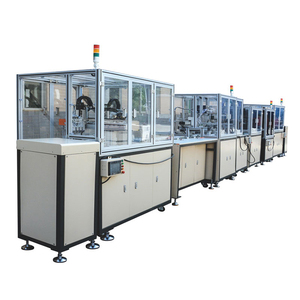
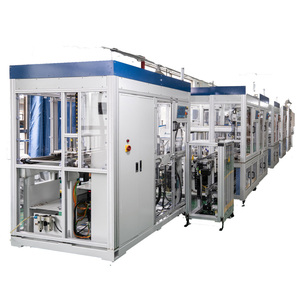
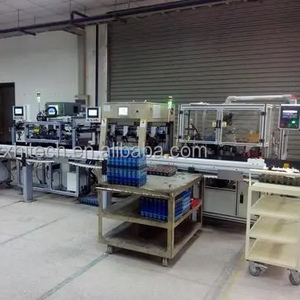
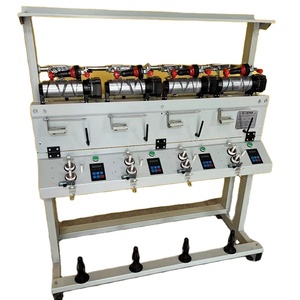
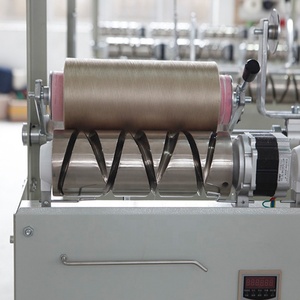
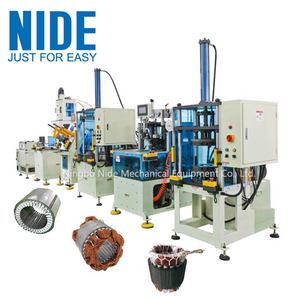
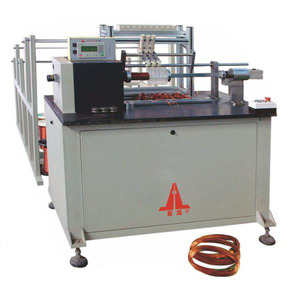
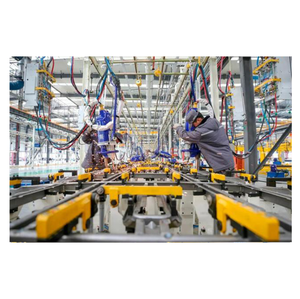
1. Executive Summary & Industry Landscape
The global electric motor manufacturing sector is undergoing a monumental paradigm shift. Driven by worldwide decarbonization mandates, the rapid adoption of Electric Vehicles (EVs), next-generation HVAC efficiency standards (IE4/IE5 compliance), smart home automation, high-end power tools, and industrial robotics, the demand for high-efficiency Brushless DC (BLDC) motors and Permanent Magnet Synchronous Motors (PMSM) has surged exponentially. Traditional manual or semi-automated motor assembly processes no longer meet the stringent tolerances, elevated thermal dissipation requirements, slot-fill factors, and zero-defect quality thresholds mandated by global Tier-1 original equipment manufacturers (OEMs).
As a premier premier OEM factory and international exporter based in Suzhou, China, Suzhou Haplin Automation Equipment Co., Ltd. (founded in November 2012 with a registered capital of RMB 15.2 million) stands at the forefront of this industrial transformation. With an expert team of over 70 dedicated engineers and technicians, and an annual output value exceeding RMB 65 million, Haplin delivers end-to-end, non-standard customized turnkey assembly solutions. This technical white paper provides a comprehensive evaluation of automated BLDC manufacturing equipment, technical evolution vectors, key procurement evaluation metrics, and strategic factory integration models.
Information Gain Insights: Transitioning from conventional brushed DC setups to modern BLDC inner-needle winding and automated stator assembly can increase line yield by up to 38% while reducing per-unit operational power overhead by 22% through precise servo-controlled tension loops and real-time vision verification.
2. Technology Trends in BLDC & Electric Motor Manufacturing Equipment
Modern electric motor manufacturing equipment is defined by high precision, flexibility, and intelligent closed-loop monitoring. To remain competitive, wholesale buyers and industrial plant managers must understand the critical technical milestones driving current equipment design:
Multi-Tooth Inner-Needle Winding
Inner-slot needle winding technology allows high copper fill factors exceeding 75% in BLDC stators. Utilizing multi-axis CNC servo synchronization, wire layout is controlled down to 0.02mm, eliminating wire overlapping and localized hot spots.
Automated Insulation Paper Insertion
Precision paper inserting modules cut, fold, and insert slot insulation paper (Nomex, Kapton, or DMD) into iron core laminations automatically, ensuring 100% dielectric isolation prior to winding and wedge locking.
High-Speed Commutator Spot Welding
For brushed armatures and hybrid designs, double-head hot-stacking and inverter DC spot welding machines ensure constant current delivery, dynamic pressure control, and zero-defect fusion joints without enamel degradation.
Technical Comparison: Traditional Fly Winding vs. Advanced CNC Inner-Slot Needle Winding
Understanding the mechanical distinctions between winding architectures is essential for engineering leads selecting equipment for high-performance BLDC production lines:
| Performance Metrics | Legacy Flyer Winding System | Haplin CNC Inner-Needle Winding Line | Industrial Impact |
|---|---|---|---|
| Slot-Fill Factor (%) | 45% – 55% | 68% – 78% | Dramatically improves torque density and thermal dissipation. |
| Tension Variance Control | ± 15% (Mechanical Brake) | ± 2% (Closed-Loop Servo Control) | Prevents insulation skin stretch, wire breakage, and phase imbalance. |
| Product Changeover Time | 3.5 to 6 Hours (Manual Tooling) | 15 to 30 Minutes (Digital Recipe Switch) | Optimized for high-mix low-volume flexible manufacturing. |
| Real-Time Traceability | None / Manual Logbook | MES / OPC-UA / QR Barcode Tracking | Fully compliant with automotive IATF 16949 audit requirements. |
3. Future Procurement & Global Sourcing Trends (2025–2030)
Global B2B procurement strategies for motor manufacturing machinery are transitioning from pure initial equipment cost (CapEx) evaluation toward long-term operational effectiveness (OpEx) and Total Cost of Ownership (TCO). Procurement managers evaluating Chinese factory partners should align their sourcing matrix with the following emerging industry shifts:
A. Modular Line Reconfigurability
As product lifecycles shorten—especially in civilian e-mobility, two-wheeled motorcycle BLDC hubs, and drone propulsion systems—purchasing rigid, single-purpose assembly automation carries massive residual risk. Modern equipment buyers prioritize modular station layouts where stator winding units, rotor magnet inserting modules, shaft press-fitting rigs, and end-of-line (EOL) electrical testers can be detached, upgraded, or reconfigured with minimal floor-space disruption.
B. In-Line End-of-Line (EOL) Testing & Predictive Maintenance
Quality control is no longer confined to post-assembly sampling. Future-proof production lines integrate inline testing modules directly into the assembly conveyor. Modern BLDC lines incorporate multi-station testing stations evaluating insulation resistance, Hipot dielectric strength, surge voltage, phase resistance, inductance, and Hall sensor alignment. Built-in vibration sensors and thermal monitoring notify operators of mechanical wear before catastrophic machine breakdown occurs.
C. Turnkey System Integration over Piece-Meal Sourcing
Sourcing individual machines from fragmented suppliers often leads to communication bottlenecks, incompatible PLC protocols, unbalanced line takt times, and protracted factory acceptance testing (FAT). The market clearly favors single-source OEM partners like Suzhou Haplin Automation, capable of engineering, building, programming, and verifying complete production ecosystems from iron core lamination loading down to final motor packaging.
4. Enterprise Capabilities & Manufacturing Excellence: Suzhou Haplin Automation
Located in Xiangcheng District, Suzhou, Jiangsu Province, China, Suzhou Haplin Automation Equipment Co., Ltd. serves as an industry benchmark for electric motor manufacturing technology. Since its establishment in November 2012, Haplin has combined research & development, precision machining, assembly integration, sales, and global field engineering services under one roof.
Engineering & R&D Depth
With over 70 highly skilled engineers, programmers, and technicians, Haplin holds dozens of patents in non-standard automation, servo-driven wire guidance, high-speed spot welding mechanics, and digital vision feedback.
Full-Spectrum Product Matrix
From brushed motor armatures, stators, and magnetic tile lines to advanced BLDC inner-winding stators, two-wheeled motorcycle BLDC assembly, and EV compressor motor production units, Haplin covers the full spectrum of industrial motor automation.
Global FAT/SAT Verification
Every machine is rigorously tested using the buyer's actual copper wire, lamination samples, and housing components in Haplin's Suzhou workshop. Overseas buyers verify equipment quality live on-site or via high-definition multi-angle remote video commissioning before dispatch.
5. Frequently Asked Questions (FAQ) for Global Equipment Procurement
Below are technical, commercially critical questions answered by our Senior Application Engineers to streamline your equipment evaluation process: