Featured Motor Production Equipment & Machining Systems
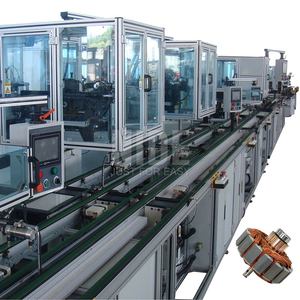
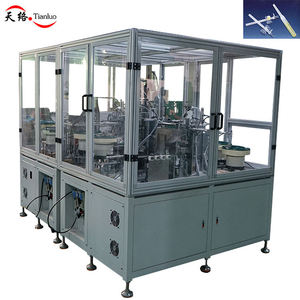
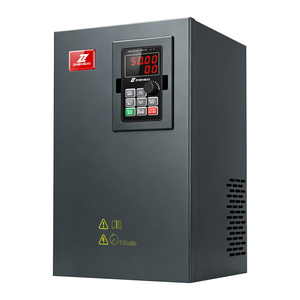
Engineered for high-volume Brushed DC armatures, universal motors, rotor cross-stamping, automated feeding, and VFD drive controllers.
Suzhou Haplin Automation Equipment Co., Ltd. Engineering Authority
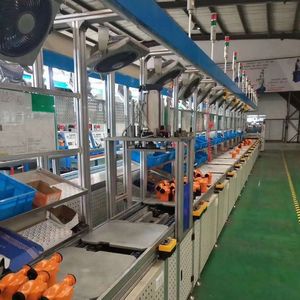
A technology-driven China factory specializing in turnkey motor assembly lines, custom non-standard automation, and precision stator/rotor processing equipment.
Manufacturing Excellence & R&D Footprint
Founded in November 2012 in Suzhou, Jiangsu, Suzhou Haplin Automation Equipment Co., Ltd. operates with a registered capital of RMB 15.2 million and a highly skilled team of over 70 automation professionals. Generating an annual equipment output exceeding RMB 65 million, Haplin seamlessly integrates mechanical R&D, precision assembly, custom PLC software programming, and international after-sales technical field support under one certified facility.
End-to-End Quality Engineering & FAT Validation
Every Brushed DC (BDC) motor production line and universal armature manufacturing cell undergoes rigorous Factory Acceptance Testing (FAT) in our Suzhou facility. Utilizing customer-supplied stack laminations, copper magnet wire, and commutators, our multi-stage inspection verifies coil tension stability, slot-fill uniformity, insulation resistance (>500MΩ at 1500V), and dynamic balancing tolerances before global dispatch.
Technical Blueprint: Brushed DC Motor Production Line Engineering
Understanding the step-by-step mechanical and electrical automation required to manufacture high-efficiency armatures, stators, and final motor assemblies.
A high-efficiency China wholesale Brushed DC (BDC) motor production line requires a synchronized balance of rotational kinetic control, precise electrical spot-welding, and automated mechanical assembly. Unlike brushless motors that rely on external electronic speed controllers (ESCs) and internal slot winding, traditional brushed DC motors depend heavily on mechanical commutator integrity, carbon brush contact alignment, and flawless copper wire termination on rotor segments.
Automated Armature Manufacturing Process Pipeline
Insulation Papering
High-speed slot paper folding, cutting, and insertion into rotor lamination slots.
Flyer Winding
Dual-flyer double-spindle flyer winding with servo closed-loop wire tensioning.
Commutator Fusing
Precision hot-staking spot welding of wire hooks to commutator riser slots.
Trickle Varnishing
Resin trickling, induction heating, and curing for structural slot stabilization.
Dynamic Balancing
Automatic dual-plane unbalance measurement and V-groove rotor milling removal.
1. Armature Core Processing & Insulation
The process begins with automatic shaft press-fitting into silicon steel rotor discs (supported by our specialized Cross Stamping Production Line). Once the core structure is assembled, the automated slot insulation paper inserting machine shapes, cuts, and inserts DMD or Nomex insulation paper into armature slots at speeds exceeding 0.5 seconds per slot, guaranteeing dielectric protection against high-voltage breakdown.
2. Servo Double-Flyer High-Speed Winding
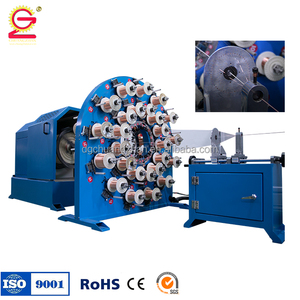
Double-flyer armature winding machines utilize high-torque AC servo motors driving precision flyer arms at speeds up to 3,000 RPM. Active closed-loop wire tensioners prevent enamel insulation scratching or copper wire stretching. Automated indexers hook magnet wire directly around commutator tangs with absolute positional accuracy, enabling multi-slot skipping and complex winding patterns.
3. Hot-Staking Commutator Spot Welding
Resistance spot welding (hot staking) permanently fuses copper wire leads into the commutator riser slots. Utilizing inverter DC spot welding power supplies with real-time displacement and current monitoring, Haplin's spot welding units eliminate cold weld joints, minimizing contact resistance to under 0.1 mΩ and preventing commutator hook burnout under continuous motor load.
4. Insulation Impregnation & Trickle Curing
To prevent wire vibration, centrifugal distortion, and thermal degradation, assembled armatures undergo automated trickle resin impregnation or dip varnishing. Controlled electrical heating cures the resin evenly without residual droplets on the shaft or commutator copper segments, resulting in Class H thermal endurance and superior heat dissipation.
5. Commutator Turning & Dual-Plane Dynamic Balancing
Diamond-tool CNC commutator lathes turn the copper commutator surface to achieve concentricity within ≤ 0.005mm and Ra 0.4 surface roughness. Next, an automated dual-plane dynamic balancing machine measures rotational unbalance and removes excess weight via precision CNC V-groove milling on the armature stack, ensuring whisper-quiet motor operation and extended carbon brush lifespan.
Machinery Specification Matrix: Manual vs. Automated Production
Evaluating key manufacturing metrics when upgrading from semi-automatic standalone workstations to fully automated China wholesale brushed DC motor lines.
| Performance Metric | Legacy Standalone Workstations | Haplin Automated BDC Production Line | Engineering Benefit & Value |
|---|---|---|---|
| Line Takt Time (Output/Shift) | 25 - 40 seconds per motor | 6 - 12 seconds per motor | Up to 300% increase in daily finished unit output |
| Labor Allocation Requirements | 12 - 18 skilled operators | 1 - 2 system supervisors | Drastic reduction in direct labor cost per unit |
| Slot Insulation Paper Insertion | Manual / Mechanical lever fed | CNC servo paper feed & form | 99.98% zero-defect insulation reliability |
| Commutator Weld Joint Resistance | Variable (±15% deviation) | Inverter DC Closed-Loop (< 2% dev.) | Eliminates field thermal failures and arcing |
| Unbalance Mass Tolerance | ≤ 15 mg·cm (Manual drilling) | ≤ 2 mg·cm (CNC V-milling) | Vibration reduction, quieter operation, longer brush life |
| Traceability & MES Integration | Paper log sheets | OPC-UA / Industry 4.0 PLC digital log | Full 100% component-level quality batch tracking |
Future Procurement Trends for Global B2B Motor Manufacturers
Strategic insights for OEM buyers, factory directors, and procurement managers sourcing motor assembly machinery from China.
1. Total Cost of Ownership (TCO) Shift
Global buyers are moving away from evaluating equipment purely on initial capital expenditure (CapEx). Modern procurement protocols prioritize Total Cost of Ownership (TCO), focusing heavily on energy efficiency (such as utilizing 3-phase 380V VFD AC controllers), reduced scrap rates, spare parts interchangeability, and low maintenance overheads over a 10-year line lifecycle.
2. Flexible Multi-Model Standardization
Dedicated single-product lines are being replaced by modular, quick-changeover production cells. Plant managers require lines capable of producing micro-motors for automotive actuators, cordless power tools, and industrial gearboxes on the same platform through quick-change quick-clamp fixtures and saved PLC HMI digital recipes.
3. Turnkey Supply Chain Integration
Leading international buyers prefer working with single-source custom machine builders capable of providing the entire workflow—from raw lamination cross-stamping lines to armature winding, stator magnet housing insertion, automatic bolt locking, and final electrical performance testing. This avoids multi-vendor integration friction.
Technological Trends Shaping Motor Manufacturing
How artificial intelligence, vision-guided robotics, and real-time sensor analytics are redefining China's wholesale motor equipment industry.
AI-Powered Machine Vision Inspection
Integrating 2D and 3D industrial vision cameras directly onto flyer winding and spot-welding stations allows immediate automated detection of enamel wire crossover errors, missing insulation paper, bent commutator hooks, or solder splashes. Defective armatures are automatically rejected onto a side conveyor buffer without stopping the primary production line.
IoT Telemetry & Remote Diagnostics
With embedded Ethernet/IP, Profinet, and OPC-UA communication modules, modern brushed DC production lines transmit real-time telemetry regarding motor temperature, spindle vibration, welding current waveforms, and pneumatic pressures to factory MES systems. Haplin engineers can provide secure remote firmware updates and diagnostic assistance globally.
High-Efficiency Carbon Brush & Commutator Contact Optimization
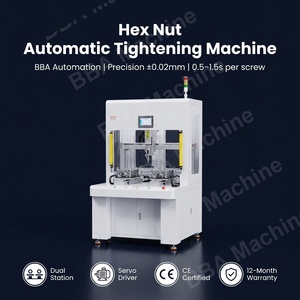
As environmental regulations and energy efficiency standards tighten worldwide, brushed DC motors are being re-engineered for higher power densities. Modern production lines incorporate precision torque-controlled automatic screw locking modules (such as our BBA Auto Hex Bolt Screw Feeding and Locking Machine) to maintain uniform casing pressure on bearings and brush boxes, minimizing friction losses and acoustic noise.
Frequently Asked Questions by Global OEM Buyers
Clear, authoritative technical answers to assist your engineering and procurement evaluation process.
What parameters are required to generate an accurate production line quote?
To provide a precise engineering proposal and line layout, we require: (1) Rotor/armature and stator technical drawings with stack height ranges, (2) Commutator dimensions and hook counts, (3) Wire gauge/diameter (mm) and turn count, (4) Target output per shift or cycle time (seconds/unit), and (5) Local factory voltage (e.g., 380V 50Hz / 480V 60Hz).
Can Haplin custom-design non-standard line layouts for tight floor spaces?
Yes. Suzhou Haplin specializes in custom non-standard automation. Our engineering team utilizes 3D CAD modeling to design linear, U-shaped, or rectangular return-loop conveyor system configurations that fit within your existing floor space while keeping maintenance access clear.
How are machine changeovers handled between different motor product models?
Our modern lines utilize quick-change tooling modules, servo-driven height adjustments, and recipe storage via touch-screen HMIs. Switching between different armature stack heights or shaft diameters typically takes 10 to 20 minutes without needing specialized hand tools.
What after-sales service and installation support do overseas buyers receive?
We provide full English operational manuals, electrical schematics, software backup files, and video installation guides. Furthermore, Haplin dispatches experienced installation engineers overseas for commissioning, line optimization, and hands-on factory technician training.
How does Haplin ensure quality before shipment?
Before factory dispatch, we conduct extensive 72-hour continuous FAT trial runs using actual raw materials provided by the customer. We verify takt times, welding integrity, dynamic balancing accuracy, and safety light curtains to ensure 100% plug-and-play functionality upon installation.
What is the typical manufacturing lead time for a complete BDC production line?
Standard standalone machines take approximately 30 to 45 days, while customized fully automated turnkey production lines typically require 60 to 90 days from initial CAD drawing approval to factory FAT sign-off.
Ready to Upgrade Your Motor Manufacturing Plant?
Consult directly with Suzhou Haplin's senior automation engineers. Send us your motor drawings, target production volumes, and plant specifications for a custom technical solution and factory-direct quotation within 24 hours.