Featured Rotor & Stator Assembly Machinery
High-speed, automated equipment solutions engineered for brushed & brushless electric motor production line integration.
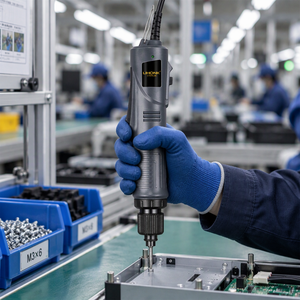
LK-GS Clutch Type Assembly Screwdriver with Forward Reverse Switch Inline Screwdriver Machine
Explore Details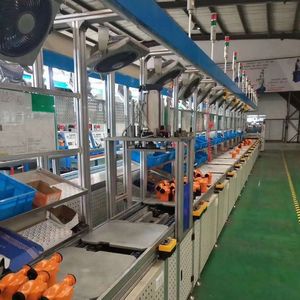
Automatic Machining Assembly Line with Up and Down Cycle Comprising Core Components
Explore Details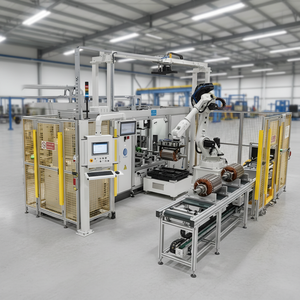
EV Motors Turnkey Automated Packaging Line Fully Filling Automatic Rotor Assembly Line
Explore Details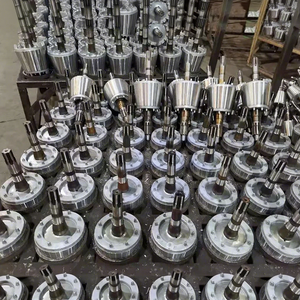
Electric Motor Machine Equipment Factory Produces Motor Rotor Stator for Electric Motor Machine
Explore Details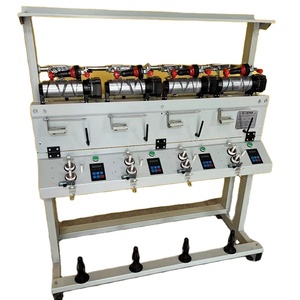
4-Head High Speed Cone to Cone Winding Machine Metal Motor Automatic Equipment
Explore Details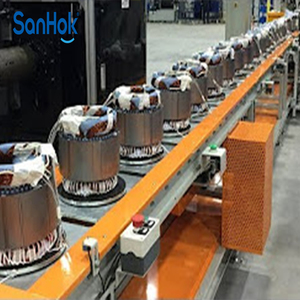
SanHok Semi-Auto Motor Stator Assembly Line 220V/380V Customized Capacity CE Certified
Explore Details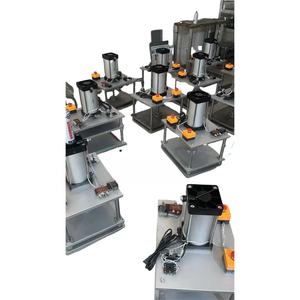
Finished Product Assembly Line with Motor for Electronic Lighter Manufacturing Equipment
Explore Details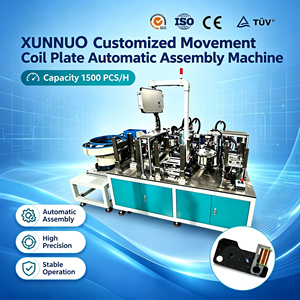
XUNNUO High Speed Movement Coil Assembly Machine 1000W Servo Motor PLC Automated Line
Explore DetailsComprehensive Procurement & Technology Guide for Wholesale Motor Rotor Assembly Lines in China
The global shift toward high-efficiency electric powertrains, smart home automation, high-performance power tools, and industrial robotics has placed unprecedented demands on electric motor manufacturing processes. At the heart of every high-efficiency motor lies the rotor assembly—a intricate composite of precision-stamped silicon steel laminations, copper or aluminum conductors, permanent magnets, high-rigidity shafts, and dynamic balance weights. Selecting the right OEM/ODM assembly automation partner in China has evolved from a simple CapEx decision to a strategic competitive imperative.
As a leading hub for industrial automation equipment, China's manufacturing ecosystem—specifically specialized machinery clusters in Suzhou, Jiangsu—offers global OEMs distinct advantages in modular line architecture, servo-driven precision, and cost-effective scalability. This comprehensive whitepaper explores the technological fundamentals, process engineering standards, market trends, and supplier evaluation criteria necessary to source wholesale rotor assembly equipment effectively.
Dynamic Balancing Integration
Modern high-speed rotors (operating at 15,000 to 100,000+ RPM) demand automatic 2-plane dynamic balancing modules with integrated laser trimming or micro-milling to achieve ISO 1940 G1.0/G2.5 balance quality.
Closed-Loop Servo Control
Every shaft press-fitting, magnet inserting, and stack lamination compression station utilizes multi-axis closed-loop electric servo actuators with real-time force vs. displacement monitoring (0.1 kN resolution).
100% In-Line Traceability
Full integration with plant Manufacturing Execution Systems (MES). Industrial vision sensors (AOI) verify slot alignment, magnet polarity, weld integrity, and insulation coating with zero human error.
Anatomy of an Automated Motor Rotor Production Line
Whether manufacturing Brushed DC armatures, Brushless DC (BLDC) permanent magnet rotors, or EV traction motor Hairpin rotors, a fully automated turnkey rotor assembly line integrates distinct, synchronized mechanical and electrical stations:
| Assembly Station Module | Primary Technical Function | Key Performance Metrics / Tolerances | Quality Control Mechanisms |
|---|---|---|---|
| 1. Shaft Press-Fitting | Precision hydraulic/servo press insertion of knurled or ground steel shafts into iron core stacks. | Positioning tolerance: ±0.015 mm Coaxial runout: < 0.02 mm |
Real-time press force vs. displacement curve logging; automated reject gate for out-of-spec force profiles. |
| 2. Insulation Slot Paper Inserting | Automatic feeding, forming, cutting, and insertion of DMD/NMN insulating paper into armature/rotor slots. | Cycle time: 0.5 - 0.8s per slot Insertion success rate: >99.9% |
Optical sensor verification for complete paper presence and collar height consistency. |
| 3. High-Speed Armature Winding | Double-flyer or needle winding of enamel-coated copper wire directly into rotor core slots. | Winding speed: Up to 3,000 RPM Wire diameter range: 0.15 - 1.5 mm |
Closed-loop magnetic tension feedback preventing wire stretching, insulation tearing, or uneven slot filling. |
| 4. Commutator Spot Welding / Fusing | Hot-staking / inverter DC resistance welding connecting winding wire hooks to commutator segments. | Weld thermal stability: >300°C Resistance variation: <1.5% |
Infrared temperature monitoring, current/voltage waveform capture per hook weld. |
| 5. Permanent Magnet Insertion & Dispensing | Automated feeding, adhesive dispensing (Loctite/epoxy), and insertion of NdFeB magnets into IPM rotor slots. | Insertion cycle: <2.0s/magnet Glue volume tolerance: ±2 mg |
Vision-guided robot orientation, magnetic polarity verification (North/South pole checker). |
| 6. Active Dynamic Balancing | Measurement of unbalance vector followed by automated material removal (drilling/milling) or addition. | Residual unbalance: ≤ 0.5 g·mm/kg Target standard: ISO 1940 G1.0 |
2-plane vibration sensors with auto-re-test logic and adaptive depth control. |
Future Procurement Trends in Motor Rotor Manufacturing Equipment (2025–2030)
Procurement directors and plant managers sourcing industrial motor assembly equipment from wholesale China manufacturers must align their capital expenditure with underlying industry trends. As electric motor architectures evolve toward higher power densities and smaller physical footprints, assembly lines must adapt:
- Transition to Hairpin & IPM Rotor Technology: Traditional flyer-wound brushed armatures are increasingly being replaced by Interior Permanent Magnet (IPM) rotors and Hairpin copper bar stators/rotors in Automotive EV and High-End Industrial applications. Machinery suppliers in China are aggressively expanding modular tooling designed for high-precision hairpin insertion, twisting, laser welding, and trickling varnish impregnation.
- Flexible Modular Line Configurations: To accommodate fast product lifecycles, motor manufacturers require quick-changeover station designs. Modern wholesale lines from Suzhou Haplin employ standardized pallets, quick-release mechanical fixtures, and recipe-driven PLC parameters, reducing re-tooling time for different stack heights or wire gauges from days to less than 45 minutes.
- Zero-Carbon & Energy-Efficient Servo Technology: Traditional pneumatic and hydraulic power units are being phased out in favor of all-electric servo-driven actuators. This shift reduces factory floor energy consumption by up to 40%, eliminates oil leakage risks in cleanroom environments, and dramatically improves position repeatability.
- Smart Diagnostics & Remote Augmented Reality (AR) Commissioning: Overseas buyers purchasing machinery from China factories now benefit from built-in Edge-IoT gateways. Factory Acceptance Testing (FAT), initial commissioning, and emergency troubleshooting are increasingly conducted via encrypted remote access links and AR visual support, minimizing line downtime.
Enterprise Spotlight: Suzhou Haplin Automation Equipment Co., Ltd.
Founded in November 2012 in the high-tech manufacturing hub of Suzhou, Jiangsu, Suzhou Haplin Automation Equipment Co., Ltd. has established itself as an authoritative leader in specialized equipment for electric motor production. Operating with a registered capital of RMB 15.2 million, a dedicated engineering team of over 70 experts, and an annual equipment delivery value exceeding RMB 65 million, Haplin seamlessly integrates R&D, precision manufacturing, global sales, and turnkey after-sales support.
Haplin’s robust equipment portfolio spans complete automatic motor assembly lines, brushed motor rotor & stator production units, brushless DC (BLDC) rotor & stator assembly solutions, dynamic balance systems, magnetic tile assembly lines, and customized standalone automated station modules. By engineering every line around the customer's specific lamination drawings, wire specifications, and target takt times, Haplin delivers high-volume production reliability backed by strict CE certifications and global service coverage.
Manufacturer Selection Framework: Evaluating Chinese Wholesale Suppliers
When conducting supplier audits for rotor assembly equipment factories in China, procurement teams should evaluate potential partners against six core engineering competencies:
1. In-House Precision Machining
Ensure the supplier maintains internal CNC machining centers, EDM wire cutting, and surface grinding facilities for critical tooling components to guarantee long-term wear resistance and spare part availability.
2. Core Electrical Architecture
Verify that key electrical components (PLC, Servos, Sensors, Pneumatics) utilize tier-one global brands (e.g., Siemens, Mitsubishi, Omron, Festo, Keyence) to simplify local maintenance in export markets.
3. Rigorous FAT & SAT Protocol
Require full Factory Acceptance Testing (FAT) in China using actual customer rotor stack samples, running continuously for at least 48 to 72 hours to verify Cpk values (Cpk ≥ 1.67 for critical dimensions).
Frequently Asked Questions (FAQ) for Global Machinery Buyers
What motor types and rotor sizes can your assembly equipment accommodate?
Our automated assembly equipment handles both brushed DC motor armatures and brushless DC (BLDC) rotors across a wide dimensional spectrum: outer core diameters ranging from 12 mm micro-motors up to 250 mm heavy-duty industrial or EV motor rotors, and lamination stack heights from 10 mm to 300 mm+. Custom station modules can be specifically engineered for unique rotor geometries, including skewed slot armatures and surface-mounted or internal permanent magnet (IPM) rotors.
What key engineering technical parameters are required to generate an exact proposal and quote?
To provide an accurate design layout, station cycle time analysis, and commercial proposal, our engineering team requires: (1) 2D/3D CAD drawings of the rotor/stator and shaft assembly, (2) Lamination stack specs, slot counts, and wire diameter/turn count details, (3) Target daily output or takt time (e.g., 6 seconds per rotor), (4) Desired level of automation (standalone units, semi-auto, or 100% turnkey auto line), and (5) Local factory voltage (e.g., 380V/415V/480V 3-phase, 50/60Hz) and safety standard compliance (CE, UL, CSA).
Can we start with standalone automatic stations and integrate them into a full line later?
Yes, absolutely. All Haplin automation equipment is designed around a modular mechanical and electrical control architecture. Many global motor manufacturers begin by purchasing high-precision single machines—such as high-speed flyer winders, commutator spot welders, or paper inserting units—to solve immediate throughput bottlenecks. As production volume scales, these individual stations can be seamless integrated with automatic palletized conveyors, robot loading arms, and centralized MES data collection hubs.
How are equipment verification and quality acceptance testing (FAT/SAT) performed for overseas clients?
Prior to shipment, every machine undergoes intensive trial runs inside our Suzhou manufacturing facility using your actual production core stacks, shafts, and magnet samples. We perform rigorous process capability testing (verifying cycle time, press-fit tolerances, electrical insulation, and dynamic balance stability). Overseas buyers can conduct Factory Acceptance Testing (FAT) in person at our plant or via high-definition live video streaming with real-time sensor data verification.
What after-sales service, installation, and technical support do you provide internationally?
We provide full lifecycle support for all international projects, including: (1) Complete English operational manuals, maintenance schematics, and PLC/HMI software documentation, (2) On-site installation, commissioning, and technician training by experienced field engineers, (3) 24/7 remote diagnostic support via secure web interfaces, and (4) Express dispatch of critical spare parts and wearable tooling directly from our Suzhou inventory.
Optimize Your Motor Production Line with China's Premier OEM Partner
Share your rotor drawings, target output, and factory specs with our Suzhou engineering team. Receive a comprehensive technical proposal and custom equipment quote within 24 hours.