Industrial Stator Production Line Engineering & Procurement Overview
In the modern electric motor manufacturing sector, achieving high electrical efficiency, thermal dissipation stability, and low total cost of ownership (TCO) requires hyper-automated manufacturing systems. As a premier China wholesale stator production line manufacturer, Suzhou Haplin Automation Equipment Co., Ltd. designs turnkey systems tailored for brushed DC motors, Brushless DC (BLDC) inner-winding stators, high-voltage AC induction stators, and specialized robotic servo drive units.
This comprehensive technical white paper addresses critical procurement frameworks, operational efficiency benchmarks, future technology roadmaps (including high slot-fill needle winding, hairpin tooling, and inline automated inspection), and factory integration standards required by Tier-1 OEM/ODM buyers across North America, Europe, and the Asia-Pacific region.
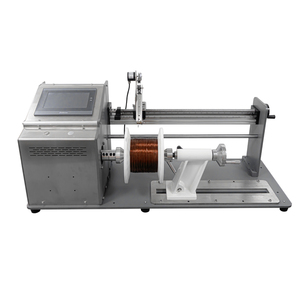
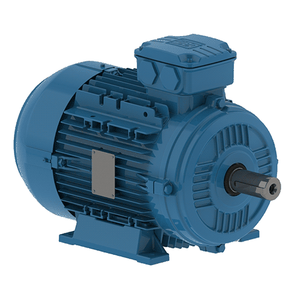
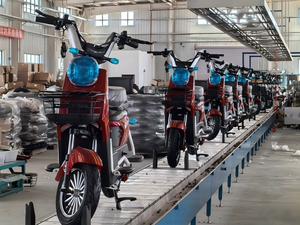
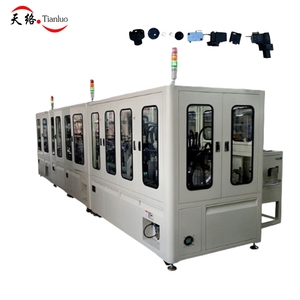
Featured Motor & Stator Production Lines
Explore our state-of-the-art automated manufacturing equipment engineered for high throughput, repeatable coil tension, and seamless MES integration.
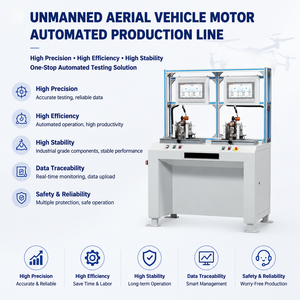
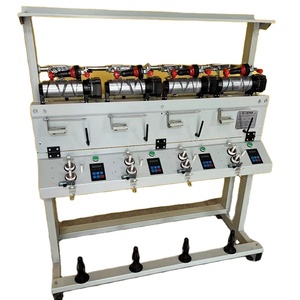
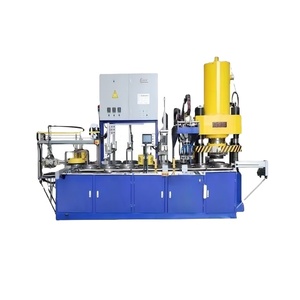
Stator Production Line Engineering Architecture
Understanding the step-by-step automated workflow required for modern electric motor stator manufacturing.
A high-performance automated stator production line integrates several synchronized sub-systems to process silicon steel lamination stacks into fully insulated, wound, impregnated, and verified motor stators. Achieving a low cycle time (takt time under 15 seconds per unit) while keeping wire damage rates at zero demands exact closed-loop servo motion control.
1. Insulation Paper Insertion
Automated cutting, forming, and feeding of Nomex or DMD insulation paper into stator slots. Closed-loop sensor monitoring prevents incomplete paper insertion or slot cuff damage.
2. High-Speed Needle Winding
CNC multi-axis servo needle winding systems optimized for BLDC stators. Maintains uniform copper wire tension, minimizing wire stretching and maximizing slot fill ratios up to 78%.
3. Wire Termination & Fusing
Robotic wire lead routing, automatic stripping, selective hot-crimping, or resistance welding for commutator and PCB terminal alignment with zero cold joints.
Technical Specifications & Operational Benchmarks
Comparative operational benchmarks between standard semi-automated systems and Haplin’s fully integrated automatic stator manufacturing lines.
| Performance Parameter | Semi-Automatic Stator Units | Haplin Fully Automated Stator Line | Industry Impact / Gain |
|---|---|---|---|
| Target Takt Time (Cycle Time) | 35 – 60 seconds / piece | 12 – 18 seconds / piece | Over 200% Output Increase |
| Slot Fill Rate Capability | 55% – 65% Maximum | Up to 78% Slot Fill | Higher Motor Energy Density |
| Tension Control Precision | Mechanical Friction (±5% Var) | Closed-Loop Electronic Servo (±0.5%) | Prevents Enamel Stripping & Shorts |
| Changeover Setup Time | 2.5 – 4.0 Hours | < 15 Minutes (Quick Tooling Change) | Flexible High-Mix Low-Volume Output |
| Quality Traceability (MES) | Manual Offline Logbooks | Real-Time OPC-UA / Ethernet-IP Data Stream | 100% Traceability per Serial Number |
| End-of-Line Verification | Sample Testing (1 in 50) | Integrated Surge, Hipot, Resistance (100%) | Zero Defect Delivery to OEM Line |
Future Procurement Trends in Stator Manufacturing Equipment
Key strategic vectors driving global B2B procurement decisions over the next decade.
1. Rapid Tooling Modularization
Global motor manufacturers are pivoting toward modular production cells. Modern lines must handle varied stack heights (from 15mm to 150mm) and stator outer diameters through fast modular fixture swaps without reprogramming servo coordinates.
2. Hairpin Stator Tooling Shift
With electric mobility and drone technology demanding extreme power densities, hairpin stator production (flat copper wire bending, slot insertion, twisting, and laser welding) is expanding rapidly from automotive into industrial drives and high-end power tools.
3. In-line AI Vision Verification
Procurement teams are prioritizing automated optical inspection (AOI) equipped with deep-learning algorithms. Automated vision systems detect paper fold irregularities, coil crossover errors, and copper foil damage prior to resin varnishing.
Industry Development Trends (2025–2035)
How decarbonization, robotics, and smart automation are shaping the next generation of motor production equipment.
As international energy efficiency standards (IE3, IE4, and IE5) become mandatory across global manufacturing plants, electric motors must deliver higher operational efficiencies under severe thermal limits. Consequently, stator line equipment must evolve along three critical technological pillars:
Energy-Efficient Resin Impregnation
Traditional dip-and-bake varnish ovens are being superseded by ultraviolet (UV) curing and automated trickling resin impregnation units, reducing factory energy usage by up to 45% and eliminating volatile organic compound (VOC) emissions.
Direct Drive & Linear Motor Actuation
Traditional belt-driven tool indexing is giving way to direct-drive torque motors and high-speed linear actuators, yielding sub-micron positioning repeatability and eliminating mechanical backlash during high-speed wire winding.
Zero-Trust Cyber-Physical SCADA Integration
Equipment now features encrypted edge computing nodes. Automated stator lines communicate directly with enterprise resource planning (ERP) databases, enabling dynamic scheduling, predictive spindle bearing maintenance, and real-time yield monitoring.
Why Partner with Suzhou Haplin Automation?
Combining deep engineering research, proven turn-key manufacturing, and comprehensive global technical support since 2012.
Full-Value Chain Manufacturing (R&D to After-Sales)
Founded in November 2012 in Suzhou, Jiangsu, China, with a registered capital of RMB 15.2 million and a dedicated team of 70+ engineers, we integrate design, machining, PLC software customization, assembly, and global commissioning under one roof.
RMB 65M+ Annual Delivered Equipment Capacity
Our robust operational structure delivers tens of complete automatic production lines annually across power tool, household appliance, drone BLDC, automotive micro-motor, and industrial robotics sectors worldwide.
Tailored Engineering for Brushed & BLDC Motors
We do not sell rigid off-the-shelf catalog units. Every line is customized according to your exact lamination drawings, slot counts, copper wire gauges, voltage specifications, and target floorplan constraints.
Strict Pre-Shipment Factory Acceptance Verification
All production lines undergo rigorous FAT (Factory Acceptance Testing) in our Suzhou facility using customer-supplied raw components, guaranteeing that cycle time, slot fill, and insulation resistance meet strict criteria prior to export loading.
Stator Production Line Procurement FAQ
Technical and operational answers to address key purchasing criteria for B2B buyers.
What core technical parameters are required to generate an accurate stator line quotation?
To provide a tailored station layout and cycle time simulation, our engineering team requires: (1) 2D/3D engineering drawings of the stator lamination stack (OD, ID, stack height, slot dimensions), (2) Wire diameter (mm/AWG) and turn count per slot, (3) Target daily or per-shift production output, (4) Plant power system specifications (e.g., 380V/415V/480V, 50/60Hz), and (5) Specific safety or brand component preferences (e.g., Siemens PLC, Festo pneumatics, Yaskawa servos).
Can Haplin line architectures accommodate both brushed rotors and BLDC stators?
While brushed armatures/rotors and BLDC inner-winding stators utilize distinct processing steps (e.g., commutator spot welding for brushed armatures vs. direct needle winding/PCB termination for BLDC stators), we design modular combined plant layouts. Customers can share centralized handling conveyors or station fixtures to process multiple motor families cleanly.
How does Haplin ensure zero wire enamel stripping during high-speed winding?
We utilize closed-loop active electronic tension controllers synchronized with the multi-axis servo movement of the winding needle. Ceramic-coated wire guides, polished tungsten nozzles, and automated wire friction monitoring prevent microscopic enamel abrasions, guaranteeing high dielectric strength and preventing inter-turn short circuits.
Is remote acceptance testing and online commissioning available for overseas buyers?
Yes. International buyers can participate in Factory Acceptance Testing (FAT) via high-definition multi-camera live video streams or inspect in person at our Suzhou facility. During FAT, we run continuous test batches using your supplied laminations and magnet wire. Remote diagnostics, field installation support, and operator video modules are fully supported.
What is the typical lead time for a fully automated custom stator production line?
Standard lead times range from 60 to 90 days following final 3D design freeze and component sign-off. Standalone modular machines (such as 4-station winding units or paper inserters) can be delivered within 30 to 45 days depending on tooling complexity.
How are spare parts and post-warranty maintenance managed globally?
We build our machines using globally standardized, non-proprietary industrial components (e.g., Schneider electrics, SMC pneumatic valves, HIWIN linear rails) so consumable spares can be sourced locally. Specialized tooling wear parts (winding nozzles, paper forming dies, fusing electrodes) are shipped within 48 hours via express air courier.
Optimize Your Motor Assembly Plant Through Precision Automation
Submit your stator drawings, stack dimensions, and target output goals. Our senior mechanical and electrical engineers will formulate a comprehensive station layout proposal within 24 business hours.