Featured Automatic Motor Assembly Lines & Specialized Workstations
Engineered for high-throughput automotive, industrial, and consumer appliance motor production. Explore our OEM custom solutions designed for maximum operational efficiency.
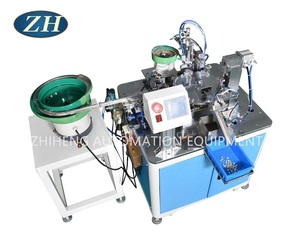
Fully Automated Motor Assembly Line & Modular Machine Systems
View Technical Details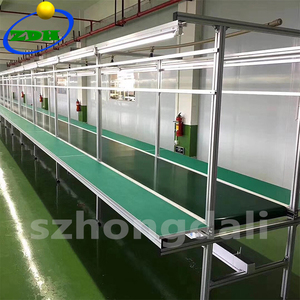
Automated Assembly Line Machine Integrated with Heavy-Duty Conveyor Belt
View Technical Details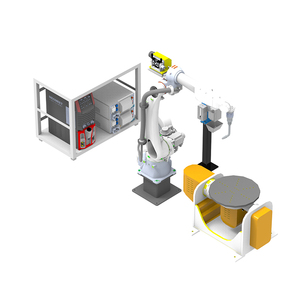
EFORT Fully Automatic Automotive Welding Robot with PLC Gearbox Control
View Technical Details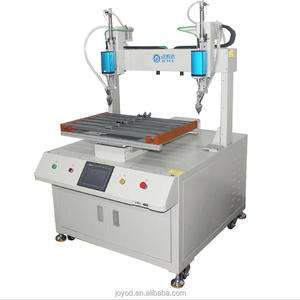
High-Efficiency 6-Axis Automatic Screw Locking Robot Machine Dual Y Station
View Technical Details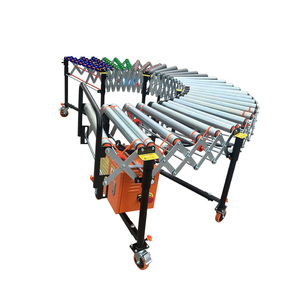
Customized Speed Electric Drive Motorized Roller Conveyor for Motor Assembly
View Technical Details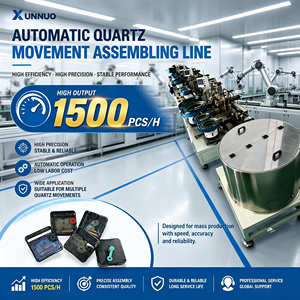
Customized PLC Controlled Precision Micro-Motor & Movement Assembly Line
View Technical Details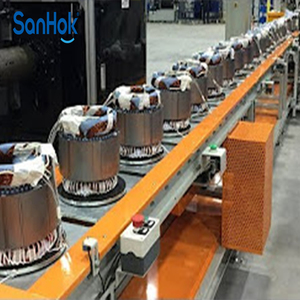
Semi-Automatic Heavy Machinery & Agricultural Motor Assembly Conveyor System
View Technical Details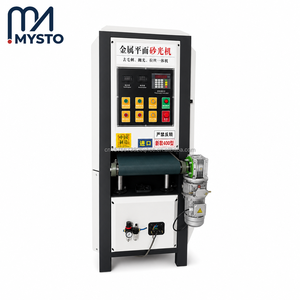
Fully Automatic Motor-Driven Deburring, Brushing & Polishing Surface Machine
View Technical DetailsEngineering Excellence in OEM Automatic Motor Assembly Architecture
In the rapidly evolving global manufacturing landscape, the transition from semi-automated production cells to fully integrated, intelligent motor assembly lines represents a paramount strategic shift. Electric motor original equipment manufacturers (OEMs)—spanning electric vehicles (EV), industrial automation, HVAC, power tools, and high-precision consumer appliances—face unprecedented demands for elevated power density, strict energy efficiency (IE4/IE5 standards), ultra-low NVH (Noise, Vibration, Harshness), and uncompromising unit-to-unit consistency.
A custom OEM automatic motor assembly line integrates multi-disciplinary engineering processes. From raw armature core paper inserting, precision needle winding, commutator hot-staking, dynamic rotor balancing, and magnetic tile insertion, to complete stator insulation, varnish dipping, end-bell pressing, and final End-of-Line (EOL) testing, every station must maintain line balancing within fractions of a second to achieve optimal Overall Equipment Effectiveness (OEE).
Flexible Modular Design
Quick-change tooling plates and servo-driven positioning allow seamless multi-model production on a single line, reducing changeover times to under 15 minutes.
Full Traceability & MES
OPC UA protocol integration captures press forces, winding tensions, resistance values, and test curves for 100% cloud-synced quality audit trails.
Ultra-High Process Reliability
Advanced closed-loop feedback systems achieve CPK ≥ 1.67 across critical assembly parameters, eliminating human error in mass manufacturing.
Why Top Global Motor Manufacturers Partner with Suzhou Haplin Automation
Founded in November 2012 in Suzhou, Jiangsu—China’s premier industrial automation hub—Suzhou Haplin Automation Equipment Co., Ltd. has established itself as a technology-driven pioneer in custom electric motor manufacturing machinery. Spanning a modern manufacturing footprint with a registered capital of RMB 15.2 million and a highly specialized workforce exceeding 70 engineers and technical experts, Haplin delivers over RMB 65 million in advanced equipment annually to clients across the globe.
| Technical Capability Dimension | Haplin OEM Standard Specification | Industry Baseline Comparison |
|---|---|---|
| Winding Precision & Slot Fill Ratio | Closed-loop active wire tension control; slot fill ratio up to 78% | Open-loop friction tension; slot fill max 62-65% |
| Commutator Spot Welding Quality | Dual-head micro-resistance welding with thermal imaging audit | Single-head conventional welding; manual visual check |
| Dynamic Balancing Grade | Automatic double-plane correction up to ISO 1940 G1.0 quality grade | Manual weight removal; ISO 1940 G2.5 standard grade |
| Line Takt Time Efficiency | Optimized parallel workstation flow; cycle times as low as 4.5 sec/unit | Sequential station arrangement; 8.0 - 12.0 sec/unit |
| Compliance & Certification | Full CE, ISO9001 certification; IP65/IP67 rated safety shielding | Basic safety guards; partial compliance documentation |
Unlike generic equipment integrators, Haplin’s philosophy centers around product-first custom engineering. Our team evaluates your specific motor design—whether brushed DC armatures, BLDC inner/outer stators, or stepper motors—analyzing copper wire gauges, lamination stack heights, magnetic tile configurations, and thermal properties before designing custom station kinematics, fixtures, and control algorithms.
Future Sourcing & Technology Procurement Trends in Motor Manufacturing (2025–2030)
As global decarbonization mandates accelerate electric vehicle adoption and industrial energy efficiency requirements, procurement directors and operational executives must align their capital expenditure (CapEx) strategy with long-term technological vectors. When sourcing automated motor assembly lines, four dominant industry trends will govern market competitiveness over the next decade:
1. Transition from Brushed to Brushless (BLDC & PMSM) Hairpin Automation
While brushed DC motors maintain dominance in cost-sensitive applications, the market shift toward Brushless DC (BLDC), Permanent Magnet Synchronous Motors (PMSM), and Hairpin stator technologies is accelerating. Procurement teams must invest in flexible line architectures capable of handling both needle winding for slotted BLDC stators and hair-pin forming, slot insertion, and laser welding for high-voltage traction motors.
2. Digital Twin Simulation & Virtual Commissioning
Leading OEM assembly line factories now leverage digital twins to simulate kinetic line balancing, robot reachability, and potential mechanical collisions before cutting physical steel. Virtual commissioning reduces factory acceptance testing (FAT) timelines by up to 40% and ensures rapid ramping to full volume production upon installation at the customer site.
3. Artificial Intelligence in Automated Optical Inspection (AOI)
Traditional rule-based vision systems often suffer from false reject rates due to ambient lighting or slight surface reflection variations. AI-driven deep learning vision algorithms integrated directly into deburring, polishing, spot welding, and varnish inspection stations enable 99.9% defect identification accuracy without slowing takt time.
4. Sustainable "Green" Automation & Energy Recovery
Energy efficiency is no longer confined to the end product. Next-generation assembly lines incorporate regenerative braking on servo axes, intelligent pneumatic standby modes, and low-power ultrasonic welding technologies to reduce the factory’s overall carbon footprint during multi-shift operations.
Technical Breakthroughs in Motor Sub-Assembly Engineering
Achieving flawless assembly performance demands breakthrough engineering across each primary module of the production sequence. Below is a breakdown of how state-of-the-art automation solves critical manufacturing bottlenecks:
Armature Insulating Paper Insertion
Utilizing high-speed servo feeding with precision die-cutting, ensuring zero paper tearing and 100% slot bottom edge protection against dielectric breakdown.
Multi-Station Precision Winding
Four-station Flyer and Needle winding machines featuring dynamic wire tension sensors prevent copper stretching, insulation enamel scraping, and wire overlapping.
Commutator Fusing & Welding
Inverter DC resistance spot welding with real-time displacement monitoring guarantees optimal hook collapse depth and zero thermal degradation of surrounding wire.
Rotor Balancing & Milling
Fully automated double-plane dynamic balance measurement coupled with integrated CNC vector milling removes unbalance mass dynamically in under 6 seconds.
Automated Fastener Locking
6-axis robotic screw locking units with dual Y-station vacuum suction deliver precise torque feedback (±2% accuracy) and thread angle verification.
Comprehensive EOL Testing
Integrated testing stations execute Hi-Pot dielectric, surge, phase resistance, back-EMF, and direction of rotation (DIR) testing in a single automated fixture.
Frequently Asked Questions for Motor Assembly Line Procurement
Find authoritative technical responses to common engineering and commercial queries encountered during line design, purchasing, and factory implementation.
What essential technical specifications are required to receive a formal assembly line proposal?
To provide a precise engineering proposal and line layout, our engineers require: 1) Detailed 2D/3D technical drawings of the motor, rotor, stator, and components; 2) Wire gauge (mm), turn counts, and slot dimensions; 3) Desired production capacity (Takt time or units per shift); 4) Plant layout constraints and utility availability (voltage, pneumatic air supply); and 5) Required integration protocols (e.g., MES, PLC preference such as Siemens or Mitsubishi).
Can Haplin lines handle multiple motor sizes and stack heights on the same equipment?
Yes. All Haplin custom automatic motor assembly lines feature quick-change modular fixtures and recipe-based HMI controls. Operators can adjust stack heights, shaft diameters, and winding patterns via digital servo settings and rapid-clamp mechanical tooling, minimizing product changeover times to under 15 minutes.
What is the typical lead time from contract signing to Factory Acceptance Testing (FAT)?
Standard lead time ranges between 8 to 14 weeks depending on line complexity, total station count, and level of robotic integration. Single standalone machines (such as 4-station winders or paper inserters) are delivered in 4 to 6 weeks. Factory Acceptance Testing (FAT) is performed in our Suzhou facility using your actual component samples prior to dispatch.
How does Suzhou Haplin ensure quality verification for international buyers unable to visit China?
For overseas clients, we offer comprehensive remote FAT protocols. This includes multi-angle high-definition live video commissioning streams, continuous 500-unit dry-run verification, detailed dimensional audit reports, GR&R (Gauge Repeatability and Reproducibility) studies, and complete electrical safety test logs certified by third-party inspectors if requested.
What post-installation, spare parts, and technical support services are provided?
We provide 12 months of comprehensive warranty coverage, backed by 24/7 remote technical assistance, PLC remote diagnostics via secure VPN gateways, and quick-ship spare part kits. Additionally, our field service engineers are available for worldwide on-site installation, Site Acceptance Testing (SAT), and operator training.
Ready to Upgrade Your Motor Manufacturing Operations?
Partner with Suzhou Haplin Automation to design a high-efficiency, fully customized OEM motor assembly line tailored to your precise technical specs and budget goals.