Featured Automated Rotor & Motor Manufacturing Equipment
Precision-engineered single units, modular cells, and full turn-key production lines designed for global electric motor OEMs.
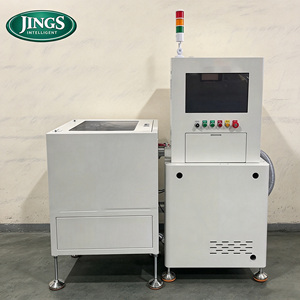
Automated Vision Magnetic Assembly Machine for Home Appliance Motor Magnet Assembly
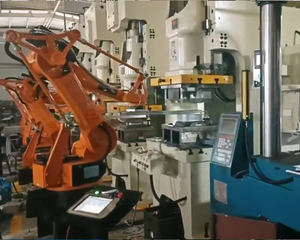
Industrial Automation & Robots PLC Motor Production Line for Nonstick Cookware and Electric Appliances
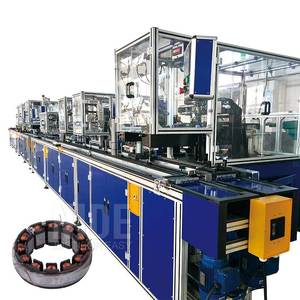
Full Auto BLDC Brushless Motor Stator Manufacturing Production Assembly Line
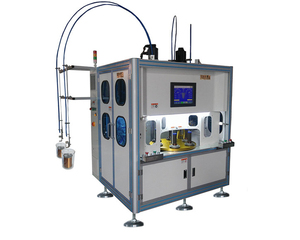
Electric Motor Armature Machine Automatic Rotor Production Line
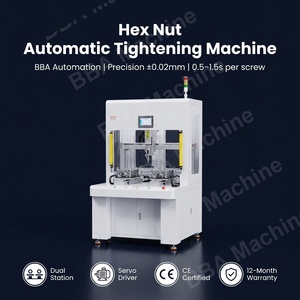
BBA Auto Hex Bolt Screw Feeding and Locking Machine for Industrial Engine Assembly Line
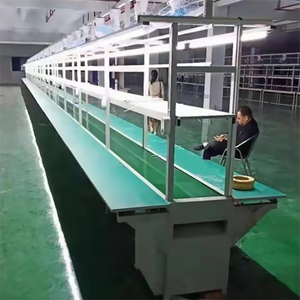
Automatic High Speed Adjustable Electric Motor Conveyor Belt Assembly Line
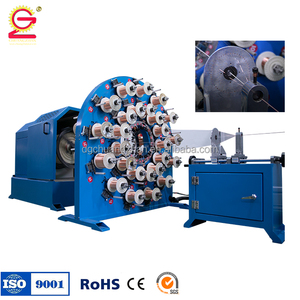
High Speed Automatic Motor Stator Winding Equipment Production Line
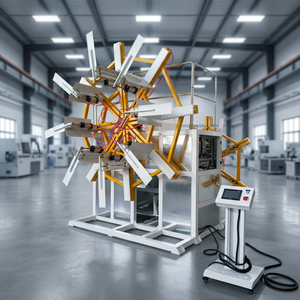
Pipe Coiler Winder Machine Tube Automatic Motor Coiling Machine
Comprehensive Engineering Guide: Next-Generation OEM Automatic Rotor Manufacturing
Modern electric motor manufacturing demands unprecedented levels of repeatability, energy efficiency, and dynamic balance stability. As global industries shift toward electric vehicles (EVs), high-efficiency Brushless DC (BLDC) systems, and power-dense industrial micro-motors, procurement teams face complex trade-offs between automated throughput, flexibility, and initial capital expenditure (CAPEX).
An Automatic Rotor Production Line integrates complex mechanical, electrical, vision-guided, and thermal processing modules into a unified automated line. From raw lamination core loading to final dynamic balancing and electrical testing, each stage must maintain tight tolerance controls (down to ±0.002 mm shaft runout and < 0.1 g·mm dynamic unbalance).
Core Architectural Process Flow of an Automated Armature/Rotor Line
Achieving a continuous takt time of 5 to 12 seconds per finished rotor requires strict synchronization across seven discrete manufacturing stations:
| Manufacturing Stage | Primary Technical Mechanism | Key Tolerance / Quality Target | Inspection & Control System |
|---|---|---|---|
| 1. Core & Shaft Assembly | Hydraulic Servo Shaft Pressing & Lamination Alignment | Pressing Depth ±0.05 mm, Concentricity < 0.015 mm | Load-vs-Displacement Monitoring (Kistler Sensor) |
| 2. Slot Insulation | Automatic Paper Feeding, Forming, Creasing & Insertion | Paper Edge Roll-over 0.5–1.2 mm, Zero Slot Tear | CCD Optical Edge Detection |
| 3. High-Speed Winding | Dual-Flyer CNC Precision Winding / Needle Winding | Coil Wire Tension ±2.5%, Tidy Slot Filling | Closed-Loop Servo Wire Tension Controllers |
| 4. Commutator Fusing/Welding | Inverter DC Hot Staking / Fiber Laser Spot Welding | Resistance Variation < 0.5%, Zero Hook Burrs | Infrared Pyrometer Temperature Control |
| 5. Trickle Varnishing | Induction Pre-heating & Resin Trickle Impregnation | 100% Slot Fill Retention, No Shaft Resin Runoff | Precision Peristaltic Dispensing & Weight Check |
| 6. Dynamic Balancing | Two-Plane Dynamic Unbalance Measurement & Milling | Residual Unbalance ≤ 0.1 g·mm (G2.5 Standard) | Piezoelectric Accelerometer Sensor Array |
| 7. End-of-Line (EOL) Test | Surge Impulse, Hi-Pot, Insulation Resistance, Resistance | 100% Electrical Fault Isolation | Integrated High-Voltage Digital Matrix Analyzer |
Key Technical Development Trends in Motor & Rotor Automation
Shift from Brushed DC to BLDC / Permanent Magnet Synchronous
Global regulations like EU IE4/IE5 energy efficiency directives are accelerating the phase-out of traditional brushed motors in HVAC and appliances. Production lines now prioritize BLDC inner-winding stators and automated surface/interior magnet insertion rotors with automated magnetic polarity testing.
AI Vision-Guided Inspection & Zero-Defect Governance
Traditional mechanical limit switches have been completely superseded by high-resolution CCD 2D/3D vision cameras. Inspection routines now verify magnet alignment, coil slot fill ratios, scratch detection, and commutator hook welding aesthetics in real-time within <200ms.
Rapid Digital Tooling Changeover (< 15 Minutes)
Modern motor manufacturers demand agile lines capable of running multiple rotor stack heights and shaft diameters on a single line. Servo-driven positioning and quick-change fixture modules reduce tooling swap times from 4 hours down to under 15 minutes.
Strategic Procurement Trends: What Global Motor Buyers Look For
When international Tier-1 automotive suppliers, power tool OEMs, and home appliance giants procure equipment from China, their criteria extend far beyond initial machine price. According to market data and engineering feedback, global buyers evaluate capital investments through five critical pillars:
1. Modular Scalability
Buyers start with semi-automated islands (standalone winding, balancing) and progressively connect them with robotic conveyors (AGV/OHT) as volume ramps up.
2. OEE & Traceability
Integration of OPC-UA protocols, SCADA systems, and MES connectivity allowing real-time tracking of line Overall Equipment Effectiveness (OEE) and component traceability.
3. Energy-Efficient Processing
Adoption of inverter-based hot staking and induction trickle varnishing, cutting power consumption by up to 45% compared to thermal convection curing ovens.
4. EHS & Noise Control
Enclosed acoustic safety guards keeping factory noise levels below 72 dBA, compliant with European CE and OSHA workplace standards.
Why Choose Suzhou Haplin Automation Equipment Co., Ltd.?
Founded in November 2012 in Suzhou, Jiangsu Province, China, Suzhou Haplin Automation Equipment Co., Ltd. is a high-tech equipment enterprise integrating research and development, custom precision engineering, component manufacturing, and global after-sales support.
Haplin specializes in custom OEM production lines for brushed motor armatures, BLDC stators and rotors, magnetic tile assembly units, and special multi-axis winding machinery. We don't just sell standard machines—our team analyzes your specific motor lamination stack, wire diameter range, and throughput targets to engineer tailored fixture tooling and PLC logic built specifically for your factory floor.
Frequently Asked Questions (FAQ) for Motor Production Line Sourcing
Essential guidance for procurement directors, manufacturing engineers, and plant managers.
Haplin designs custom assembly lines for a wide range of motor designs, including:
- Brushed DC Motors: Power tool armatures, automotive wiper/window lift motors, starter motors, and domestic appliance rotors.
- BLDC Motors: Inner-winding stators, outer-rotor BLDC assemblies, ceiling fan stators, and drone/EV micro-drives.
- Specialty Assemblies: Magnetic tile bonding lines, hex bolt tightening systems, and PE tube wrapping machines.
To provide an accurate engineering proposal, cycle time analysis, and line drawing, our engineering team requires:
- Rotor / Stator 2D/3D CAD drawings (stack height, shaft length, slot dimensions, commutator specs).
- Winding specifications: Wire gauge range (mm), number of turns per slot, hook connection schematic.
- Target production output per shift (e.g., 3,000 units / 8 hours) or target takt time.
- Desired automation level (standalone island vs. fully automated conveyor-linked line).
- Local factory power standards (e.g., 380V 50Hz 3-phase vs 480V 60Hz) and safety norms.
Yes. All Haplin single machines (such as paper inserters, flyer winders, hot staking welders, and dynamic balancers) are designed with standardized height, modular PLC control architectures, and conveyor pass-through heights. This allows growing manufacturers to invest in standalone units first and integrate automated loading arms, palleted belt conveyors, and MES software later as volume demands.
We execute a strict Factory Acceptance Test (FAT) protocol at our Suzhou facility. The line is run using the customer's actual sample laminations, wire, and commutators under real production speeds. We test for continuous yield rates, CPK values on critical press and weld operations, and electrical safety performance. Customers can witness FAT live in Suzhou or participate via high-definition multi-angle video FAT sessions.
Haplin provides comprehensive global support services:
- Full English HMI interfaces, wiring schematics, and operating manuals.
- Remote IP-gateway diagnostics for fast software troubleshooting and PLC program updates.
- On-site commissioning, installation assistance, and operator training by senior technical engineers.
- Standardized wearing parts (winding flyers, insulation blades, welding electrodes) stocked for express international dispatch.
Ready to Upgrade Your Motor Manufacturing Automation?
Contact our Suzhou engineering center today for technical consultations, customized layout proposals, and comprehensive equipment catalogs.