Engineering White Paper: Industrial-Grade OEM Brushless Motor Assembly Lines
As modern electromechanical systems transition toward higher power density, stringent energy efficiency benchmarks (IE4/IE5 standards), and thermal durability, global manufacturing plants are fundamentally updating their production architectures. The shift from traditional brushed direct current (DC) motors to advanced Brushless DC (BLDC) and Permanent Magnet Synchronous Motors (PMSM) demands a parallel transformation in manufacturing assembly line engineering.
Suzhou Haplin Automation Equipment Co., Ltd. (founded in November 2012 with registered capital of RMB 15.2 million) stands at the forefront of this industrial shift. Integrating R&D, structural precision engineering, CNC fabrication, proprietary PLC control software development, and turnkey global commissioning, Haplin engineers purpose-built OEM brushless motor assembly lines customized to exact client lamination stack heights, slot fill requirements, wire gauges, and takt-time targets.
1. Advanced Architectural Breakdown of Custom BLDC Assembly Lines
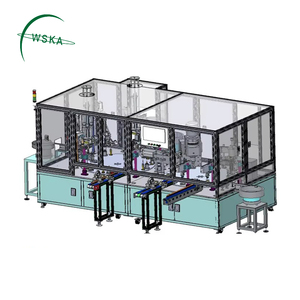
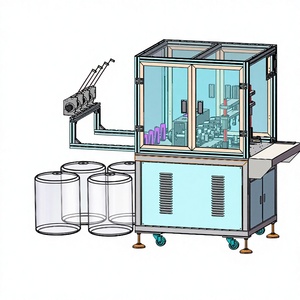
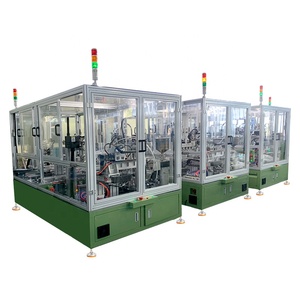
A high-performance OEM Brushless Motor Production Line built by Suzhou Haplin encompasses four interconnected sub-systems, engineered to run continuously in high-throughput industrial environments:
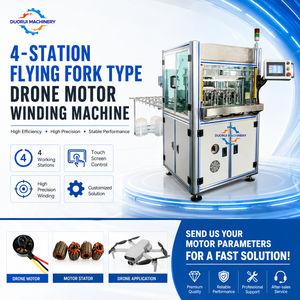
- Stator Manufacturing Automation Unit: Incorporating automatic slot paper insertion (wedge forming), high-speed multi-axis CNC needle winding (or flying fork winding for external rotors), automatic coil phase tapping, wire stripping, lead terminal insertion, and resin potting/varnish trickling.
- Rotor Processing & Assembly Module: Dedicated to automated shaft pressing, magnetic tile/segment insertion, precision adhesive dispenser metering, UV/thermal curing tunnels, dynamic rotor balancing correction, and protective sleeve crimping.
- Final Motor Mechanical Assembly Station: Seamlessly integrating front/rear bearing press-fitting, housing expansion thermal fit, stator-to-housing insertion, end-cover fastening, and encoder/Hall-sensor circuit board soldering.
- End-of-Line (EOL) Quality Verification Suite: 100% automated inspection testing for hipot dielectric breakdown, surge voltage insulation resistance, phase resistance balance, back-EMF symmetry, cogging torque, and vibration spectrum analysis.
2. Key Technical Specifications & Engineering Selection Matrix
When specifying a custom OEM brushless motor assembly line, engineering teams must evaluate structural and electrical parameters to balance capital expenditure (CAPEX) with daily operational efficiency (OPEX). Below is standard engineering telemetry provided by Suzhou Haplin Equipment:
| System Parameter | Standard BLDC Line Capability | High-Precision OEM Customization | Inspection / Control Method |
|---|---|---|---|
| Stator Outer Diameter (OD) | Ø15 mm – Ø180 mm | Customized up to Ø350 mm (Industrial Drives) | Precision Optical Laser Gauging |
| Wire Diameter Range | 0.08 mm – 1.6 mm | Parallel Multi-Strand (up to 12 strands) | Closed-Loop Servo Tension Controllers |
| Takt Time (Cycle Speed) | 12 – 25 sec / finished motor | High-Speed Single Unit (Under 6 sec) | Multi-Station Parallel Indexer |
| Positioning Repeatability | ±0.02 mm | ±0.005 mm (Servo-Spindle Driven) | Absolute Optical Encoders |
| PLC Control Standard | Siemens S7-1500 / Omron Sysmac | Beckhoff TwinCAT / Allen-Bradley PLC | Industrial Touchscreen HMI Interface |
| Insulation Resistance Test | 500V - 2500V DC (>500 MΩ) | Up to 5000V Surge / Partial Discharge | Automated High-Voltage EOL Tester |
3. Global Procurement & Market Future Trends (2025–2030)
As international supply chains shift toward decentralized, high-efficiency smart factories, procurement directors for motor manufacturing lines face unprecedented demands. Below are the primary market dynamics shaping equipment investments over the next decade:
- Transition to Modular Flex-Lines: Fixed dedicated lines are being replaced by modular quick-changeover platforms. Modern OEM assembly plants require tooling changeover times under 15 minutes to switch between different stack heights or wire turn configurations without re-programming the master PLC.
- Integration of FPV Drone & E-Mobility Lines: Micro-BLDC motors for UAVs, FPV racing drones, robotic joint actuators, and electric power tools require ultra-lightweight, high-slot-fill stators. Winding equipment must handle high thermal class wire without micro-abrasion of enamel coatings.
- Energy Efficiency Regulations (IE4 / IE5): International energy mandates necessitate precision stator lamination stack alignment and magnet positioning to minimize cogging torque, eddy current losses, and thermal dissipation.
- Poka-Yoke Machine Vision Integration: Optical inspection cameras are now natively integrated at every assembly station to verify insulation paper wedge placement, magnet polarity orientation, wire stripping length, and solder joint mass prior to final housing enclosure.