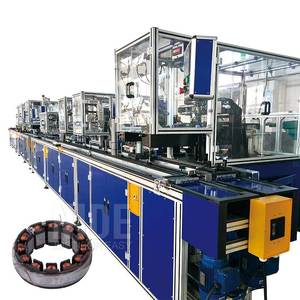
Flagship Automation Systems
Precision OEM Motor Manufacturing Equipment
Engineered for maximum slot fill ratio, micron-level repeatable accuracy, and uninterrupted 24/7 industrial production cycles.
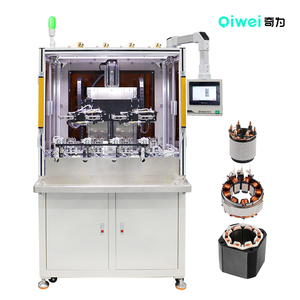
High Accuracy Automation Mechanical Equipment Electric Motor Winding Machine
View Line Details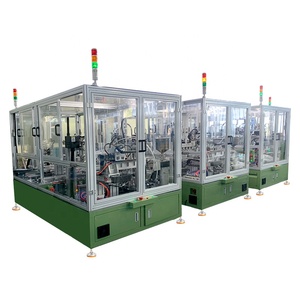
Integrated Motor Automatic Production Line for Industrial & Home Appliance Motors
View Line Details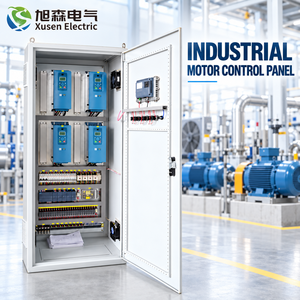
Custom Motor Control Panel with PLC HMI and Multiple VFDs for Process Equipment
View Line Details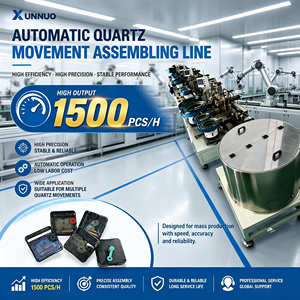
Customized PLC Controlled Automatic Micro-Motor & Precision Assembly Line
View Line Details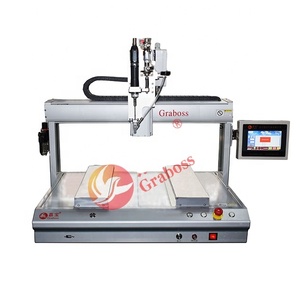
Desktop Double Y Platform Multi-axis Automatic Screw Locking Assembly Machine
View Line Details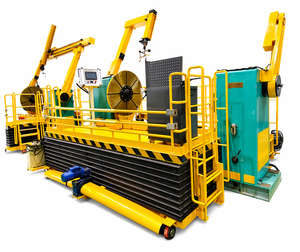
LEADWIN High-Torque VFD Speed Control Horizontal Transformer & Motor Winding Machine
View Line Details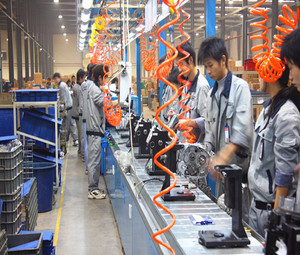
Heavy-Duty Motor & Powertrain Engine Assembly Production Line Equipment
View Line Details2012
Established in Suzhou Technology Hub
70+
Senior R&D & Automation Engineers
¥65M+
Annual Machinery Output Value
99.4%
First-Pass Yield Standard Rate
Executive Summary: Engineering Next-Generation OEM DC Motor Production Lines
In the modern electromechanical engineering landscape, the transition toward high-density power systems, brushless DC (BLDC) topology, and Permanent Magnet Synchronous Motors (PMSM) has reshaped manufacturing paradigm requirements. Tier-1 motor OEMs and global exporters face unprecedented demands: elevating slot fill ratios past 78%, minimizing Takt times to under 6 seconds per rotor, and guaranteeing zero-defect winding insulation across multi-thousand-unit daily operational shifts.
As a specialized original equipment manufacturer rooted in Suzhou's high-tech industrial cluster, Suzhou Haplin Automation Equipment Co., Ltd. engineered this whitepaper to provide plant directors, procurement managers, and production engineers with an authoritative blueprint. From brushed armature spot-welding synchronization to needle-winding kinematics for BLDC stators, automated assembly line architecture must balance mechanical rigidity, servo-driven tension control, and real-time SCADA/MES connectivity.
Architectural Foundations of High-Throughput Motor Manufacturing Lines
A fully integrated custom OEM DC motor production line comprises three interconnected, modular domains: Stator Sub-Assembly, Armature/Rotor Fabrication, and Final Electromechanical Integration. Engineering a line that mitigates mechanical vibration and thermal stress requires precise station balancing.
Stator Winding & Insulation Line
Employs multi-axis CNC flyer winding or direct needle winding modules. Integrates automated insulation paper insertion, slot wedge punching, trickling varnish curing, and surge/hipot electrical test stations.
Armature & Commutator Fusion
Dedicated to brushed DC motor rotors. Features high-speed core papering, double-flyer armature winding, automatic commutator riser hot-staking (resistance spot welding), dynamic balancing, and commutator precision turning.
Final Assembly & EOL Testing
Automated housing insertion, bearing press-fitting, magnet tile gluing and UV curing, end-cover screw locking, and 100% End-of-Line (EOL) testing measuring back-EMF, cogging torque, vibration, and acoustic noise levels.
5-Stage Manufacturing Workflow: From Lamination Stack to Finished Motor
Achieving structural consistency across high-volume production runs requires rigid adherence to sequential processing modules connected via low-friction magnetic or palletized chain conveyors.
01
Slot Insulation
Servo-driven slot paper insulation folding and insertion into lamination stacks without damaging iron core edges.
02
Precision Winding
High-speed flyer or needle coil winding with closed-loop magnetic tensioners preventing wire elongation and insulation degradation.
03
Termination & Fusing
In-line hot staking or wire termination connecting magnet wire leads to commutator bars or terminal PCBs with micro-ohm accuracy.
04
Balancing & Impregnation
Two-plane dynamic rotor balancing via automated weight removal (milling/drilling) combined with environmental trickling resin impregnation.
05
EOL Quality Inspection
Full spectrum automated testing verifying insulation resistance, phase inductance, direction of rotation, and load curve parameters.
Global Procurement Trends & Industrial Technological Shifts
As automotive electrification, robotic actuators, and energy-efficient HVAC equipment surge globally, procurement executives must anticipate technological shifts before finalizing capital expenditure (CapEx) investments in motor assembly lines.
1. Transition to Hairpin & Concentric Slot Designs
Traditional random wire winding is rapidly giving way to rectangular wire (Hairpin) technology in automotive traction and premium industrial DC/BLDC motors. Hairpin stator technology raises copper fill factors beyond 80%, substantially reducing thermal resistance and overall motor envelope dimensions. Production lines must incorporate specialized wire stripping, 3D bending, slot insertion, twisting, and laser welding modules.
2. AI-Assisted Machine Vision Inspection
Visual verification has evolved beyond simple optical presence checks. Contemporary OEM production lines embed high-resolution CMOS cameras paired with deep learning neural networks. These systems automatically detect copper wire crossover defects, insulation varnish micro-fissures, solder ball spatter, and lamination stack misalignment in under 200 milliseconds per station.
3. Modular Standardization vs. Quick-Change Tooling
Motor manufacturers no longer build single-purpose lines. Procurement directors demand modular frame architectures capable of handling multiple motor frame sizes (e.g., 55mm to 120mm stator diameters) with quick-change tooling fixtures requiring under 15 minutes of operator intervention. Servo-driven adjustments allow automated recipe loading via HMI touchscreen terminals.
4. Industry 4.0 Traceability & MES Integration
Traceability is mandatory for automotive and aerospace OEM supply chains. Modern lines upload individual component barcodes, winding tension curves, welding peak temperatures, and EOL test data directly to cloud-based Enterprise Resource Planning (ERP) and Manufacturing Execution Systems (MES) via OPC-UA or MQTT communication protocols.
Expert Buying Guide
Frequently Asked Questions: DC Motor Production Lines
Essential technical and operational answers to support supply chain directors, industrial engineers, and factory executives during vendor evaluation.
Which specific motor typologies and dimensional ranges can Haplin production lines process?
Haplin designs custom automated lines for both brushed DC motors (armature diameters 12mm to 90mm) and Brushless DC / Permanent Magnet Synchronous Motors (BLDC/PMSM stators with outer diameters up to 250mm). Our equipment covers power tool motors, home appliance blower motors, automotive actuator micro-motors, automotive cooling fan drives, and heavy-duty electric vehicle/motorcycle powertrains. Each tooling set is customized to your exact lamination drawing, stack height, wire gauge, and shaft specification.
What technical data and specifications are required to obtain a engineering proposal and quotation?
To generate an actionable line layout design and cycle time calculation, our engineering team requires: (1) 2D/3D component drawings of the rotor, stator, commutator, and housing; (2) Wire gauge (SWG/AWG) and slot turn counts; (3) Desired daily production capacity or required Takt time (e.g., 8 seconds per unit); (4) Desired degree of automation (fully automatic hands-off line vs. semi-automatic modular stations); and (5) Local factory power standard (e.g., 380V/415V 50/60Hz) and safety certifications (CE, UL).
Can we start with standalone automated machines and integrate them into a fully automated line later?
Yes. Haplin builds modular standalone machinery designed with standardized mechanical interfaces and PLC communication protocols. Clients frequently automate bottleneck operations first—such as replacing manual winding with our Stator Four-Station Winding Machine or Rotor High-Speed Winding Spot Welding Machine—and subsequently install robot loading arms, vision systems, and interconnecting pallet conveyors as market demand scales.
How does Suzhou Haplin guarantee quality and cycle time prior to overseas shipment?
Every machine undergoes rigorous Factory Acceptance Testing (FAT) at our Suzhou facility. We request clients to provide representative batches of raw materials (lamination stacks, magnet wire, commutators, shafts). We conduct continuous multi-hour production trials to verify Takt time, mechanical repeat precision (±0.02mm), winding tension stability, slot fill uniformity, and overall Cpk capability. International buyers can participate in FAT in person or approve via live HD video streaming and full statistical data reports.
What after-sales service, installation, and engineering support are provided for global exports?
Haplin provides comprehensive international support: English PLC user interfaces, detailed electrical/pneumatic schematics, operation manuals, and remote IoT diagnostic modules installed on control panels for immediate technical assistance. We dispatch field installation engineers to customer factories worldwide for mechanical setup, commissioning, process optimization, and operator training. Replacement spare parts are cataloged and shipped via express air delivery within 48 hours.
How does Haplin address wire tension control and prevent insulation enamel stripping during high-speed winding?
Winding wire insulation integrity is paramount. Haplin machinery incorporates electronic closed-loop tensioners equipped with real-time feedback sensors. As flyer rotation speed accelerates or decelerates, servo control dynamically adjusts braking torque, holding wire tension within a strict ±2% tolerance window. Ceramic wire guides and polished tungsten carbide nozzles ensure zero friction damage to enamelled copper wire during high-speed insertion.
What is the typical lead time for a complete custom OEM DC motor production line?
Standard standalone winding or welding machines are typically completed in 30 to 45 days. Complete turnkey custom production lines comprising multiple automated assembly stations, conveyor routing, and inline testing systems require approximately 75 to 110 business days depending on design complexity, station count, and custom tooling requirements.
Initiate Your Custom Motor Automation Project Today
Partner with Suzhou Haplin Automation to design a high-efficiency OEM DC motor production line tailored to your exact motor topology, output volume targets, and plant floor layout. Speak directly with our senior mechanical and electrical engineers.