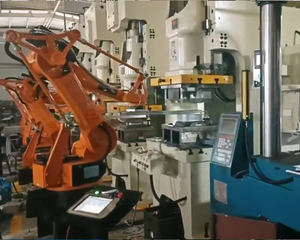
≤ 12s
Average Takt Time / Rotor Unit
≥ 99.8%
First-Pass Yield (FPY)
≤ G2.5
ISO Dynamic Balancing Grade
35%
Average Operational Cost Savings
Factory Direct Manufacturing Equipment
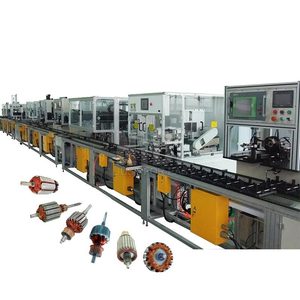
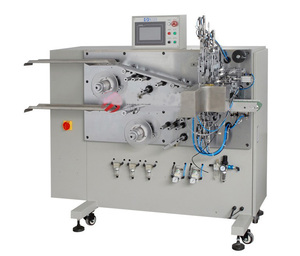
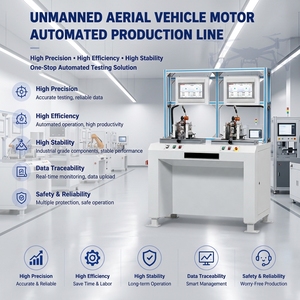
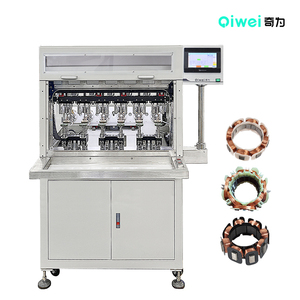
Featured Industrial Motor Automation & Production Lines
Explore our customizable OEM/ODM rotor, stator, coil winding, and assembly systems built to rigid industrial standards.
Industry Whitepaper & Technical Analysis
Engineering Principles of Modern Brushed Rotor Production
A comprehensive breakdown of automated armature assembly, quality control mechanisms, and process optimization for high-duty electric motors.
1. The Critical Role of Brushed Rotor Manufacturing in Modern Industry
Despite the rapid acceleration of brushless DC (BLDC) technology, brushed DC electric motors and universal armatures maintain a dominant global market share across power tools, automotive seat/window actuators, household appliances, and specialized industrial pumps. The reason lies in their unbeatable torque density at lower speed curves, cost-efficiency, simple driver electronics, and proven structural robustness.
However, mass manufacturing of high-performance brushed rotators demands extreme precise engineering. A single defective armature coil or an unevenly spot-welded commutator segment can cause premature brush wear, severe electrical arcing, excessive electromagnetic interference (EMI), or complete motor failure. As a specialized OEM/ODM Brushed Rotor Production Line Supplier & Wholesaler, Suzhou Haplin Automation Equipment Co., Ltd. resolves these challenges by integrating closed-loop servo feedback, digital tension control, and real-time visual inspection into automated assembly lines.
Key Technical Benchmark: Modern high-speed brushed rotor manufacturing lines must maintain a stack coaxiality tolerance within ≤ 0.012 mm, slot insulation paper insertion integrity at 100%, and dynamic balancing residual unbalance grade below ISO G2.5 to guarantee a service life exceeding 1,500 continuous operating hours.
2. Fundamental Process Flow of an Automated Brushed Rotor Production Line
A fully integrated brushed rotor automated assembly line seamlessly transitions silicon steel laminations, rotor shafts, commutators, and magnet wire into a tested, balance-corrected final armature assembly. Below is the technical breakdown of the 8 core automated operations:
01
Shaft Pressing & Core Stacking
Servo-electric press-fitting joins the precision-ground rotor shaft with the knurled armature lamination stack under monitored force-displacement curves.
02
Slot Insulation Paper Inserting
High-speed mechanical feeders fold and insert Nomex or DMD insulation paper into armature slots with zero edge tearing, preventing copper-to-core ground faults.
03
Commutator Pressing & Positioning
Automated indexers position the copper commutator onto the shaft, maintaining precise angular alignment relative to the core slots for correct commutation timing.
04
High-Speed Double-Flyer Winding
Twin servo flyer heads wind enamelled copper wire into rotor slots at speeds up to 3,000 RPM, governed by active closed-loop electronic tension controllers.
05
Double-Head Commutator Fusing
Resistance spot welding (hot staking) permanently fuses wire leads to commutator riser hooks using inverter DC welding power for consistent micro-ohmic contact.
06
Resin Trickling & IR Curing
Controlled thermal trickling applies electrical-grade insulating varnish to coil overhangs, followed by infrared induction curing to lock windings against centrifugal force.
07
Diamond Turning & Undercutting
Natural diamond cutting tools turn the copper commutator surface to Ra < 0.4 μm roughness, followed by high-speed mica undercut slotting and burr removal.
08
Dynamic Balance & Electrical Test
Two-plane dynamic balancing automatically removes weight via V-groove milling, concluding with 100% Hipot, surge, resistance, and bar-to-bar spark testing.
3. Technical Comparison: Legacy Manual Production vs. Haplin Automated Brushed Rotor Lines
Procurement teams and plant managers evaluating machinery investments must weigh initial capital expenditure (CAPEX) against long-term operational efficiency (OPEX). The matrix below demonstrates the quantifiable performance gains realized when transitioning to Haplin's automated brushed rotor lines.
| Performance Indicator | Traditional Semi-Manual Line | Haplin Turnkey Automated Line | Impact on OEM Manufacturer |
|---|---|---|---|
| Takt Time per Armature | 35.0 - 50.0 seconds | 8.0 - 12.0 seconds | >300% Capacity Acceleration |
| Direct Labor Requirement | 12 - 16 Operators / Shift | 1 - 2 Supervisory Operators | 85% Labor Reduction |
| Winding Tension Control | Friction Brake (Variable) | Active Closed-Loop Servo (±0.5N) | Eliminates Copper Stretching & Shorts |
| Commutator Spot Weld Quality | Manual Voltage Adjust / Visual Check | Inverter DC Power + In-line Resistance Audit | Zero Cold Welds & Arc Splatters |
| Dynamic Balance Precision | Manual Putty Addition (G6.3) | Automated Dual-Plane V-Milling (G2.5) | Dramatically Lower Motor Noise & Vibration |
| Traceability & MES Integration | Paper Logs / Standalone Testing | PLC EtherCAT / OPC-UA Industry 4.0 Standard | 100% Digital Birth Certificate per Rotor |
2025–2030 Global Market Procurement Outlook
Key Sourcing Trends in Motor Assembly Automation
How leading wholesalers, tier-1 suppliers, and OEMs are adapting their equipment procurement strategies for smart manufacturing.
1. Modular Tooling & Rapid Changeover Architecture
Global buyer demand has shifted from rigid single-model lines to flexible OEM/ODM platforms. Modern brushed rotor lines now feature tool-less quick-change fixture modules, recipe-driven digital adjustments, and quick-disconnect pneumatic lines, reducing product line changeover times from 4 hours down to under 25 minutes.
2. Real-Time Vision AI & In-Line Quality Gates
Wholesalers are demanding zero-defect tolerance from their production equipment. Integrating high-resolution CCD visual sensors and AI machine vision directly into paper insertion, winding wire arrangement, and commutator undercut stations eliminates bad parts before expensive downstream processing occurs.
3. Energy-Efficient Servo Drives & Regenerative Power
With industrial electricity prices rising globally, modern rotor lines utilize regenerative servo drives that feed energy back into the power grid during flyer deceleration cycles. This engineering upgrade lowers total plant power consumption by up to 22% compared to conventional motor lines.
4. End-to-End MES & Cloud Data Integration
Procurement specifications for 2025 and beyond mandate seamless integration with factory MES (Manufacturing Execution Systems). Haplin equipment comes pre-configured with OPC-UA protocols, allowing global managers to monitor live OEE, cycle times, yield rates, and predictive maintenance metrics remotely.
Why Partner With Haplin Automation
Suzhou Haplin: Your Trusted OEM/ODM Manufacturing Partner
Combining decade-long specialized R&D with rigorous quality validation to support global electric motor innovators.
Founded in November 2012
Headquartered in Weitang Town, Xiangcheng District, Suzhou, Jiangsu, China. Over 12 years of exclusive focus on electric motor manufacturing automation.
RMB 15.2M Registered Capital
Strong financial foundation supporting continuous technology investment, precision CNC machinery procurement, and large-scale turnkey project execution.
70+ Expert Engineers & Staff
In-house mechanical designers, electrical control engineers, PLC programmers, and international after-sales technicians delivering tailored solutions.
RMB 65M+ Annual Output
Proven production capacity supplying custom brushed and brushless motor assembly equipment to tier-1 appliance, automotive, and power tool makers worldwide.
Full In-House R&D & Assembly
From initial motor sample evaluation and 3D layout simulation to fixture machining, assembly, program debugging, and factory acceptance testing (FAT).
Comprehensive Global Support
Complete English manuals, remote AR video troubleshooting, fast spare-parts dispatch, and optional on-site engineer commissioning anywhere globally.
Procurement & Technical Clarifications
Frequently Asked Questions
Detailed answers to common questions regarding line customization, delivery timelines, engineering requirements, and after-sales service.
What specific parameters are required to generate an accurate quotation for a brushed rotor production line?
To provide an engineered quote, our technical team requires: (1) 2D/3D technical drawings of your rotor core, shaft, and commutator; (2) Wire diameter, number of turns per slot, and slot fill requirements; (3) Target takt time or required shift capacity (e.g., 5,000 units/8-hour shift); (4) Desired automation level (fully automatic inline vs. semi-automatic modular stations); and (5) Local factory voltage standards (e.g., 380V 50Hz / 480V 60Hz) and safety compliance requirements (CE, UL, ISO).
Can Haplin accommodate custom OEM/ODM rotor designs with non-standard stack heights or shaft diameters?
Yes, custom engineering is our core strength. We design and manufacture bespoke tooling, servo-driven gripper systems, and adjustable loading magazines customized precisely to your rotor's physical parameters. Whether your application involves micro-armatures for automotive actuators (OD < 15mm) or heavy-duty power tool rotors (OD > 60mm), our engineering team tailors the tooling accordingly.
What is the standard lead time for a complete turnkey brushed rotor production line?
Standard lead times range from 60 to 90 calendar days following final design approval and receipt of customer rotor samples for testing. For single standalone machines (such as paper inserting machines or spot welding units), delivery can often be completed within 35 to 45 days.
How does Haplin verify line quality and performance before equipment is shipped overseas?
Every production line undergoes a rigorous Factory Acceptance Test (FAT) at our Suzhou manufacturing facility. We run trial batches using your actual rotor laminations, wire, and commutators to verify continuous takt time, Cpk values, and electrical test pass rates. Overseas customers can attend in person or witness a comprehensive live HD video stream and review full data analytics reports before authorizing shipment.
Can we begin with individual standalone machines and integrate them into a fully automated line later?
Absolutely. We build all standalone equipment (e.g., winding machines, fusing machines, dynamic balancers) with standardized mechanical interfaces and modular PLC control code. This allows growing manufacturers to invest step-by-step in individual stations initially and later connect them using robotic arms or conveyor belts into an automated inline system.
What after-sales service and spare parts support are offered for overseas clients?
We provide 12 months warranty on all mechanical and electrical components. Overseas clients receive complete HMI software interface in English, step-by-step video operation guides, remote diagnostic support via VPN/Ethernet connection, and fast courier dispatch for wear-and-tear items (such as tungsten spot-welding electrodes, diamond cutters, and flyer needles). On-site installation and commissioning by our senior automation engineers can also be arranged.
How do your lines handle wire tension control during high-speed flyer winding to prevent copper wire breakage?
Our high-speed winding modules incorporate active closed-loop electronic servo tension control rather than passive mechanical felt friction pads. The system continuously measures real-time wire tension and dynamically adjusts servo torque within milliseconds, keeping wire tension stable (±0.5N) across rotational acceleration, flyer constant speed, and deceleration indexing phases.
Ready to Upgrade Your Motor Manufacturing Efficiency?
Send us your product drawings or target production capacity today. Our application engineers will analyze your requirements and deliver a detailed technical proposal within 24 hours.