High-Precision Brushless & Brushed Motor Machinery
Engineered for low takt times, continuous reliability, and full process traceability across automotive, power tools, home appliances, and industrial drives.
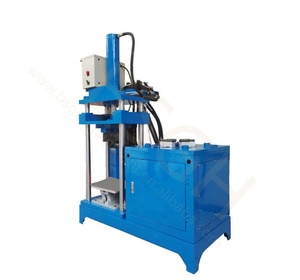
Electric Motor Stator Coil Winding Final Forming Machine
View Details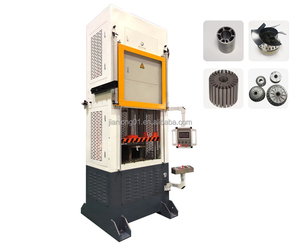
Precision Brushless DC Motor Stator Forming Machine Press
View Details
LEADWIN Torque VFD Speed Control Horizontal Winding Machine
View Details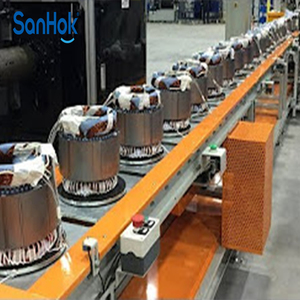
Semi-Automatic Agricultural Motors Assembly Conveyor Line
View Details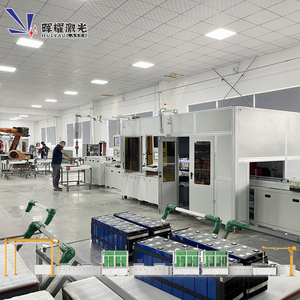
Automatic Prismatic EV Lithium Battery Pack Assembly Line
View Details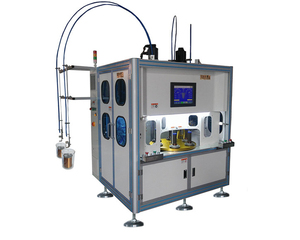
Electric Motor Armature Automatic Rotor Production Line
View Details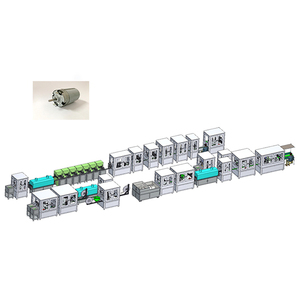
Customized AC/DC/BLDC Motors Automatic Assembly Line
View Details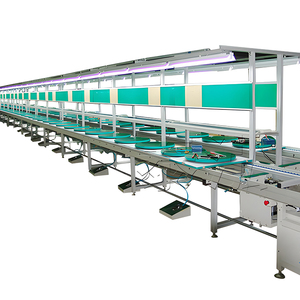
Electrical Assembly Double-Speed Chain Conveyor Production Line
View DetailsWhy Global Motor Manufacturers Partner with Suzhou Haplin Automation
Founded in November 2012 in the high-tech industrial hub of Suzhou, Jiangsu, China, Suzhou Haplin Automation Equipment Co., Ltd. has established itself as an authoritative leader in the R&D, custom engineering, and manufacturing of automated production systems for electric motors. Operating with a registered capital of RMB 15.2 million and a dedicated workforce exceeding 70 specialized control engineers, mechanical designers, and assembly technicians, Haplin delivers an annual equipment output exceeding RMB 65 million to tier-1 motor manufacturers around the globe.
Our comprehensive manufacturing portfolio spans fully automated brushless DC (BLDC) motor assembly lines, high-speed brushed motor armature production equipment, precision stator inner-winding units, rotor magnetic tile insertion stations, and custom double-speed chain conveyor systems. We combine rigorous mechanical engineering with sophisticated digital automation to solve complex manufacturing bottlenecks.
Turnkey OEM & ODM Capability
From customer lamination drawings and wire parameters to full-line CAD layout, fixture design, PLC programming, and final commissioning, we offer 100% customized manufacturing solutions engineered around your exact cycle-time targets.
Precision & Yield Optimization
Integrates closed-loop servo tensioning, multi-axis CNC needle winding heads, and optical vision inspection to consistently maintain slot fill rates up to 85% while preventing copper wire enamel degradation.
Industry 4.0 Architecture
Equipped with industrial Ethernet (Profinet/EtherCAT), centralized PLC controllers (Siemens/Mitsubishi), and MES-compatible protocols for real-time tracking of winding tension, press-fit forces, and electrical test data.
Technological Evolution & Production Bottlenecks in Brushless Motor Lines
The global transition from brushed DC motors to Brushless DC (BLDC) and Permanent Magnet Synchronous Motors (PMSM) is driven by demanding efficiency mandates (IE4/IE5 standards), higher power density requirements, and the proliferation of electric mobility, power tools, HVAC equipment, and robotics. However, manufacturing BLDC stators and rotors at scale introduces complex mechanical and electrical challenges that standard legacy machinery cannot solve.
1. Multi-Axis CNC Needle Winding vs. Flyer Winding Technologies
Modern BLDC stators feature concentrated inner-slot winding geometries where space constraints are severe. Traditional flyer winding often causes non-uniform wire layering, high copper resistance variations, and enamel damage. Haplin’s proprietary multi-axis CNC needle winding units utilize direct-drive linear motion modules coupled with dynamic servo tensioners. This ensures precise, layer-by-layer coil placement even in narrow slot openings, maximizing the copper slot fill ratio (up to 85%) and elevating overall motor thermal efficiency.
2. High-Precision Magnet Assembly & Rotor Dynamic Balancing
BLDC rotors require exact placement of high-coercivity Neodymium (NdFeB) magnets onto laminated stacks or shaft assemblies. Automated magnetic tile dispensing, adhesive curing, and sleeve pressing stations must execute under strict positional tolerances (<0.02 mm). Furthermore, high-rpm BLDC motors demand integrated two-plane dynamic balancing stations that automatically perform mass removal or balance weight placement directly inline, reducing vibration and audible noise in the final motor assembly.
3. Automated In-Line Quality Assurance & Electrical Testing
To eliminate manual inspection bottlenecks, Haplin’s modern BLDC manufacturing lines integrate continuous testing modules right after stator coil forming and lead wire termination. Automated testing suites execute: AC/DC Hipot Dielectric Withstand Tests, Insulation Resistance Testing, Surge/Impulse Waveform Analysis, and Precision DC Resistance Measurement. Defective stators are automatically routed to reject chutes via PLC signal flags, ensuring zero-defect output reaches the final assembly stations.
Hairpin Winding Tech Integration
Supporting next-generation EV drive motors with flat copper wire bending, slot paper insertion, twisting, and laser welding automation modules.
Quick Tooling Changeover
Modular tooling cartridges and recipe-driven servo height settings reduce line changeover time between different stack heights from 4 hours to under 20 minutes.
Closed-Loop Force Feedback
Servo-electric press-fitting stations monitor force vs. displacement curves in real time during bearing, shaft, and end-cover assembly steps.
Global Sourcing & Procurement Trends for Motor Production Equipment
As international original equipment manufacturers (OEMs) and contract manufacturing vendors evaluate capital expenditure (CapEx) investments for motor production capacity, several strategic sourcing trends have emerged in 2025–2030:
Shift from Standalone Machines to Fully Integrated Turnkey Lines
Historically, motor factories purchased standalone winding machines, slot paper inserters, and spot welders from disparate vendors, resulting in complex line integration, mismatched PLC communications, and divided warranty liabilities. Strategic buyers now prioritize single-source system integrators like Suzhou Haplin Automation, capable of supplying completely synchronized turnkey assembly lines with unified double-speed chain conveyors, centralized safety relays, and single-point SCADA interfaces.
Total Cost of Ownership (TCO) vs. Initial CapEx Evaluation
Wholesalers and enterprise buyers increasingly assess automation investments through TCO models rather than initial purchase price alone. Critical TCO metrics evaluated include:
- Power Efficiency & Air Consumption: Servo-electric press stations replace pneumatic cylinders, reducing factory compressed air demands by up to 35%.
- Spare Parts Interchangeability: Utilizing globally recognized standard components (e.g., SMC pneumatics, Schneider electrics, HIWIN linear guides) ensures low maintenance costs and immediate local part availability.
- Remote Tele-Service Capabilities: Integrated VPN routers allow machine builders to diagnose software bugs, perform remote PLC code updates, and assist plant operators without expensive overseas engineering travel.
Custom OEM/ODM Engineering Flexibility
No two motor designs are identical. Difference in lamination slot geometry, stack height (ranging from 10mm micro-actuators to 300mm industrial drives), wire gauge, and thermal insulation classes require bespoke tooling adaptation. Suzhou Haplin’s dedicated R&D team works under strict NDA frameworks to design custom tooling, pallet fixtures, and robotic loading end-effectors tailored to specialized motor geometries.
Frequently Asked Questions by Procurement Managers
Which motor topologies can Haplin automated lines manufacture? +
What technical parameters are required to receive a comprehensive technical proposal and quotation? +
- Stator and rotor 2D/3D CAD drawings with lamination dimensions (OD, ID, stack height).
- Wire diameter (mm/AWG), number of turns per slot, and winding connection scheme (Star/Delta).
- Target production capacity per shift (e.g., 3,000 units / 8 hours) or required takt time (e.g., 12 seconds/piece).
- Desired automation level (semi-automatic manual loading vs. fully automatic robotic cell).
- Factory supply voltage standards (e.g., 380V/415V/480V at 50/60Hz) and safety compliance rules.
Can we purchase standalone winding or forming machines first and automate the complete line later? +
How are equipment verification, Factory Acceptance Testing (FAT), and Site Acceptance Testing (SAT) executed? +
What after-sales warranty, spare parts, and technical support do overseas buyers receive? +
What is the average lead time for a complete custom BLDC motor manufacturing line? +
Accelerate Your Motor Manufacturing Automation Today
Partner with Suzhou Haplin Automation Equipment Co., Ltd. for engineering expertise, high first-pass yield, and custom OEM/ODM motor production equipment built to your exact specifications.
Contact Us