Precision-Engineered Motor Production Equipment
Explore our industrial-grade automated production modules, standalone winding machinery, and turnkey rotor assembly lines tailored for global electric motor manufacturers.
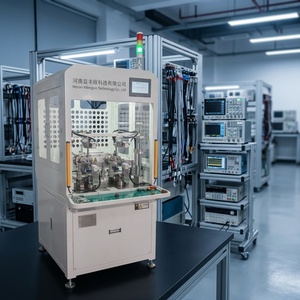
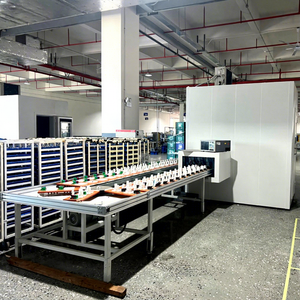
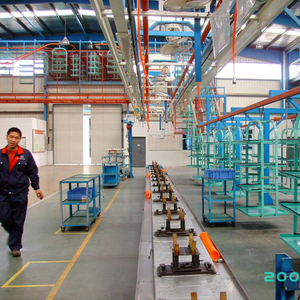
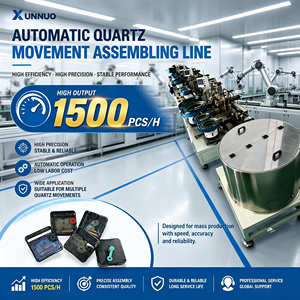
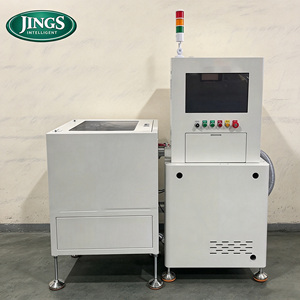
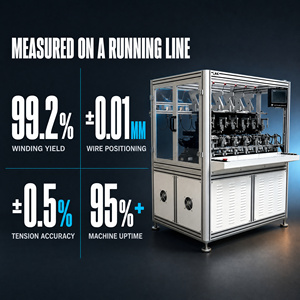
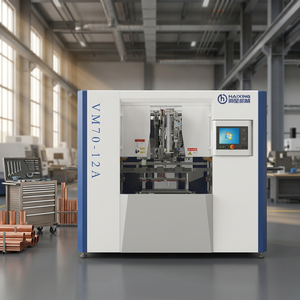
OEM & ODM Engineering Leadership: Suzhou Haplin Automation
In the high-stakes sector of electric motor manufacturing, purchasing an OEM/ODM Rotor Assembly Line represents a decisive capital investment that directly influences throughput yields, thermal performance, vibration harmonics, and total cost of ownership (TCO). Established in November 2012 in the advanced manufacturing hub of Suzhou, Jiangsu Province, Suzhou Haplin Automation Equipment Co., Ltd. (No. 35 Aige Hao Road, Weitang Town, Xiangcheng District) operates as a high-precision automation supplier integrating specialized R&D, precision machining, software engineering, and global field commissioning.
Operating with a registered capital of RMB 15.2 million and an elite workforce of over 70 mechanical designers, PLC control specialists, and quality control engineers, Haplin maintains an annual production output exceeding RMB 65 million. Our production facilities specialize in custom-engineered assembly automation for brushed DC armatures, brushless DC (BLDC) inner/outer rotors, permanent magnet synchronous motor (PMSM) rotors, shaded-pole stators, and magnetic tile positioning lines.
Unlike standard off-the-shelf machinery distributors, Haplin builds custom assembly lines configured around unique stack heights, wire gauges, slot fill ratios, lamination profiles, and target cycle times (takt time). Every line undergoes rigorous Factory Acceptance Testing (FAT) in Suzhou, verified using real customer laminations, shafts, and copper wire prior to international freight dispatch.
Engineering Deep-Dive: Modular Architecture of a Turnkey Rotor Line
A high-performance automated rotor assembly line transforms raw silicon steel laminations, precision-ground steel shafts, enamelled copper wire, and permanent magnets into fully balanced, tested, and varnish-impregnated rotor units. Depending on whether the motor architecture is brushed (commutator-based armature) or brushless (BLDC/PMSM internal/external rotor), the sequential engineering modules execute the following precision steps:
1. Shaft Pressing & Lamination Stacking
Servo-electric press modules with real-time force-displacement monitoring press the motor shaft into silicon steel lamination stacks. Closed-loop load cells ensure interference fit compliance without distortion or shaft runout.
2. Slot Insulation & End-Cap Insertion
Automated paper inserters cut, fold, and insert Nomex or DMD insulation film into armature slot cells at ultra-high speeds. End-cap placement units protect wire coils from edge shearing during high-tension winding.
3. CNC High-Speed Winding & Fusing
Dual-flyer or multi-axis needle winding heads coil magnet wire into slots with constant dynamic tension control. Hot-stake spot welders or micro-resistance fusing heads securely join wire leads to commutator hooks.
4. Automatic Magnet Insertion & Gluing
For BLDC rotors, high-resolution optical vision sensors guide robotic grippers to accurately insert Neodymium (NdFeB) permanent magnet tiles into surface slots or internal V-cavities with automated structural adhesive dispensing.
5. Dynamic Balancing & Material Removal
Two-plane soft-bearing dynamic balancing stations measure residual unbalance down to G2.5 standards. Integrated CNC milling cutters automatically remove precise metal mass from balancing rings to eliminate operational vibration.
6. Trickle Varnishing & End-of-Line Testing
Continuous resin trickle impregnation stations apply epoxy varnish, followed by induction curing ovens. Integrated EOL testing stations verify electrical resistance, surge insulation, Hipot breakdown, and Hall effect magnetic flux.
Automated vs. Legacy Rotor Line Performance Matrix
Upgrading from semi-automated single-cell machinery to a fully integrated CNC-controlled rotor production conveyor system dramatically enhances unit throughput while eliminating human assembly variance.
| Performance Metric | Fully Automated OEM Line (Haplin) | Semi-Automated Cell Setup | Legacy Standalone Line |
|---|---|---|---|
| Takt Time / Cycle Speed | 6.0 - 12.0 seconds / rotor | 25.0 - 45.0 seconds / rotor | > 90.0 seconds / rotor |
| Direct Manual Labor Required | 1 - 2 Supervisory Technicians | 6 - 10 Station Operators | 15+ Manual Workers |
| Balancing Precision (ISO 1940) | G1.0 - G2.5 (CNC Auto-Milling) | G6.3 (Manual Add-Weight) | Uncontrolled / Rough Check |
| Process Data Traceability | Full MES / OPC-UA / Cloud IoT | Local PLC Memory Logs | Paper Run Sheets |
| Quality Yield (First Pass) | ≥ 99.4% | 94.5% - 96.0% | < 90.0% |
| Changeover Setup Duration | 15 - 30 mins (Recipe Select) | 2 - 4 hours (Mechanical Swap) | Full Day Tooling Downtime |
Future Procurement Trends in Rotor Assembly Automation
As global industries accelerate electrification across automotive (EV traction motors), personal e-mobility, high-efficiency HVAC compressors, and industrial robotics, motor manufacturing procurement teams must anticipate several key structural trends driving automation design over the next decade:
1. Shift Toward Hairpin & High Fill-Factor Slot Designs: Traditional round wire winding is increasingly being replaced by rectangular wire "hairpin" designs and inner-winding stator/rotor configurations. High slot fill factors (>65%) demand extreme winding head motion control to prevent enamel wire insulation stripping during insertion.
2. Deep Integration of Machine Vision & AI Defect Inspection: Visual verification is no longer restricted to final quality control. Modern procurement specifications require inline cameras at magnet insertion stations, slot insulation paper fold checkers, and 3D laser profilers to measure commutator runout before resin trickle coating.
3. Flexible Modular Platform Engineering (Rapid Tooling Switch): Direct-to-consumer appliance makers and automotive Tier-1 suppliers demand modular conveyor platforms capable of handling multiple motor stack heights (e.g., 20mm to 120mm) on the same chassis with servo-driven digital adjustments rather than manual mechanical re-tooling.
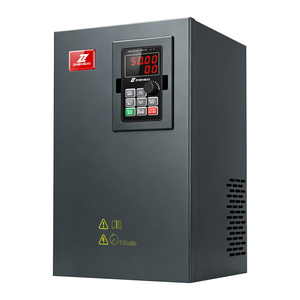
4. Strict Energy Efficiency & Carbon Footprint Monitoring: Modern European and North American buyers mandate that rotor line equipment incorporate energy-recovery VFD drives (such as 3-phase 380V VFD controllers) and servo-driven actuators instead of pneumatic cylinders to reduce plant pneumatic electrical consumption by up to 35%.
Cutting-Edge Innovations in Rotor Production Technology
Achieving superior power density in brushless motors requires overcoming thermal and mechanical limits. Suzhou Haplin Automation continuously integrates breakthrough engineering innovations into custom client lines:
Servo Electric Pressing with Dynamic Force-Distance Signature Analysis: Shaft-to-core press fitting generates critical strain. Haplin lines utilize piezoelectric force transducers that map load profiles against shaft position down to 0.001mm resolution, automatically rejecting laminations with burrs or oversized shaft diameters.
Non-Contact Laser Commutator Turning & Deburring: For brushed rotors, traditional diamond-tool lathe turning of commutators introduces copper microscopic burrs across mica slots. Our advanced lines offer integrated laser micro-ablation stations that polish commutator segments clean without mechanical tool wear.
Dual-Plane Automatic Dynamic Balancing via Closed-Loop CNC Milling: High-rpm BLDC rotors (operating above 20,000 RPM in power tools and vacuum suction turbines) require balance tolerance finer than 2 milligram-centimeters. Haplin balancing stations combine FFT vibration spectrum analyzers with 3-axis CNC milling heads to execute dynamic weight subtraction in a single chuck clamping cycle.
Frequently Asked Technical Questions (Buyer FAQ)
What technical information is required to receive a formal OEM/ODM engineering proposal?
Can Haplin lines support both Brushed Armatures and Brushless (BLDC) Rotors?
How does Suzhou Haplin ensure rotor dynamic balance quality on high-speed lines?
What is the standard delivery timeline for a custom automated rotor assembly line?
What international quality certifications and safety standards do your machines fulfill?
What after-sales service and remote diagnostic support are provided for overseas buyers?
Turnkey Custom OEM & ODM Engineering Capability
Whether you require a high-speed commutator spot-welding module or an end-to-end 40-meter automated rotor manufacturing line, Suzhou Haplin Automation provides full engineering lifecycle management. From initial finite element magnetic analysis consultation to floor commissioning, we optimize every stage of your production line for maximum ROI.
Ready to Automate Your Motor Production Line?
Send us your motor lamination drawings, wire specifications, and target daily output. Our senior automation engineers will respond within 24 hours with a customized line proposal.
Inquire Now