Featured Motor Manufacturing Equipment
High-precision stator, rotor, and complete turnkey assembly machines engineered for maximum throughput and low scrap rates.
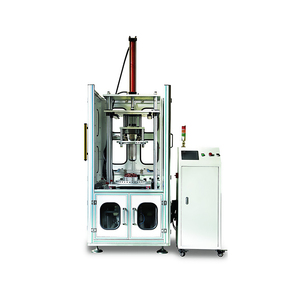
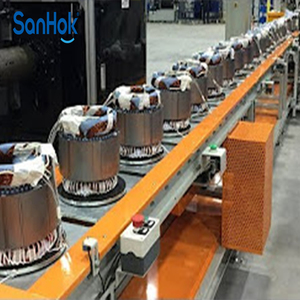
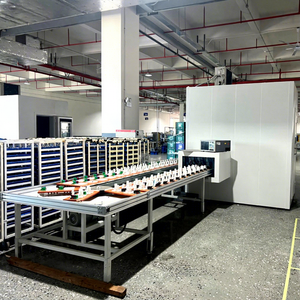
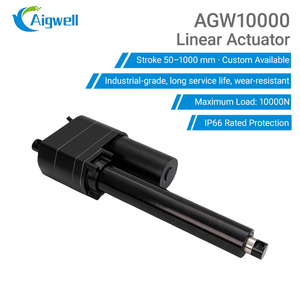
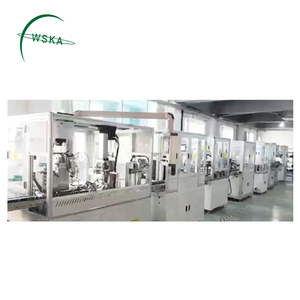
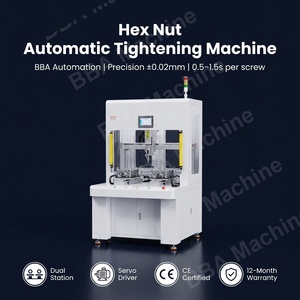
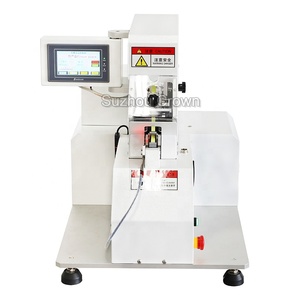
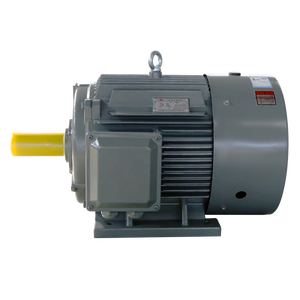
Executive Industry Overview: The BLDC Manufacturing Paradigm Shift
As global industries rapidly shift toward electrification, energy efficiency, and higher power-density requirements, Brushless DC (BLDC) motors have replaced traditional brushed DC and AC induction motors across automotive systems, HVAC units, cordless power tools, home appliances, and industrial robotics. However, manufacturing BLDC motors demands significantly higher precision compared to conventional motor lines. The transition requires advanced needle winding for inner stators, precise magnetic tile insertion, micro-welding of lead wires, high-speed dynamic balancing, and integrated End-of-Line (EOL) testing.
Technical Comparison Matrix: Key Assembly Line Metrics
Selecting the optimal BLDC motor manufacturing equipment factory requires a granular evaluation of machine performance, slot filling precision, automated changeover speed, and quality control integration.
| Assembly Process Stage | Critical Key Performance Indicators (KPIs) | Legacy/Manual Method | Advanced Automated BLDC Line | Yield Impact |
|---|---|---|---|---|
| Stator Core Insulation | Insertion precision, dielectric strength, zero paper damage | Manual / Mechanical die insertion | Fully Automatic High-Speed Paper Inserter / Epoxy Coating | + 99.8% Pass Rate |
| Coil Winding | Slot fill ratio, wire tension uniformity, turn accuracy | Flying-arm winding (External only) | Multi-station CNC Needle Winding (Inner/Outer) | + 40% Torque Output Density |
| Wire Termination & Welding | Contact resistance, zero thermal degradation | Hand soldering / Crimping | Automatic Resistance Spot Welding / Hot Staking | 99.9% Joint Reliability |
| Rotor Magnet Assembly | Air gap uniformity, glue dispensing repeatability | Manual magnet alignment | Robotic Magnet Insertion & Dynamic Balancing | - 85% Vibration Level |
| Quality Verification | Hi-Pot test, surge test, resistance, hall sensors | Post-assembly batch testing | 100% In-line Automatic EOL Testing Station | Zero Defect Delivery |
Top 10 BLDC Motor Assembly Line Manufacturers & Factories Analysis
An authoritative evaluation based on R&D depth, engineering customization, cycle time optimization, and global service capabilities.
1. Suzhou Haplin Automation Equipment Co., Ltd. (China)
Headquarters: Suzhou, Jiangsu Province, China | Established: 2012
Core Specialization: Turnkey Brushless & Brushed Motor Automated Lines, Inner-winding Stator Units, Armature Production Lines, Magnetic Tile Assembly, and Custom EOL Testing Systems.
Engineering Advantage: Founded with a capital of RMB 15.2 million and a dedicated R&D engineering team of over 70 specialists, Suzhou Haplin delivers tailored manufacturing lines reaching annual equipment output values above RMB 65 million. Haplin excels in non-standard automation customization, allowing motor manufacturers to configure modular stations according to exact lamination stack heights, wire gauges, and output requirements. Their systems feature parameter-driven digital quick-changeovers, integrated resistance spot welding, and robust factory acceptance testing (FAT).
2. Statimat / Schaeffler ELMOTEC (Germany)
Core Specialization: High-end automotive BLDC stator winding and hairpin technology.
Strengths: Statimat provides elite-tier manufacturing solutions tailored for EV traction motors and heavy-duty industrial BLDC stators. Known for premium precision, hairpin segment forming, and ultra-high slot fill factor handling, though capital expenditure demands are substantial.
3. Mikron Automation (Switzerland)
Core Specialization: High-speed modular assembly systems for medical & micro-BLDC motors.
Strengths: Mikron specializes in ultra-fast, ultra-precise micro-motor assembly platforms. Their systems are ideal for high-volume miniaturized brushless motors used in surgical tools, personal care devices, and high-precision actuators.
4. Odawara Engineering Co., Ltd. (Japan)
Core Specialization: Winding equipment, stator insertion, and industrial motor automation.
Strengths: Odawara brings decades of motor manufacturing legacy, delivering reliable equipment for household appliance BLDC motors and industrial pump motors, focusing heavily on winding consistency and mechanical longevity.
5. Marsilli S.p.A. (Italy)
Core Specialization: Precision coil winding and motor assembly integration.
Strengths: Marsilli is a global leader in coil winding and assembly solutions, offering sophisticated wire-handling components and multi-axis CNC winding heads for complex BLDC stator topologies.
6. ATS Automation Tooling Systems (Canada)
Core Specialization: Full factory turnkey manufacturing systems and robotic integration.
Strengths: ATS develops custom end-to-end assembly lines for tier-1 automotive motor suppliers, integrating vision verification, laser welding, and automated material handling on a enterprise scale.
7. Nidec Read / Automation Systems (Japan)
Core Specialization: In-line motor inspection, winding, and robotic assembly cells.
Strengths: Leverages Nidec’s extensive internal motor production expertise to build highly optimized motor assembly modules tailored for automotive cooling fan motors and hard disk drive motors.
8. DMG MORI Automation / Teamtechnik (Germany)
Core Specialization: EOL test benches, high-precision assembly modules for electric drives.
Strengths: Renowned for extreme rigid construction, precise dynamic force monitoring, and sophisticated software architecture for EV brushless powertrain assembly lines.
9. Oda Selsn Co., Ltd. (Japan)
Core Specialization: Needle winding technology for brushless stators.
Strengths: Highly focused on multi-pole inner winding machines with exceptionally stable tension management, protecting thin magnet wire insulation during high-speed winding cycles.
10. Ningbo Cixing Automation (China)
Core Specialization: Automatic motor production lines and single-station winding machines.
Strengths: Offers cost-effective entry points for manufacturers upgrading from manual assembly to semi-automatic motor production for small household appliance motors.
Future Procurement & Technological Trends in BLDC Assembly Lines
As smart factories advance under Industry 4.0 standards, plant managers and procurement directors must align equipment purchases with upcoming technological shifts:
- 1. Multi-Axis CNC Needle Winding with Active Tension Feedback: Conventional flyer winders struggle with inner-slot BLDC stators. Future lines utilize multi-axis CNC needle winding heads equipped with real-time closed-loop tension sensors to prevent wire stretching or micro-cracks, ensuring consistent copper fill factors exceeding 85%.
- 2. Automated Fast-Changeover Modular Tooling: Modern motor manufacturers are shifting away from dedicated single-product lines toward flexible platform lines. Equipment designed with servo-driven width adjustments and quick-release pallet fixtures allows operators to switch between different stack heights and rotor diameters in under 15 minutes.
- 3. AI-Driven Vision Inspection & Machine Learning EOL Testing: Computer vision systems now inspect slot insulation placement, terminal wire routing, and magnet glue dispensing before parts advance to subsequent stations. Integrated EOL testing stations utilize machine learning algorithms to detect subtle acoustic and vibration anomalies before final packaging.
- 4. Eco-Friendly Energy Management & Traceability (SCADA/MES): Energy-efficient servo drives and regenerative braking systems on conveyor lines lower total factory power consumption. Comprehensive barcode/QR-code laser marking ensures full component-level traceability from raw lamination stacks to finished BLDC motor shipment.
Buyer's Roadmap: How to Source a BLDC Production Line Efficiently
To avoid costly project delays and ensure seamless equipment commissioning, purchasing teams should execute a systematic evaluation process:
Step 1: Specification Brief
Provide detailed motor 2D/3D drawings, stack height ranges, wire diameters, turn counts, target shift output (PPH), and local plant voltage standards (e.g., 380V 50Hz vs 480V 60Hz).
Step 2: FAT & Sample Trial
Insist on Factory Acceptance Testing (FAT) using your actual rotor/stator samples in the manufacturer's workshop to verify cycle time (Takt time) and yield rates prior to shipment.
Step 3: Lifecycle Support
Confirm vendor remote diagnostic capabilities, availability of fast-wear spare parts (winding needles, welding tips), and comprehensive English technical documentation.
Why Choose Suzhou Haplin Automation Equipment Co., Ltd.
Operating from Suzhou, Jiangsu — China's premier automation manufacturing hub — Suzhou Haplin Automation Equipment Co., Ltd. has established itself as an authoritative partner for electric motor producers globally since November 2012.
Combining R&D innovation, mechanical engineering precision, and rigorous after-sales support under one roof, Haplin offers distinct operational advantages:
Comprehensive Customization & Modular Flexibility
Unlike rigid standardized machinery suppliers, Haplin designs station layouts around your factory floor plan, existing conveying height, and specific motor topology — whether for micro power tool armatures or automotive BLDC stators.
Proven Track Record & Annual Scale
With an annual output value exceeding RMB 65 million and over 70 engineering and technical personnel, Haplin possesses the capacity to deliver multi-station lines on tight commissioning schedules.
Full Assembly Line Portfolio
From standalone paper inserters and four-station stators to high-speed commutator spot welders, magnetic tile gluing lines, and full automatic BLDC assembly lines.
Overseas Support & Remote Diagnostics
Complete English documentation, HMI interfaces in multiple languages, remote diagnostic modules, and live-video factory acceptance testing (FAT) for international buyers.
Frequently Asked Questions (FAQ) for BLDC Line Sourcing
Clear technical answers addressing common engineering and commercial queries from plant buyers.
Which specific motor types can Haplin automated production lines process?
What engineering information is required to request a customized quote?
- Motor 2D/3D drawings or physical samples (stator, rotor, housing).
- Wire diameter (mm/AWG), turn numbers, and connection schematic.
- Target production volume per shift or required cycle time (Takt time).
- Automation preference (Semi-automatic standalone vs Fully automatic conveyor line).
- Local plant power specifications (Voltage, Frequency, Air pressure).
Can we start with standalone machines and automate into a full line later?
How is equipment quality and cycle time verified before overseas shipment?
What after-sales service and spare parts support are provided internationally?
What is the average lead time for a turnkey BLDC motor production line?
Does Haplin equipment support MES (Manufacturing Execution System) connectivity?
Upgrade Your Motor Assembly Automation Today
Send your motor technical drawings or sample specifications to our Suzhou engineering team. Receive a free line layout proposal, cycle time estimate, and competitive quotation within 24 hours.