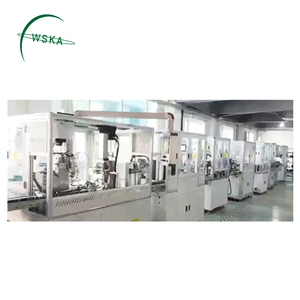
Featured Automation Systems
High-Precision BLDC & Motor Production Solutions
Explore our flagship automated motor processing lines, precision coil winding units, and turnkey assembly equipment engineered for global export.
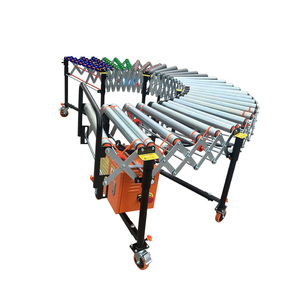
Assembly Line Custom Motorized Roller Conveyor Adjustable Speed Electric Drive
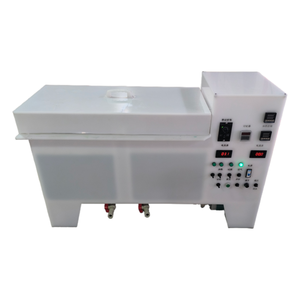
Shenzhen Factory Customized Electroplating & Galvanizing Production Line Equipment
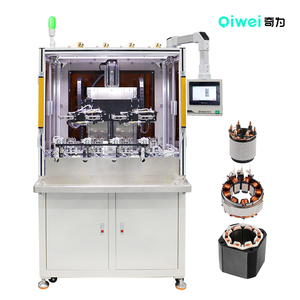
High Accuracy Automatic Electric Motor Coil Winding Machine
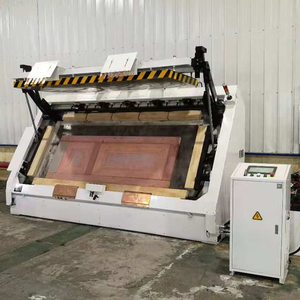
High Frequency 20KW Motor & Pump Wood Panel Joining Press Frame Assembly Machine
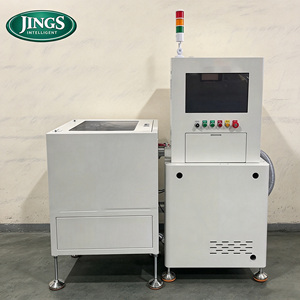
Automated Vision Appliance Motor Magnet Assembly Machine
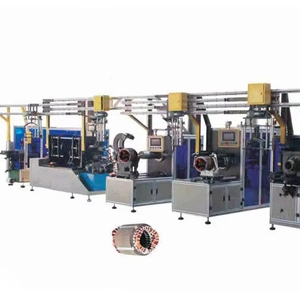
NDQ240308GM01 Electric Motor Assembly & Automated Processing Line
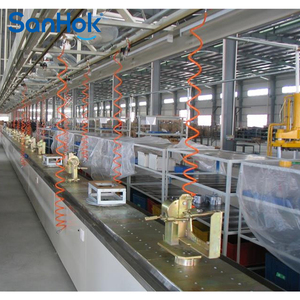
Car Motor Automatic Conveyor Electromobile Engine Assembly Line
Manufacturing Excellence
Why Top Global Tier-1 Motor Makers Partner with Suzhou Haplin
Established in November 2012 in Suzhou, Jiangsu, Suzhou Haplin Automation Equipment Co., Ltd. stands as an industry-leading high-tech enterprise specializing in turnkey motor manufacturing automation solutions.
2012
Established in Suzhou, China
¥15.2M
Registered Capital (RMB)
70+
Expert R&D & Engineering Staff
¥65M+
Annual Equipment Output Value
In the rapidly evolving electromechanical sector, the transition from conventional brushed motors to high-efficiency Brushless DC (BLDC) and Permanent Magnet Synchronous Motors (PMSM) demands unprecedented precision in manufacturing equipment. Suzhou Haplin Automation Equipment Co., Ltd. operates at the epicenter of this transformation. Integrating advanced R&D, structural engineering, precision assembly, sales, and global commissioning, Haplin delivers customized industrial solutions across the entire motor manufacturing spectrum.
Information Gain Insight: Modern BLDC motor production is no longer constrained by mechanical assembly speeds, but by slot fill ratio control, servo-tensioned coil placement accuracy, and dynamic balancing tolerances. Leading global exporters must provide integrated inline machine vision, real-time closed-loop tensioning, and MES-ready data architectures to prevent insulation damage and thermal hot-spots.
Executive White Paper: Global Top 10 BLDC Motor Manufacturing Equipment Exporters Benchmark
Procuring BLDC motor assembly automation involves navigating complex technical specifications including lamination stack height variability, wire gauge ranges (0.05mm to 1.8mm), needle winding kinematics, and magnet inserting force control. To guide global procurement managers, automotive OEMs, and home appliance tier-1 suppliers, this comparative matrix evaluates the top global factories and exporters based on key engineering metrics.
| Manufacturer / Exporter | Core Specialization | Primary Target Markets | Key Technological Advantages | Automation Level |
|---|---|---|---|---|
| Suzhou Haplin Automation (China) | Turnkey BLDC Stator Inner Winding, Rotor Lines & Magnetic Tile Assembly | Global (Automotive, Power Tools, Home Appliances, Industrial HVAC) | Custom fixture engineering, high slot-fill needle winding, modular conveyor integration, rapid tool changeover (<15 mins) | Full Turnkey & Semi-Auto Flexible Lines |
| Statomat (Germany) | Heavy-Duty Stator Insulation & Winding Machines | Automotive EV Powertrains, Heavy Industrial | Hairpin winding systems, ultra-high slot fill capability, rigid mechanical engineering | Fully Automated Heavy Lines |
| Odawara Engineering (Japan) | High-Speed Flyer Winding & Small Stator Lines | Micro-motors, Precision Consumer Electronics | Extremely high-speed coil winding, ultra-fine wire tension stability | High-Speed Automated Cells |
| Bdronic (Germany) | EV Stator Production & Trickle Impregnation | Electric Vehicle Motors, E-Mobility | Advanced trickling insulation, stator slot paper insertion precision | Custom Enterprise Automation |
| Marsilli (Italy) | Coil Winding & Assembly Systems | Automotive Components, Solenoids, Sensors | Flexibility in winding kinematics, multi-spindle coil positioning | Modular Automated Workcells |
| Nidec-Shafer (USA/Global) | Industrial Motor Assembly Lines | Commercial HVAC, Large Industrial Drives | Robust structural press-fitting, heavy rotor balancing integration | Integrated Production Lines |
| ATOP Solutions (Italy) | Automated Traction Motor Lines | Automotive EV & Hybrid Drives | 3D slot insulation, automatic lead wire termination and fusing | Fully Automated Lines |
| Stoba Automation (Germany) | Custom Assembly & Laser Welding Cells | High-Precision Micro BLDC & Actuators | Inline micro-laser welding, vision-guided component positioning | Robotic Automated Cells |
| Shenzhen Automation Leaders (China) | BLDC Appliance Motor Assembly | White Goods, HVAC Fans, Drone Motors | Cost-effective line integration, rapid delivery timelines | Flexible Automated Lines |
| Ningbo Motor Tech (China) | Armature & Commutator Lines | Power Tools, Cordless Outdoor Equipment | High-speed spot welding, automatic commutator trickling | Semi to Fully Automated |
Engineering Breakdown: Advanced Technical Architecture of BLDC Manufacturing Equipment
BLDC motor manufacturing demands a paradigm shift from traditional brushed DC armature processing. Because BLDC motors place the phase windings on the stationary outer/inner stator and permanent magnets on the inner/outer rotating rotor, the machinery required relies heavily on non-contact sensing, precision servo positioning, and complex wire path management.
Precision Needle Winding Technology
Utilizes multi-axis CNC servo synchronization to feed wire directly into narrow inner-slot stators. Closed-loop active tension controllers prevent enamel stripping while maximizing copper slot fill factors up to 78%.
Vision-Guided Magnet Assembly
Integrates high-resolution industrial cameras and AI optical algorithms to inspect magnetic tile polarity, measure adhesive dispensation thickness, and verify robot magnet insertion depth down to ±0.01mm.
Automated Rotor Dynamic Balancing
High-speed spin testing stations measure single-plane or dual-plane unbalance vectors. Automated CNC milling or weight-addition heads automatically correct mass distribution in real time within cycle times under 18 seconds.
End-of-Line (EOL) Electrical Testing
Comprehensive automated testing cells perform surge voltage withstand testing, AC/DC hipot isolation checks, phase resistance measurement, inductance matrix evaluation, and Back-EMF curve analysis before packaging.
Smart Factory & Industry 4.0 MES Integration
Equipped with OPC-UA protocols, Ethernet/IP, and real-time SCADA connectivity. Every production batch records individual motor serial numbers, torque curves, coil resistance values, and operator logs for total traceability.
Modular Conveyor & Flexible Pallet Transfer
Heavy-duty motorized roller conveyors and high-speed pallet routing systems allow rapid adjustment between different motor frame sizes (e.g., NEMA 17 to NEMA 42, or 28mm to 120mm stator outer diameters).
Future Procurement Trends & Manufacturing Evolution (2025–2030)
As global industries accelerate electrification across automotive, HVAC, robotics, and consumer electronics, procurement directors must anticipate critical technological shifts in BLDC motor production equipment. Sourcing decisions made today will impact plant profitability and yield for the next decade.
Key Procurement Trend 1: Transition to Flat Wire & Hairpin Winding for E-Mobility
While round-wire needle winding remains dominant for micro-motors and home appliances, automotive traction motors and high-power industrial drives are rapidly transitioning to hairpin (flat copper wire) winding technology. Hairpin lines demand specialized slot paper insertion, 3D wire bending, laser stripping, laser welding, and automated trickling resin systems capable of handling extreme current densities.
Key Procurement Trend 2: AI-Powered Defect Prevention over Post-Assembly Inspection
Modern global buyers are rejecting traditional offline batch testing in favor of inline AI vision inspection. Deep-learning camera networks monitor magnet surface micro-cracks, wire crossover defects during winding, and terminal crimp integrity at the exact moment of operation, automatically rejecting non-conforming parts before high-value downstream assembly steps.
Key Procurement Trend 3: Rapid Tooling Changeover & High-Mix Low-Volume (HMLV) Agility
Factory floors are shifting away from rigid, single-model dedicated lines. Leading exporters are designing modular quick-change tooling pallets, tool-less quick-clamp fixtures, and servo-parameterized recipe switching on HMI touchscreens, enabling full stack-height and stack-diameter changeovers in under 15 minutes.
Procurement Guide
Frequently Asked Questions (FAQ) for BLDC Equipment Sourcing
Answers to common technical, commercial, and operational questions asked by global plant managers and procurement teams.
What parameters are required to generate an accurate BLDC production line technical proposal?
To provide a comprehensive technical proposal and station layout, our engineering team requires: (1) 2D/3D component drawings of stators, rotors, and final motor assembly; (2) Wire gauge specifications, turn counts, and slot fill requirements; (3) Target takt time or annual volume (PPH - Parts Per Hour); (4) Required level of automation (manual loading, semi-automated cells, or 100% full turnkey line); and (5) Local factory electrical standards (e.g., 380V 50Hz / 480V 60Hz).
How does Suzhou Haplin ensure coil insulation integrity during high-speed needle winding?
Suzhou Haplin integrates multi-axis closed-loop servo tensioning systems combined with ceramic wire guides and polished tungsten carbide needle tips. This eliminates sudden tension spikes, maintains steady tension throughout complex slot geometries, and prevents wire enamel scraping or micro-fractures, ensuring zero hipot failure rates.
Can Haplin’s production lines accommodate both brushed DC armatures and brushless BLDC stators?
Yes. While brushed armatures require commutator slot paper inserting, flyer winding, and spot welding, and BLDC stators utilize inner-slot needle winding, Haplin manufactures dedicated standalone modules as well as hybrid flexible lines. Modern plant setups can link separate rotor/armature lines and stator lines into a centralized automated final assembly conveyor.
What factory acceptance testing (FAT) and commissioning standards are followed for international buyers?
All equipment undergoes rigorous Factory Acceptance Testing (FAT) at our Suzhou facility. We run customer-provided raw materials for continuous dry-run and full-speed production runs to verify Cpk (Process Capability Index), cycle time, and dimensional tolerances. Overseas buyers can attend in person or conduct remote video FAT. Upon delivery, our field application engineers provide onsite Site Acceptance Testing (SAT), installation, and operator training.
What is the typical lead time for a custom automated BLDC motor assembly line?
Standard standalone machines (such as single-station winding machines or paper inserters) typically ship within 30 to 45 days. Complete turnkey BLDC stator, rotor, and assembly lines generally range from 90 to 120 days from final design sign-off, depending on line complexity, robotics integration, and station count.
Accelerate Your BLDC Manufacturing Automation Today
Partner with Suzhou Haplin Automation Equipment Co., Ltd. for engineering expertise, custom line design, and proven reliability. Contact our senior automation engineers for a customized technical quote.