Featured Brushed & Automated Motor Production Equipment
Explore turnkey manufacturing lines, high-speed winding equipment, and precision assembly solutions engineered for maximum operational throughput.
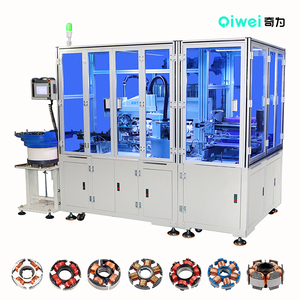
CNC Fully Automatic Production Line for Motor Stator Winding Machine
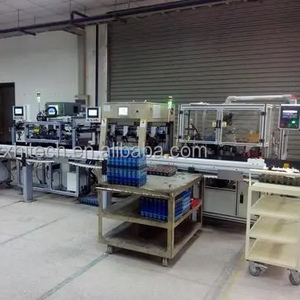
High-Speed Motor Production Line
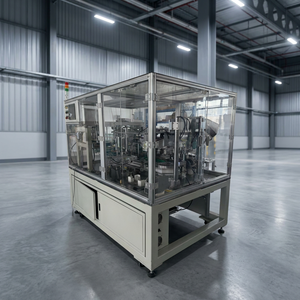
Turnkey Automated Custom Motor Assembly Line
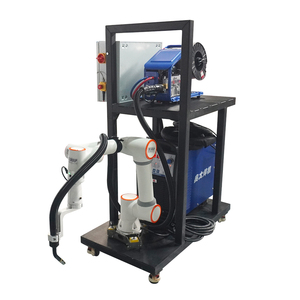
High Quality Electric Motor Arm Automated Production Line
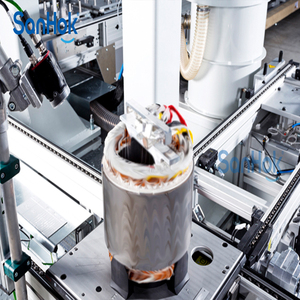
Semi-Automatic Motor Assembly Line Equipment
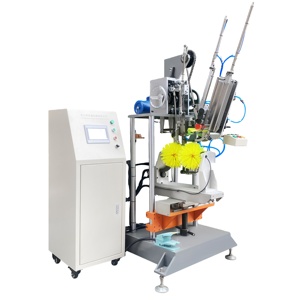
Fully Automated Servo Motor Production Machinery
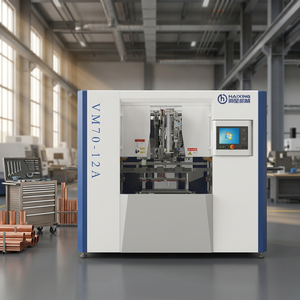
Elevator Motor & Brush Assembly Equipment
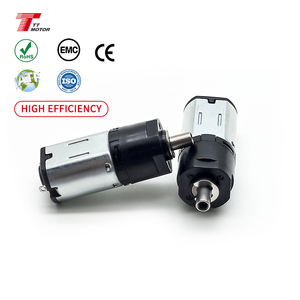
Mini Compact Brushed DC Motor Production System
1. Executive Overview: The Enduring Value of Brushed Motor Automation
Despite the rapid proliferation of brushless DC (BLDC) technology across consumer electronics, the global market for Brushed DC (BDC) Motors remains robust, expanding across industrial automation, power tools, automotive sub-systems, HVAC controls, and household appliances. Valued for their exceptional starting torque, simple drive architecture, cost-effective speed regulation, and structural reliability, brushed motors continue to dominate high-volume production schedules worldwide.
However, manufacturing brushed motors at global scale presents severe engineering bottlenecks when relying on manual or semi-automated work cells. Challenges such as inconsistent copper wire tension during flyer winding, commutator riser degradation during hot-staking, dynamic unbalance in high-speed armatures, and insulation paper misplacement directly compromise Overall Equipment Effectiveness (OEE) and elevate scrap rates. Modern procurement directors and plant operational leaders must transition toward fully integrated, CNC-controlled Brushed Motor Manufacturing Lines capable of continuous 24/7 takt time execution.
Technical Insight: A fully automated brushed motor manufacturing line integrates paper insertion, slot insulation, high-speed flyer winding, commutator hot-staking/welding, trickling/varnishing, dynamic balancing, diamond-tool turning, and End-of-Line (EOL) electrical testing into a single continuous conveyorized loop—reducing unit labor costs by up to 78% while guaranteeing a first-pass yield above 99.2%.
2. Global Benchmark: Top 10 Brushed Motor Manufacturing Line Factories & Wholesalers
Selecting the appropriate machinery supplier requires an in-depth audit of engineering expertise, core patents, custom tooling flexibility, and post-installation technical support. Below is an authoritative evaluation of the Top 10 Brushed Motor Manufacturing Line Suppliers operating globally.
1. Suzhou Haplin Automation Equipment Co., Ltd.
Based in Suzhou, China, Haplin is an engineering heavyweight specializing in custom turnkey assembly lines, rotor/stator winding machinery, and automated armature systems. With an annual output exceeding RMB 65M and 70+ technical personnel, Haplin delivers high-precision modular equipment tailored to automotive and tool applications.
Global Leader • Turnkey Integration2. Schaeffler ELMOTEC STATOMAT (Germany)
Renowned for heavy-duty stator and rotor automation. Statomat excels in high-volume industrial motor lines with proprietary winding tech, though capital expenditure requirements remain significantly higher than Asian equivalents.
Premium Tier • High Precision3. Aumann AG (Germany)
Specializing in winding and assembly automation for electric traction drives and automotive micro-motors. Aumann provides highly sophisticated digital twin modeling and Industry 4.0 data logging systems.
Automotive Focus • Industry 4.04. Odawara Engineering (Japan)
A long-standing Japanese OEM manufacturer known for ultra-precise winding tension control and mechanical longevity. Ideal for micro-motors requiring stringent noise and vibration control.
Ultra-Reliable • Micro-Winding5. Rimac Technology (Italy)
Pioneers in heavy industrial motor maintenance equipment, commutator mica segment undercutting, and large-scale industrial armature processing machines.
Heavy Machinery • European Engineering6. Kaido Manufacturing Co., Ltd. (Japan)
Specialized machinery producer focusing on high-density winding structures and custom spooling systems with automatic wire stripping capabilities.
Winding Specialist • Custom Tooling7. Shenzhen Risun Automation (China)
Focuses on consumer motor assembly systems, offering fast pallet transfer conveyors and basic semi-automated testing modules for regional Asian assembly hubs.
Cost Competitive • Rapid Delivery8. Nidec Systems Division (Global)
Offers global turnkey factory automation programs, integrating stamping presses, die-casting, and assembly cells for global tier-1 motor sub-assembly plants.
Tier-1 OEM • Turnkey Plants9. DMG MORI Systems Division
Integrates heavy CNC machining centers with robotic arm material handling for heavy-duty motor housings, shaft turning, and commutator diamond finishing.
Robotic CNC • Heavy Duty10. Sanhok Automation (China)
Specialized supplier of modular conveyor lines, semi-automatic motor assembly tables, and custom magnetic tile placement fixtures for small to mid-scale factories.
Modular Lines • Flexible Setup3. Technical Benchmark Matrix: Key Stations in a Brushed Armature Line
To evaluate potential OEM suppliers effectively, procurement engineers must compare line capabilities across critical production steps. Below is a standard engineering matrix representing the baseline specifications provided by leading factory manufacturers like Suzhou Haplin Automation.
| Station Module | Key Process Function | Engineering Benchmark Standard | Critical Quality Control Gate |
|---|---|---|---|
| 1. Insulation Paper Inserter | Inserts slot insulation paper into rotor stack slots automatically. | Cycle time: < 1.2 sec/slot; Paper feed length precision: ±0.1mm. | Visual detection for torn, short, or missing paper folds. |
| 2. High-Speed Flyer Winder | CNC double-flyer winding of enameling copper wire into armature slots. | Flyer Speed: Up to 3000 RPM; Magnetic brake tension control ±2g. | Resistance monitoring across turns; automatic wire breakage stop. |
| 3. Commutator Spot Welder | Thermo-crimping or inverter DC spot welding wire leads to riser slots. | Current accuracy: ±1%; Pressure feedback loop; Zero spark output. | Weld hook resistance check; temperature history logging. |
| 4. Varnish Trickling & Drying | Applies resin impregnation to fix coil windings and prevent thermal drift. | Infrared pre-heating; controlled flow-rate trickling nozzle; zero leakage. | Coil insulation resistance test (> 500 MΩ at 1000V DC). |
| 5. Dynamic Balancing Machine | Measures rotational unbalance and removes excess iron stack material via drilling. | Balance accuracy: ISO 1940 G2.5; residual unbalance < 2 mg·mm. | Dual-plane vibration sensors; automatic re-test cycle gate. |
| 6. Diamond Tool Commutator Turning | Lathe turning of the copper commutator surface using diamond tooling. | Surface finish Ra < 0.4 μm; Concentricity runout < 0.005mm. | Laser micrometric diameter and roundness verification. |
| 7. End-of-Line (EOL) Tester | Final electrical validation before housing installation. | Integrated HIPOT (Withstand Voltage), Surge, Resistance & DOR test. | Automatic fail-item sorting & laser marking rejection. |
4. Future Procurement Trends in Motor Manufacturing Machinery
As motor manufacturers face global shifts toward localized supply chains, rising energy costs, and stringent efficiency directives, the equipment procurement strategy for 2025 and beyond is shifting dramatically:
Rapid Tooling Changeover (< 30 Mins)
High-mix, low-volume manufacturing requires production lines capable of accommodating multiple stack diameters and shaft lengths. Modern lines feature servo-adjusted fixtures, modular winding heads, and recipe-driven HMI software to drastically cut downtime.
Real-Time MES Data & Traceability
Global buyers demand complete traceability for every motor produced. Modern lines record wire tension graphs, spot weld energy curves, dynamic balance values, and EOL test results per barcode, uploading data directly to plant Manufacturing Execution Systems (MES).
Hybrid Line Architecture (Brushed/BLDC)
Forward-thinking manufacturers invest in modular line chassis that can be converted from brushed armature processing to BLDC inner/outer stator winding with minimal mechanical retrofit, protecting capital investment against market shifts.
5. Technical Innovations & Next-Gen Manufacturing Trends
In traditional motor manufacturing, wire tension fluctuations during high-speed flyer winding lead to copper stretch, thinning enamel insulation, and premature motor failure under heavy duty cycles. To counter this, advanced factories are integrating closed-loop servo tensioning systems with real-time hysteresis control.
Furthermore, high-precision laser welding is increasingly replacing traditional resistance hot-staking for commutator connection. Laser welding eliminates thermal stress on neighboring insulation, provides a 100% metallurgical bond, and creates consistent electrical contact even under extreme ambient temperatures.
Why Partner with Suzhou Haplin Automation Equipment Co., Ltd.?
Founded in November 2012 in Suzhou, Jiangsu, China, Suzhou Haplin Automation Equipment Co., Ltd. is a high-tech manufacturing leader specializing in full-line automated motor equipment. With a registered capital of RMB 15.2 million, a 70+ strong team of senior automation engineers, and an annual output exceeding RMB 65 million, we deliver complete R&D, precision manufacturing, and international field service.
- End-to-end custom engineering based on customer motor drawings & samples
- ISO-certified manufacturing quality control with complete factory pre-acceptance (FAT)
- Closed-loop servo tensioning and high-speed CNC winding technologies
- Comprehensive technical service: English installation manuals, remote diagnostics, and on-site engineering
6. Frequently Asked Questions (FAQ) for B2B Procurement Managers
Here are expert answers to critical questions faced by procurement teams when sourcing automated motor manufacturing lines:
What specific motor parameters are required to generate an accurate machinery quote?
To provide a precise station layout and cycle time simulation, our engineering team requires: (1) 2D/3D component drawings of the armature, stator, commutator, and shaft; (2) Magnet wire gauge and number of coil turns; (3) Target output per shift (takt time requirement); (4) Local factory voltage/frequency (e.g., 380V 50Hz / 480V 60Hz); and (5) Desired level of line automation (semi-automatic vs. fully automated pallet line).
Can a single brushed motor production line handle multiple motor models?
Yes. Haplin builds modular, quick-changeover production lines. By swapping out standardized tooling fixtures and selecting pre-programmed recipes on the touchscreen HMI, operators can switch stack diameters, rotor stack heights, and turn counts in under 30 minutes.
How is dynamic balance verified during the automated assembly process?
Our integrated dynamic balancing station spins the finished armature at operational speeds, measures unbalance magnitude and angular position across dual planes, and uses servo-driven milling cutters or drills to remove precise weight from the lamination stack until residual unbalance meets ISO 1940 G2.5 standards.
What Factory Acceptance Testing (FAT) takes place prior to overseas shipment?
Prior to delivery from our Suzhou facility, equipment undergoes continuous trial runs using the customer's actual lamination stacks, commutators, and copper wire. We verify cycle time, line efficiency (OEE), scrap rates, and electrical safety standards. Overseas buyers can inspect testing in person or via live HD video streaming.
What after-sales and installation support is provided for international orders?
Haplin provides comprehensive English operational documentation, PLC wiring schematics, spare parts kits, and 24/7 remote diagnostic support. In addition, our field engineers can be dispatched globally to your facility for site setup, line commissioning, and operator training.