High-efficiency, ISO-certified automated assembly units, coil winders, and turnkey lines engineered for global electric motor manufacturers.
Technical White Paper: Advanced Automated Rotor Production Lines
In the modern manufacturing ecosystem, electric motor performance directly dictates the energy efficiency, noise vibratory profile (NVH), and reliability of automotive powertrains, industrial drives, household appliances, and power tools. At the structural core of every electric motor lies the rotor—the high-speed rotating component responsible for electromagnetic torque conversion. As global OEMs transition toward high power density, tighter copper slot fill ratios, and brushless DC (BLDC) architectures, legacy manual and semi-automatic production lines can no longer meet strict mechanical tolerances or aggressive cycle-time targets.
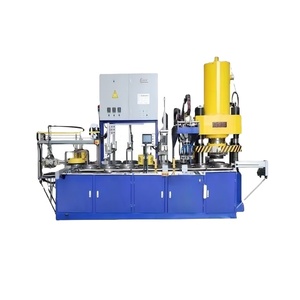
As a leading Chinese supplier and direct factory wholesaler, Suzhou Haplin Automation Equipment Co., Ltd. (founded in November 2012 in Suzhou, Jiangsu) engineers custom turnkey rotor manufacturing lines designed for continuous 24/7 operation. Integrating mechanical design, hardware precision machining, closed-loop servo control systems, automated vision inspection, and SCADA/MES connectivity, Haplin provides state-of-the-art solutions for both brushed commutator armatures and brushless (BLDC/PMSM) permanent magnet rotors.
Sequential Process Engineering of an Automated Rotor Manufacturing Line
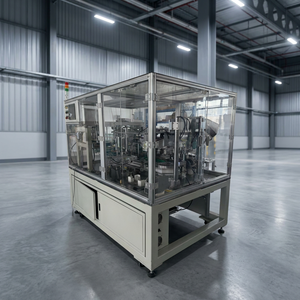
A fully integrated rotor production line executes a synchronized sequence of high-precision electro-mechanical steps. Each station is equipped with dedicated sensors, photoelectric monitoring, and servo-driven tooling to eliminate operator human error:
- Lamination Stacking & Shaft Pressing: Silicon steel laminations are automatically fed, weighed, stacked, and hydraulic/servo press-fitted onto precision-ground steel shafts with micron-level axial alignment and concentricity control.
- Insulation Slot Paper Insertion: High-speed automated inserters fold, cut, and insert slot insulation paper (NMN, DMD, or Nomex materials) into the armature core slots with 100% optical presence verification.
- High-Speed Precision Rotor Winding: Dual-flyer or needle winding heads apply enamelled copper wire into armature slots with closed-loop active wire tension control, preventing micro-scratches on insulation varnish while optimizing wire packing density.
- Commutator Hot-Staking / Spot Welding: For brushed armatures, wire leads are fused to commutator riser slots using high-frequency inverter DC hot-staking. Microprocessor-controlled current profiles guarantee zero cold-weld defects.
- Trickle Varnish & Thermal Curing: Resin trickling or dipping under controlled heating environments secures copper windings against centrifugal deformation and thermal breakdown under high RPM operating conditions.
- Dynamic Balancing & Automatic Weight Removal: Integrated dynamic balancing units measure unbalance vectors in dual correction planes. Automated milling cutters or drill heads instantly remove excess material to bring rotational balance within strict specifications.
- End-of-Line (EOL) Electrical & Optical Testing: 100% automated testing covering coil resistance, surge insulation (inter-turn short circuit), Hipot dielectric strength (dielectric breakdown voltage), and 2D vision checking of key mechanical dimensions.
Engineering Breakdown: Brushed Armature vs. BLDC Rotor Lines
Choosing the correct line architecture depends on the internal rotor topography and electromagnetic design of your motor. The table below highlights key technological differences between Haplin’s specialized manufacturing configurations:
| Specification / Process Parameter | Brushed Motor Armature Production Line | BLDC / PMSM Permanent Magnet Rotor Line |
|---|---|---|
| Primary Rotor Component | Slotted iron core, commutator, copper magnet wire | Permanent magnets (NdFeB/Ferrite), rotor shaft, sleeve |
| Core Winding Method | High-speed flyer armature winding (Direct slot coil) | Stator inner-winding or outer-rotor needle winding |
| Joining Technology | Hot-staking / Resistance spot welding to commutator | Automated magnet insertion, potting, or robotic laser welding |
| Insulation Requirement | Slot paper insertion, trickling/dipping varnish coating | Epoxy powder coating, magnet retention wrapping, sleeve press-fit |
| Unbalance Correction | V-shape slot milling on lamination core outer diameter | Precision axial drilling or selective epoxy weight balancing |
| Quality Control Focus | Commutator bar-to-bar resistance, surge voltage breakdown | Surface magnetic field mapping (Hall probe), shaft runout (<5µm) |
| Automation Integration Level | Full Turnkey: Papering → Winding → Fusing → Testing | Modular Cell: Magnetizing → Glue dispensing → Assembly |
Future Procurement & Industry Trends in Motor Automation
As the global market accelerates toward electrification in automotive EV traction, e-mobility, industrial robotics, and smart HVAC systems, procurement teams must evaluate rotor production machinery through a forward-looking technological lens. The following key trends are reshaping equipment purchasing strategies for 2025 and beyond:
1. Flat-Wire Hairpin Technology Migration
While conventional round enamel wire winding remains dominant for micro-motors, heavy-duty industrial and EV rotors are rapidly adopting rectangular copper hairpin technologies. Production equipment must offer sub-millimeter bender precision, automated twist-forming, and high-energy laser welding modules.
2. Smart Cyber-Physical Systems & MES Readiness
Modern buyers demand complete process traceability. Standard machine architectures now incorporate OPC-UA communication protocols, industrial Internet of Things (IIoT) sensors, and seamless connectivity to enterprise MES (Manufacturing Execution Systems) for real-time monitoring of scrap rates, OEE, and tool wear.
3. High Slot Fill Factors (>65%)
Maximizing electromagnetic efficiency requires cramming more copper into constrained slot volumes. Advanced servo tension control systems and active wire guiding nozzles prevent wire overlap and insulation skin stripping during dense needle winding operations.
4. Sustainable Equipment & Stator/Rotor Recycling
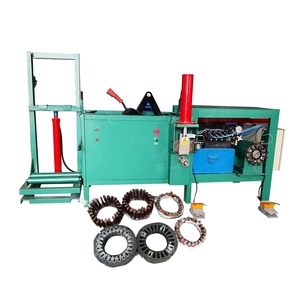
Circular economy regulations mandate end-of-life recovery. Leading manufacturers are investing not only in assembly lines but also in specialized copper extraction and stator/rotor recycling machinery that cleanly separates steel stacks from valuable copper wire without toxic chemical emissions.
Frequently Asked Questions (FAQ) for Global Buyers
Below are authoritative responses to common technical and commercial queries encountered during the technical evaluation and RFQ process for custom rotor lines:
Accelerate Your Motor Production Line Project Today
Leverage Suzhou Haplin Automation’s 12+ years of manufacturing engineering excellence. Contact our senior automation experts for customized line designs, cycle time evaluations, and factory-direct wholesale pricing.