Featured Stator & Motor Production Lines
Explore our industrial-grade automated equipment engineered for high slot fill factors, maximum operational uptime, and seamless Industry 4.0 integration.
2012
Established in Suzhou
70+
R&D & Engineering Experts
¥65M+
Annual Equipment Output
100%
Turnkey Factory FAT Tested
Engineering Dominance & Manufacturing Excellence
Why Tier-1 Global Motor Manufacturers Partner with Suzhou Haplin Automation Equipment Co., Ltd.
Pioneering Motor Stator & Rotor Automation Since 2012
Founded in November 2012 in Suzhou, Jiangsu—China’s premier industrial automation hub—Suzhou Haplin Automation Equipment Co., Ltd. operates with a registered capital of RMB 15.2 million and a dedicated workforce of over 70 highly skilled engineers and technicians. Generating an annual equipment production value exceeding RMB 65 million, Haplin has established itself as an authoritative leader in electric motor manufacturing technology.
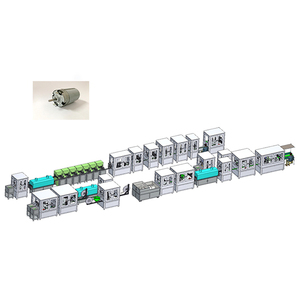
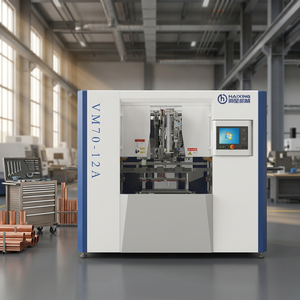
We integrate whole-process design, CNC precision manufacturing, intelligent PLC software deployment, and comprehensive global field service under one unified quality management standard. Our machine portfolio ranges from individual slot insulation paper inserters to completely integrated, multi-station BLDC stator needle-winding lines.
- Customized Tooling & Modular Engineering: Tailored to lamination stack diameters, slot configurations, and magnetic geometry.
- High Slot-Fill Ratios: Precision tension control systems supporting dense copper fill factors up to 75% without enamel damage.
- Complete Digital Traceability: Integrated SCADA, MES connectivity, and real-time vision verification for zero-defect assembly.
- Turnkey Production Capability: End-to-end lines for Brushed DC, Brushless DC (BLDC), AC Induction, and Hairpin Stators.
Core Technical Advantages of Our Stator Systems
Built for Continuous 24/7 Heavy Industrial Operation with Minimum Maintenance Takt Times
Multi-Axis Servo Motion Control
Utilizing high-speed Japanese and European servo controllers (Siemens/Mitsubishi), our stator winding machines execute synchronized multi-axis interpolations. This eliminates wire crossing, maintains exact turn counts, and guarantees balanced phase impedance.
Automatic Paper Inserting & Lacing
Our stator paper insertion units form, cut, and seat slot insulation with micrometer precision. Coupled with automated end-coil lacing and shaping units, we deliver structural integrity capable of withstanding extreme thermal cycles and severe vibration.
In-Line Vision & Quality Diagnostics
Integrated camera arrays inspect lead wire positioning, terminal fusing quality, and insulation clearance in real time. Defective stators are automatically diverted before downstream potting or casing encapsulation.
Future Procurement Trends in Stator Production Equipment
Strategic Insights for Supply Chain Directors and Plant Managers (2025–2030 Horizon)
The global transition toward high-efficiency electric powertrains—spanning Electric Vehicles (EVs), industrial robotics, energy-saving HVAC systems, and next-generation household appliances—has fundamentally transformed the technical requirements for motor stator production equipment. As global energy efficiency standards push toward IE4 and IE5 super-premium efficiency ratings, motor original equipment manufacturers (OEMs) must upgrade their production technologies to maintain market competitiveness.
1. The Shift from Flying Winding to Inner-Slot Needle Winding & Hairpin Architecture
Historically, traditional brushed and basic AC induction motors relied heavily on flyer winding techniques. However, the rise of Brushless DC (BLDC) and Permanent Magnet Synchronous Motors (PMSM) demands internal needle winding where the wire nozzle moves inside the stator bore. This ensures compact end-turns, reduces copper loss, and minimizes thermal resistance.
Simultaneously, for high-power automotive and industrial drive stators, Continuous Hairpin (Flat Wire) Stator Technology is rapidly displacing round wire configurations. Hairpin stators achieve slot fill factors exceeding 70-75% (compared to 45-50% for standard round wire), significantly improving power density and heat dissipation. B2B buyers procuring China stator production equipment are increasingly seeking modular manufacturing platforms capable of handling both multi-pole needle winding and automated flat-wire hairpin forming, insertion, twisting, and laser welding.
2. Automation 4.0, Cyber-Physical MES Integration & Flexible Tool Changeover
Modern stator equipment lines are no longer stand-alone mechanical units; they are fully digitized cyber-physical systems. Modern procurement specs prioritize key functional capabilities:
- Automated Tooling Changeover: Quick-change modular fixtures that reduce tooling swap times from 4 hours down to under 15 minutes, allowing short-run flexibility for multi-model motor factories.
- Closed-Loop Tension Monitoring: Active electronic tensioning systems that dynamically adjust wire tension depending on winding speed and slot position, preventing micro-fractures in enamel insulation coating.
- OPC-UA & MQTT Smart Factory Interfaces: Standardized industrial communication protocols that feed real-time production statistics, OEE (Overall Equipment Effectiveness), and predictive maintenance metrics directly to corporate MES systems.
3. Total Cost of Ownership (TCO) vs. Initial Capital Expenditure (CapEx)
International buyers sourcing from Chinese stator equipment suppliers are increasingly evaluating projects through the lens of Total Cost of Ownership (TCO) rather than initial CapEx alone. High-tier suppliers like Suzhou Haplin Automation differentiate themselves by utilizing premium international brand components (e.g., THK guide rails, SMC pneumatics, Omron/Siemens controllers, Mitsubishi servos). This ensures that while initial procurement costs remain globally competitive, long-term operational costs, downtime, and spare parts wear are minimized over a 10-to-15-year machine lifecycle.
Standard Stator Winding Machine Technical Capability Matrix
| Technical Parameter | BLDC Inner Needle Winding Unit | 4-Station CNC Stator Winding Line | Automatic Armature / Rotor Line |
|---|---|---|---|
| Stator Outer Diameter (OD) | Ø15 mm – Ø220 mm | Ø30 mm – Ø180 mm | Ø10 mm – Ø120 mm |
| Stack Height Range | 10 mm – 150 mm | 15 mm – 200 mm | 10 mm – 100 mm |
| Wire Diameter Range | 0.12 mm – 1.60 mm | 0.08 mm – 1.20 mm | 0.10 mm – 1.00 mm |
| Max Winding Speed | 1,200 RPM (Servo Driven) | 2,500 RPM (High Speed) | 3,000 RPM |
| Slot Fill Factor Capability | Up to 75% | Up to 65% | Up to 60% |
| Air Supply & Operating Power | 0.5–0.7 MPa | 380V 3Ph 50/60Hz | 0.5–0.7 MPa | 380V 3Ph 50/60Hz | 0.5–0.7 MPa | 220V/380V Custom |
Stator Equipment Procurement FAQ
Expert Answers to Critical Engineering, Installation, and Sourcing Questions
Which electric motor types can Haplin stator production lines process?
Suzhou Haplin Automation manufactures tailored production systems for a vast range of electric motors, including Brushless DC (BLDC) inner/outer winding stators, Brushed DC motor armatures and stators, AC Universal Motors, Permanent Magnet Synchronous Motors (PMSM), Servo Motors, Power Tool Motors, and Automotive Micro-Pump Motors. Each line is custom-configured around your exact lamination stack dimensions, slot counts, copper wire gauges, and target shift output requirements.
What technical details are required to receive a comprehensive line quote and layout drawing?
To provide an accurate engineering proposal and cycle time calculation (takt time), please provide:
1. Stator 2D/3D engineering drawings (Outer diameter, Inner diameter, stack height, slot dimensions).
2. Wire diameter, number of turns per slot, connection diagram (Star/Delta), and terminal termination type.
3. Required daily or annual production capacity (e.g., 3,000 units per 8-hour shift).
4. Target automation level (Standalone operator-assisted machines vs. fully automated conveyor-linked robotic lines).
5. Plant operating voltage, frequency, and local safety compliance standards (CE, UL, ISO).
Can we order standalone stator machines first and integrate them into a full line later?
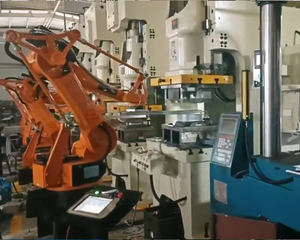
Yes, absolutely. Our modular machine architecture allows clients to start with standalone units—such as an Automatic Insulation Paper Inserter, a Needle Winding Machine, or a Stator End-Coil Lacing Machine. All our standalone units feature standardized mechanical pick-and-place interfaces and industrial PLC control ports, allowing seamless future connection via pallet conveyors, indexing tables, or six-axis robotic loading arms when your production volumes scale up.
How does Suzhou Haplin ensure machine quality and verify Factory Acceptance Testing (FAT)?
Every production line built in our Suzhou factory undergoes rigorous pre-shipment Factory Acceptance Testing (FAT). We request sample raw materials (lamination stacks, wire, slot insulation, terminals) directly from the client. Our engineers run continuous full-speed production trials in-house to verify cycle speeds, winding tension, electrical hipot/surge insulation integrity, and CPK statistical capability. Overseas buyers can witness FAT testing in person at our facility or via live HD video streaming and full sensor data logs.
What after-sales, commissioning, and spare parts support is provided internationally?
Haplin provides end-to-end global service support. All equipment comes with full English HMI interfaces, detailed operating manuals, maintenance schematics, and recommended spare parts lists. We dispatch field service engineers directly to customer plants worldwide for installation, line commissioning, and operator training. Additionally, all machines feature remote IoT diagnostic modules allowing our software engineers in Suzhou to assist your local team via secure remote connections 24/7.
How do your machines handle high slot fill factors without damaging magnet wire insulation?
We utilize proprietary active electronic tensioning units combined with ceramic/tungsten-carbide polished wire guides and precision needle trajectories. This closed-loop control guarantees that tension remains stable even during ultra-high-speed acceleration and deceleration phases, preventing stretching, enamel stripping, or short circuits between turns—even at demanding slot fill rates reaching up to 75%.
Ready to Upgrade Your Motor Stator Manufacturing Line?
Consult with our engineering team today to receive a customized stator production line layout, cycle time simulation, and direct wholesale quotation.