Flagship Automated Motor Production Lines & Systems
Precision-engineered production lines, stator/rotor assembly systems, and specialized equipment custom-built for high-volume manufacturing environments.
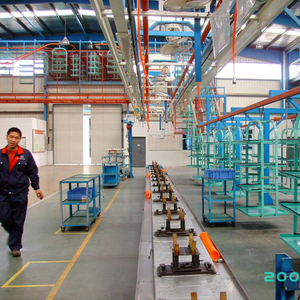
40m Electric Bike & Motor Car Assembly Line Production Conveyor
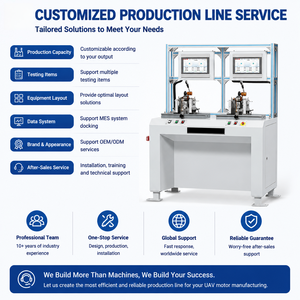
Automatic Brushless DC Motor Production Line for Civilian UAV & FPV Drones
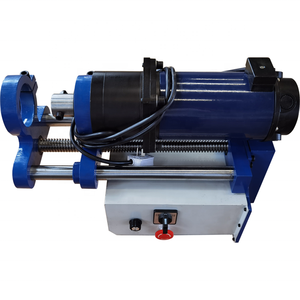
2021NEW LTT-40 Brushed Motor Maintenance Portable Line Boring Machine
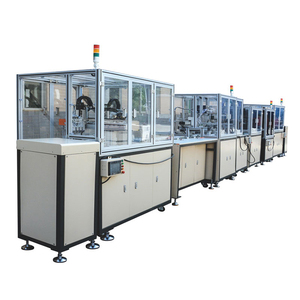
Huiyue Tech Non-standard Automatic Assembly Machine for Pump Motor Gear
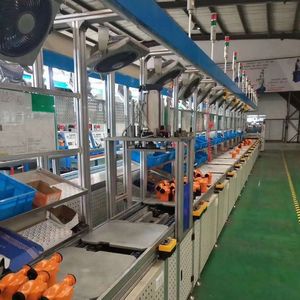
Automatic Cycle Machining Line for Core Bearing, Motor & Gearbox Components
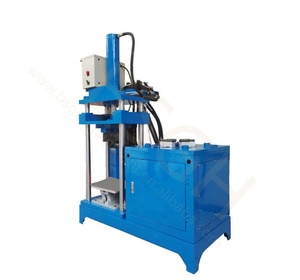
Electric Motor Stator Coil Final Forming Machine (Copper & Aluminum Wire)
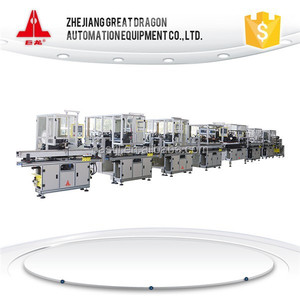
Full-Turnkey Electric Motor Automatic Assembly & Testing Production Line
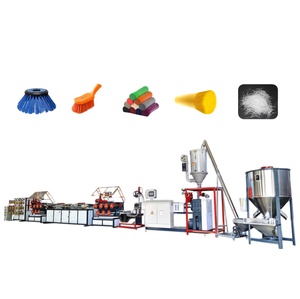
Monofilament Extruding & Sweeper Brush Bristle Manufacturing Line
Engineering Leadership: Suzhou Haplin Automation Equipment Co., Ltd.
Founded in November 2012 and situated in the industrial technology hub of Xiangcheng District, Suzhou, Suzhou Haplin Automation Equipment Co., Ltd. (Haplin) has grown into a premier global designer and manufacturer of specialized electric motor production machinery. Backed by a registered capital of RMB 15.2 million, a multidisciplinary team exceeding 70 experienced engineers and technicians, and an annual output value surpassing RMB 65 million, Haplin seamlessly combines scientific R&D, precision manufacturing, international sales, and field commissioning under a unified Quality Management System.
Modern electric motor manufacturing demands strict geometric tolerances, minimal electrical loss, and rapid cycle times. Whether producing miniature high-KV brushless motors for commercial FPV drones, high-torque traction motors for e-mobility systems, or rugged brushed armatures for power tools, Haplin approaches every client line as a custom engineering project. Rather than forcing standardized catalogue machines onto complex manufacturing processes, our engineering team evaluates iron core lamination stack heights, slot wire gauge requirements, slot fill factors, and target output per shift to build automated lines optimized for high repeatability and low Total Cost of Ownership (TCO).
Technological Trends Shaping Next-Generation Automatic Motor Lines
The global electric motor industry is undergoing a structural transition driven by electrification across automotive, aerospace, industrial automation, and consumer electronics sectors. To remain competitive, motor manufacturers are upgrading from manual and semi-automatic workbenches to fully integrated, data-driven automated production lines. Key engineering innovations defining the future of motor line automation include:
1. High-Precision Needle Winding & High Slot Fill Ratios
Direct needle winding technology has revolutionized brushless stator production. Modern inner-winding machines now achieve slot fill ratios exceeding 65% while preserving insulation paper integrity. Dynamic closed-loop servo tension controllers ensure that copper wire stress remains uniform throughout high-speed winding cycles. This prevents micro-abrasions in enamelled wire coatings, directly reducing inter-turn short-circuit risks in high-voltage BLDC applications.
2. Automated Slot Insulation Paper Insertion & Wedge Placement
Insulation integrity is critical to motor longevity. Advanced automated paper inserting units execute continuous roll feeding, precise cuff shaping, cutting, and insertion within millisecond cycle times. Digital changeover mechanisms allow operators to switch between different stack heights and slot geometries through HMI recipe selections, eliminating hours of mechanical re-tooling.
3. Multi-Station Commutator Spot Welding & Precision Trimming
For brushed DC motors and universal armatures, fusing wire leads to commutator segments requires exact thermocompression energy control. Modern automated lines utilize double-head inverter resistance spot welders equipped with dynamic displacement monitoring. This ensures uniform weld resistance, eliminates excessive commutator riser deformation, and seamlessly feeds rotors into high-speed dynamic balancing and trickle-varnishing stations.
4. Real-Time Quality Control (QC) & Vision-Guided Inspection
Inline testing modules are now integrated directly into the conveyor loop. High-resolution CCD vision systems inspect coil turn counts, wire routing paths, magnet polarity, and slot paper positioning prior to resin impregnation. Integrated electrical testing cabinets execute Hi-Pot (dielectric breakdown), surge (inter-turn insulation), DC resistance, and no-load performance checks in real time, automatically rejecting non-conforming units from the production flow.
| Automation Metric | Traditional Manual / Semi-Auto Line | Haplin Integrated Automatic Production Line |
|---|---|---|
| Average Takt Time (per motor) | 45 - 90 Seconds | 6 - 15 Seconds (Modular Parallel Processing) |
| First-Pass Yield (FPY) | 91.0% - 94.5% | 99.2% - 99.8% (CCD & Servo Controlled) |
| Direct Operator Headcount | 12 - 20 Operators per Line | 1 - 3 Supervisory Operators |
| Traceability & MES Integration | Manual Paper Logsheets | Full Industry 4.0 SCADA / MES Cloud Logging |
| Changeover Flexibility | 4 - 8 Hours Mechanical Reset | 15 - 30 Minutes Digital Recipe Selection |
Engineering Capabilities & System Features
Designed for durability, scalability, and seamless integration into high-output factory environments.
Modular Architecture
Standardized station modules allow step-by-step automation upgrades, expanding from single winding units to fully automated turnkey assembly lines as demand scales.
High-Speed Takt Times
Synchronized multi-axis servo transfer indexers and palleted pallet conveyors achieve rapid line indexing, maximizing net daily output per square meter.
100% Inline Testing
Automated stations perform surge tests, insulation resistance checks, turn-to-turn shorts inspection, and mechanical torque verification directly on the pallet.
Industry 4.0 MES Connectivity
EtherCAT / PROFINET industrial protocol connectivity enables instant data upload to plant execution systems for batch traceability and predictive maintenance.
Custom Fixturing & Tooling
In-house CNC machining guarantees sub-micron precision on wire guides, insertion dies, clamping nests, and custom rotor balancing mandrels.
Global Field Support
Comprehensive FAT (Factory Acceptance Testing) in Suzhou, overseas installation, English documentation, and remote video maintenance assistance.
Future Sourcing Trends for Motor Assembly Capital Equipment
Procurement directors and plant managers evaluating automatic motor production lines face shifting operational challenges. Sourcing decisions are no longer evaluated purely on initial capital expenditure (CapEx). Instead, forward-thinking manufacturing enterprises focus on long-term operational resilience, energy efficiency, and line flexibility. Key trends influencing global procurement strategies include:
1. Multi-Model Flexibility vs. Dedicated Line CapEx
Fast consumer hardware cycles demand equipment that can be reconfigured rapidly. Buyers prioritize suppliers providing servo-driven quick-change tooling plates and standardized HMI recipe structures. Investing in modular lines capable of accommodating multiple lamination stack heights and wire diameters minimizes long-term tooling write-offs when product generations change.
2. Energy Efficiency & Eco-Conscious Manufacturing
With stringent global carbon regulations and rising industrial electricity costs, motor production equipment itself must operate efficiently. Kinetic energy recovery systems in servo drives, energy-saving pneumatic actuators, and smart standby modes reduce kilowatt-hour consumption per manufactured unit. High-efficiency motor manufacturing lines align directly with corporate ESG (Environmental, Social, and Governance) targets.
3. Supplier Co-Engineering & Pre-Validation Testing
Global buyers increasingly rely on equipment manufacturers to validate product design manufacturability. Leading suppliers perform finite element simulation on wire bending dynamics, coil insertion forces, and heat dissipation during welding prior to physical metal cutting. Partnering with a manufacturer capable of running full-scale Factory Acceptance Testing (FAT) using real customer laminations eliminates commissioning delays at the destination factory.
Frequently Asked Questions (FAQ) for Motor Line Sourcing
Direct answers to technical, operational, and commercial questions commonly asked by international manufacturing buyers.
Transform Your Motor Manufacturing Efficiency Today
Consult with Suzhou Haplin's senior automation engineers to get a custom line layout, cycle time analysis, and tailored equipment quotation within 24 hours.
Get Catalog