State-of-the-Art Motor Manufacturing Equipment
Explore our premium automated production lines, CNC stator winders, and high-precision assembly machinery engineered for high volume efficiency.
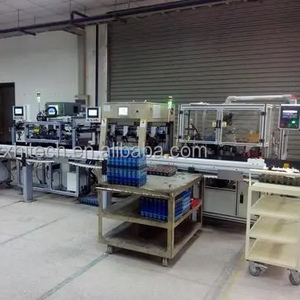
High-speed Motor Production Line
View Product Details →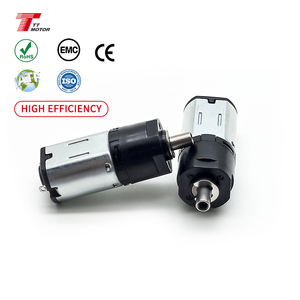
Mini Compact Brushed DC Motor with Encoder Threaded Shaft Line
View Product Details →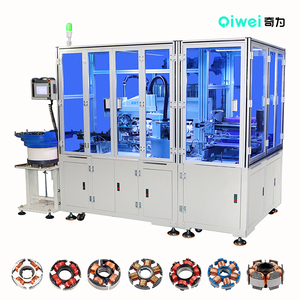
CNC Fully Automatic Production Line for Motor Stator Winding Machine
View Product Details →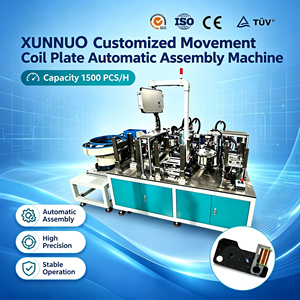
XUNNUO High Speed Movement Coil Assembly Machine 1000W
View Product Details →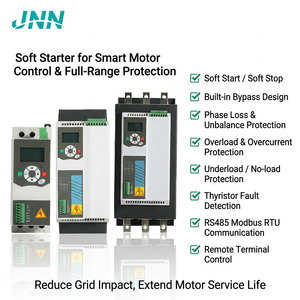
Electronic Soft Starter Three-Phase Motor Controller
View Product Details →
Servo Press Fitting Machine for Motor Rotor & Stator High Precision
View Product Details →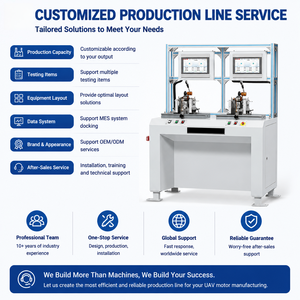
Automatic Brushless DC Motor Production Line for Drones & UAVs
View Product Details →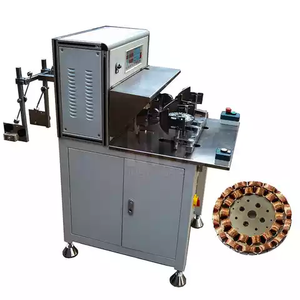
Ceiling Fan Motor Automatic Winding Machine Systems
View Product Details →Comprehensive Technical Report: Next-Generation Brushless Stator Production Lines
The global shift toward electrification across automotive, industrial automation, personal mobility, and smart home appliances has triggered an unprecedented surge in demand for high-efficiency Brushless Direct Current (BLDC) and Permanent Magnet Synchronous Motors (PMSM). At the core of every high-performance BLDC motor lies an exceptionally well-engineered stator assembly. Achieving maximum electromagnetic performance, minimal thermal resistance, and optimal slot fill factors requires production technology that transcends conventional manual or semi-automated methods.
This industry whitepaper explores the critical engineering parameters, automated processes, emerging technology trends, and procurement considerations that global OEMs and motor tier-1 suppliers must evaluate when selecting a turn-key Brushless Stator Production Line exporter or wholesaler.
1. Anatomical Workflow of Modern BLDC Stator Manufacturing Lines
An advanced, fully integrated brushless stator production line integrates several sequential automated modules. Each station must maintain micrometer-level mechanical precision and synchronized electronic motion control to prevent copper wire damage, insulation tearing, or core distortion:
- Automated Lamination Stacking & Riveting/Laser Welding: Silicon steel laminations (ranging from 0.2mm to 0.5mm thickness) are automatically fed, height-measured via linear transducers, aligned under precision indexing heads, and joined using servo-driven riveting or multi-axis fiber laser welding.
- Slot Insulation Paper Insertion & End Cap Fitting: Insulation paper (Nomex, DMD, NMN, or PET) is automatically cut, folded into target cuff geometries, and inserted into the inner or outer stator slots with zero surface tear. Alternatively, dual-component plastic end-caps are automatically pressed onto the core stack.
- CNC Servo Needle Winding (Inner Winding & Outer Flying Winding): Utilizing multi-axis CNC servo systems, high-speed flying needles directly wrap copper wire into inner-slot configurations with controlled wire tensioners, preventing overlapping and ensuring uniform layer placement at high speeds.
- Wire Termination, Tying & Skeining: Automatic lead wire routing, stripping, and wire wrap-around pin terminals or terminal boards, followed by automatic tying using specialized industrial cords to ensure mechanical stability during rotation and thermal cycles.
- Commutator/Terminal Resistance & Hipot Testing: In-line quality gates perform instantaneous DC resistance measurement, surge testing, phase-to-phase insulation resistance, and AC/DC withstand voltage (Hipot) verification before moving to downstream sealing.
- Trickle Impregnation & Resin Coating: Automated induction heating and resin trickling coat the stator windings, eliminating air voids, increasing dielectric strength, and ensuring superior thermal dispersion during heavy motor duty cycles.
2. Key Technical Parameters Benchmarking Table
To assist procurement managers and plant engineers in evaluating automation equipment performance, the following technical benchmark represents current top-tier industry standards for fully automated BLDC stator manufacturing modules:
| Process Parameter | Standard Production Specification | High-Precision Custom Range |
|---|---|---|
| Stator Outer Diameter (OD) | Ø 18 mm – Ø 150 mm | Up to Ø 350 mm (Industrial/EV) |
| Lamination Stack Height | 5 mm – 100 mm | Customized to 250 mm |
| Wire Gauge Diameter Range | Ø 0.12 mm – Ø 1.3 mm | Parallel multi-strand up to Ø 2.0 mm |
| Winding Speed (RPM) | 800 – 3,000 RPM (Servo Controlled) | Up to 6,000 RPM depending on flyer geometry |
| Slot Fill Factor Yield | 45% – 65% | Up to 78% with segmented/hairpin tech |
| Line Takt Time (Per Stator) | 8 sec – 25 sec / piece | Multi-station parallel line < 5 sec |
Future Sourcing & Procurement Trends in Motor Automation
Key technological shifts shaping global investments in brushless stator assembly systems between 2025 and 2030.
1. Transition to Segmented Stator Core Topologies
Traditional single-piece stators limit the maximum achievable slot fill factor. Forward-thinking motor manufacturers are adopting segmented stator cores (T-core geometry), which allow open needle winding prior to ring assembly. Sourcing lines that support automatic tooth combination, welding, and ring expansion provide up to 20% higher power density.
2. Industry 4.0 Data Traceability & Smart Sensors
Global procurement teams are mandating MES (Manufacturing Execution System) integration. Modern stator production lines incorporate OPC-UA communication protocols, Real-Time closed-loop tension sensors, CCD vision inspection, and digital twin monitoring to log torque, resistance, and wire tension data for every individual serial number produced.
3. Modular Multi-Product Rapid Tool Changeover
Faced with fluctuating product lifecycles, motor factories no longer purchase single-purpose machine lines. Sourcing priorities have shifted toward flexible, servo-driven production units featuring quick-change tooling fixtures, digital parameter recall, and quick-disconnect pneumatic coupling systems that reduce mold changeover times to under 15 minutes.
Product & Technology Development Trends
How cutting-edge motor manufacturing technology is redefining production throughput and quality assurance.
Hairpin Winding Penetration into Micro-BLDC
Once limited to heavy EV traction motors, flat copper wire (hairpin) technology is scaling down to high-power-density BLDC motors used in drones, power tools, and industrial robotics, demanding ultra-precise wire stripping, bending, and laser welding modules.
Active Tension Control Systems
Modern high-speed needle winders are eliminating traditional mechanical friction tensioners in favor of active electromagnetic closed-loop tension controllers, reducing wire stretch and insulation breakdown by over 95% during high-acceleration indexing.
High-Speed Optical (AI-Vision) Quality Gates
In-line camera inspection systems enhanced with machine-learning algorithms now automatically verify winding coil alignment, slot paper cuff integrity, and wire stripping clean lengths in under 100 milliseconds per stator station.
Why Partner with Suzhou Haplin Automation Equipment Co., Ltd.?
Founded in November 2012 in Suzhou, Jiangsu Province, China, Suzhou Haplin Automation Equipment Co., Ltd. is a specialized technology enterprise integrating R&D, advanced manufacturing, international trade, and technical field services. Operating with a registered capital of RMB 15.2 million, a dedicated engineering workforce of over 70 staff members, and an annual equipment production value exceeding RMB 65 million, Haplin has established itself as an authoritative global manufacturer of motor automation machinery.
Engineering Innovation
Over 10 years of specialized focus on brushed armatures, BLDC inner/outer stators, automatic paper inserters, high-speed spot welders, and full turnkey line integration tailored to exact customer drawings.
Stringent Quality Assurance
Every customized production line undergoes rigorous Factory Acceptance Testing (FAT) in our Suzhou facility using customer-supplied core samples, wire batches, and target takt times before global shipment.
Worldwide Field Support
Comprehensive English operation documentation, remote PLC diagnostic access, localized engineer dispatch for commissioning, and lifetime spare-parts replacement guarantees for international buyers.
Our complete machinery portfolio spans 7 core equipment families covering brushless motor stator & rotor lines, brushed motor rotor & stator production units, magnetic tile assembly lines, and high-speed multi-station specialized winders for power tool, automotive micro-motor, drone UAV, and HVAC appliance manufacturers worldwide.
Frequently Asked Questions by Global Buyers
Clear, direct answers to common technical and operational questions regarding brushless stator equipment sourcing.
Which motor types can Haplin brushless stator production lines handle?
Our production lines and standalone machinery handle a comprehensive spectrum of motor configurations, including inner-winding BLDC stators, outer-rotor BLDC stators, micro-drone motors (UAV/FPV), ceiling fan stators, power tool motors, automotive actuator motors, brushed DC armatures, and industrial servo motor stators. Each module is custom-configured around your exact lamination outer diameter, stack height, wire diameter gauge, slot count, and target production volume.
What engineering information is required to receive a formal turnkey quotation?
To provide an accurate layout proposal, station cycle time analysis, and itemized commercial quote, our engineering team requires:
- 2D/3D part drawings of the raw stator core lamination stack and finished stator assembly.
- Winding diagram detailing wire diameter, turns per slot, connection method (Delta or Star), and terminal geometry.
- Target production capacity (takt time in seconds or total target units per 8-hour shift).
- Factory operational specs: local voltage supply (e.g., 220V/380V/415V 50/60Hz), factory compressed air pressure, and safety compliance standard (CE/UL).
Can we purchase individual standalone winders or paper inserters and integrate them later?
Yes, absolutely. Many growing motor manufacturing plants adopt a modular investment approach. You can begin by purchasing individual standalone units—such as a CNC 4-station stator winding machine, an automatic slot paper inserter, or a servo press machine—and later connect them using automated conveyor belts, robot arms, and line master controllers into a fully integrated automatic production line as production volume expands.
How is equipment verification and Factory Acceptance Testing (FAT) conducted before overseas shipping?
Prior to shipment, every machine undergoes thorough dry-run testing and sample trial runs at our Suzhou factory. We encourage overseas customers to send their actual lamination stacks, copper wire, and end-caps to our facility. Acceptance can be conducted in person at our plant or verified remotely via high-definition live video streaming demonstrating continuous full-speed production runs, CPK statistical analysis, and safety sensor validation.
What post-sales technical support, commissioning, and spare parts guarantees do you provide?
We provide comprehensive overseas support services, including complete HMI touch-screen interfaces in English, full electrical schematics, operating manuals, and video setup guides. Our control systems feature remote Ethernet access modules, allowing our software engineers in Suzhou to diagnose, update, and troubleshoot PLC programs in real time. On-site commissioning engineers can also be dispatched to your plant for line setup and operator training upon request.
What is the typical lead time for a custom automated brushless stator line?
Standard standalone equipment (such as single-head needle winders or paper inserting machines) typically carries a manufacturing lead time of 30 to 45 days. Fully customized, turnkey automated production lines featuring multi-station assembly, trickling varnish, and inline testing stations generally require 60 to 90 days from technical drawing sign-off to final FAT verification.
Accelerate Your Motor Manufacturing Efficiency
Partner with Suzhou Haplin Automation to design, build, and deploy high-performance brushless stator production lines customized to your exact engineering specifications. Contact our senior automation engineers today.
Get Catalog