Precision Motor Manufacturing Equipment Portfolio
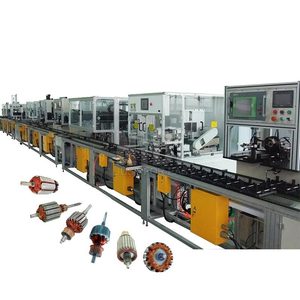
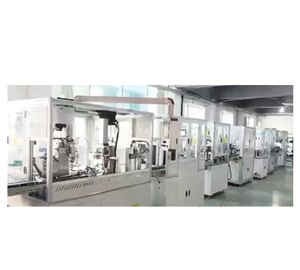
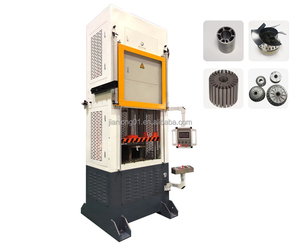
High-efficiency turnkey assembly lines, stator winding units, rotor spot welders, and automated component forming machinery engineered for global OEMs.
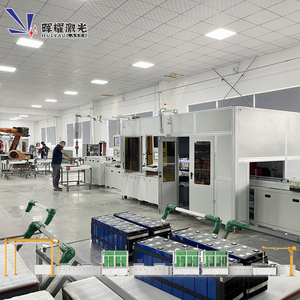
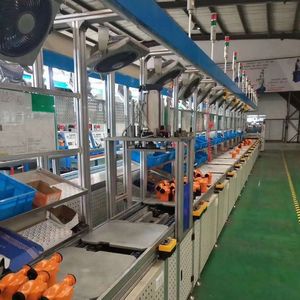
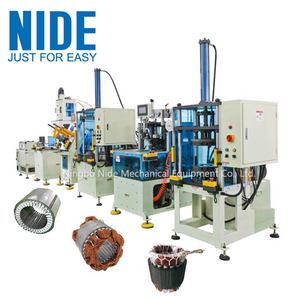
Engineering Competence & Manufacturing Infrastructure
Suzhou Haplin Automation Equipment Co., Ltd. leads China's specialized motor assembly automation sector through engineering excellence, custom motion control software, and robust quality control.
Turnkey Engineering & Customization
From component lamination analysis to final motor performance testing, our engineers design custom pallet conveyers, servo-driven winding flyers, and automated indexing nests tailored precisely to your part dimensions and cycle time goals.
Closed-Loop PLC & Motion Control
Our assembly lines integrate advanced Beckhoff, Siemens, or Omron PLC systems paired with ultra-precise tension controllers to prevent wire stretching, insulation tearing, and micro-cracks during high-speed winding processes.
Rigorous Factory Acceptance (FAT)
Prior to global dispatch from our Suzhou production facility, every system undergoes 72 hours of uninterrupted trial production using your actual wire, laminations, and commutators to guarantee operational zero-defect handover.
Comprehensive Technical Report: Optimizing Electric Motor Assembly Lines for High-Yield Sourcing
The global electric motor manufacturing sector is undergoing a massive transformation. Driven by the electrification of automotive powertrains, the escalation of industrial robotics, energy-efficiency regulations (such as IE4 and IE5 standards), and high-density household appliances, demand for fully automated, high-precision motor manufacturing lines has escalated. Procurement directors, manufacturing engineers, and technical OEM buyers require deep insights into line architecture, takt time reduction, and system reliability when evaluating potential equipment suppliers and wholesalers.
1. Architecture of Modern Motor Production Automation
Whether manufacturing Brushed DC motors, Permanent Magnet Brushless DC (BLDC) motors, or Synchronous Reluctance Motors (SynRM), an assembly line is a synchronized system of mechanical, electrical, and pneumatic subsystems. Supplier evaluation must focus on how seamlessly these subprocesses are linked:
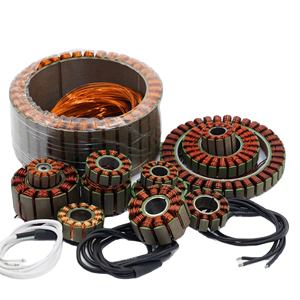
- Stator Core Stack & Insulation Assembly: Automated insertion of slot paper (nomex, polyester film), end-fiber insulating caps, and slot cell forming. Precision insulation paper insertion prevents electrical breakdown under thermal stress.
- High-Speed Winding Subsystems: Utilizing needle winding technology for inner-slot BLDC stators or flyer winding for traditional brushed motor armatures. Wire tension control must be dynamically regulated via closed-loop electronic feedback to keep tension fluctuations within ±1 gram.
- Commutator Hot Staking & Resistance Welding: For brushed rotors, hot staking applies controlled pressure and high current to bond copper wire to commutator slots, creating a low-resistance metallurgical joint without thermal insulation damage.
- Neodymium Magnet Insertion & Dispensing: Automated magnet feeding, structural adhesive micro-dispensing, infrared curing, and Gauss-meter magnetic flux testing ensure structural bond strength and field symmetry.
- Rotor Dynamic Balancing & Trickle Varnishing: High-speed rotation generates centrifugal stress. Automatic balancing machines measure imbalance vectors and remove weight via precision milling or add weight via balancing compound. Secondary trickle resin impregnation anchors coils against vibration.
- Final Assembly & End-of-Line (EOL) Electrical Testing: Automated press-fitting of bearings, end shields, and shafts, followed by 100% automated inspection of surge voltage, insulation resistance (Hi-Pot), phase resistance, back-EMF, and acoustic noise.
| Process Parameter | Brushed DC Motor Line | BLDC Inner-Winding Line | Haplin Automation Advantage |
|---|---|---|---|
| Winding Kinetic System | Dual-Flyer High-Speed Winding | Multi-Axis CNC Needle Winding | Multi-station flexible servo heads with auto-tooling switch |
| Copper Slot Fill Factor | 45% – 60% standard | up to 78% high-density | Precision layer winding minimizing cross-over wire distortion |
| Takt Time (Per Unit) | 4.5s – 8.0s | 12s – 25s (multi-pole) | Parallel multi-station configuration to slash bottleneck cycle times |
| Quality Inspection Method | Visual & Commutator Resistance | Back-EMF & Hall Sensor Phase Alignment | Integrated Cognex Machine Vision & EOL 100% Traceability Data |
| Changeover Flexibility | Manual Tooling (30-60 mins) | Servo Quick-Change (10-15 mins) | Parameter-based recipe loading via HMI with servo auto-adjustment |
Future Procurement Trends in Electric Motor Assembly Equipment
Sourcing managers and industrial equipment purchasers must evaluate automation partners not only on initial purchase price (CAPEX), but also on long-term technological adaptability. The following four macro-trends are reshaping global procurement requirements through 2030:
A. Transition from Semi-Automated Cells to Modular High-Speed Lines
Labor cost escalation and strict product quality tolerances are pushing manufacturers away from manual pallet transfer and standalone desktop machines. Global buyers are prioritizing modular production architectures where standard base frames can be expanded. Flexible pallet conveyor systems with RFID tracking allow individual stations to be upgraded or bypassed without shutting down the entire manufacturing line.
B. Implementation of Industrial IoT (IIoT) & MES Integration
Modern tier-1 automotive suppliers (supplying electric power steering, brake actuators, and cooling pumps) mandate full process data logging. High-end motor production lines manufactured by suppliers like Suzhou Haplin Automation come equipped with OPC-UA and Modbus TCP protocols. Every winding turn count, hot staking temperature curve, press-fit displacement curve, and EOL test value is tied to the motor's laser-etched QR code for 10-year warranty traceability.
C. High-Density Winding for EV and Robotic Actuators
With the rise of humanoid robotics and electric mobility, motors require higher torque density in smaller form factors. Equipment suppliers must offer specialized needle winding heads capable of handling thick magnet wire without scraping enamel insulation. Advanced square-wire (hairpin) and concentrated inner-winding technologies are becoming mandatory evaluation criteria for premium procurement contracts.
D. Energy Efficiency and Low-Scrap Wire Management
Material costs for high-purity copper and neodymium magnets represent over 60% of motor Bill of Materials (BOM). Production line designs that minimize scrap wire tails during lead-stripping and eliminate magnet chipping during assembly provide immediate Return on Investment (ROI) for factory operators.
Evaluating Motor Assembly Line Wholesalers & OEM Suppliers: E-E-A-T Sourcing Framework
When selecting a China-based motor assembly line supplier, procurement teams must look beyond marketing brochures and perform rigorous technical duediligence based on Experience, Expertise, Authoritativeness, and Trustworthiness (E-E-A-T):
- Engineering Team Depth & Patent Portfolio: Confirm that the supplier retains dedicated mechanical, electrical, and software design engineers in-house. Companies like Suzhou Haplin Automation, with over 70 qualified personnel and millions in registered capital, demonstrate the scale required to execute complex custom engineering projects.
- Standardization of Core Components: Check the vendor's sub-supplier network. High-reliability machinery should incorporate globally recognized pneumatic and electrical brands (SMC, Festo, Schneider, Siemens, Misumi) to ensure global availability of replacement parts.
- Pre-Shipment Validation (FAT & Machine Run Off): Ensure your contract specifies clear validation protocols. The supplier must run the line continuously using your actual material samples to verify target yield rates (>99.2%) and CPK/PPK process capability values before crating and export loading.
- After-Sales Global Support Infrastructure: Determine whether the equipment manufacturer provides comprehensive English documentation, remote diagnostic capabilities via secure VPN routers, and options for technician dispatch for factory commissioning and staff training.
Frequently Asked Sourcing & Technical Questions (FAQ)
Clarifying technical parameters, lead times, custom options, and international project execution.
Which specific motor types can Haplin automated production lines process? +
Our custom engineered production lines cover a wide spectrum of electric motor designs. For Brushed DC motors, we build turnkey lines for armatures/rotors, stators, and magnetic tile assemblies. For Brushless DC (BLDC) motors, we manufacture inner-winding stator lines, automated rotor magnet assembly units, and complete motor final assembly systems. Equipment parameters are engineered around your lamination outer diameter, stack height, wire gauge range, and target production volume.
What technical documentation is required to receive an accurate RFQ quote? +
To provide a tailored equipment proposal and cycle time estimate, our engineering team requires: 2D/3D CAD drawings of your finished motor and individual components (stator lamination, rotor shaft, commutator, wire specs), target shift capacity (e.g., 3,000 units/8-hour shift), preferred automation degree (semi-automated vs. fully automatic connected line), plant operating voltage, and any specific safety standards (CE, UL, ISO).
Can we purchase standalone winding or welding units and integrate them into automated lines later? +
Yes. Many expanding motor manufacturers start by deploying single machines—such as our four-station stator winding machine, automatic insulation paper inserter, or rotor double-head spot welder—to solve immediate throughput bottlenecks. All Haplin single machines feature standard PLC interfaces and modular mounting, allowing easy retrofitting into full conveyor-linked automatic production lines as business volume grows.
How does Suzhou Haplin ensure wire tension control and prevent enamel insulation scraping? +
We utilize precision closed-loop tension controllers combined with polished ceramic wire guides and hardened tungsten carbide nozzles. Tension is maintained dynamically across high-speed acceleration and deceleration cycles, preventing micro-stretching of copper wire and eliminating insulation enamel damage. This guarantees stable phase resistance and superior surge voltage test performance.
What global after-sales commissioning and remote technical support services are offered? +
Every Haplin equipment delivery includes comprehensive English operating manuals, electrical schematics, and HMI software interfaces. We provide remote video diagnostics, rapid spare parts dispatch, and online engineering assistance. Depending on customer requirements, our senior automation technicians can be dispatched overseas to perform on-site line installation, final commissioning, and operator training.
Upgrade Your Motor Manufacturing Output Today
Connect directly with our engineering team in Suzhou to discuss your stator, rotor, or complete motor assembly line project. Receive a complete technical proposal and customized cycle-time analysis within 24 hours.
Get a Quote