info@haplinauto.com Suzhou, Jiangsu, China · Serving Motor Makers Worldwide
English

Top Trusted Motor Automation Line Suppliers & Wholesalers

Next-Generation Turnkey Assembly Systems, High-Precision Coil Winding & Intelligent Quality Verification

Industrial Grade Motor Production Lines & Automated Systems

Explore our engineered turnkey systems designed for high-efficiency electric motor manufacturing across automotive, drone, appliance, and industrial sectors.

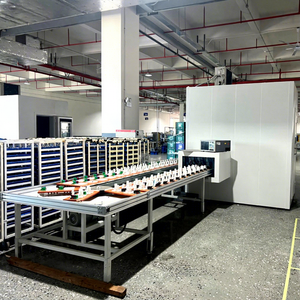
Car Motor Automatic Conveyor Electromobile Production Line Engine Assembly Line

Car Motor Automatic Conveyor Electromobile Production Line

Heavy-duty palletized conveyor systems engineered for EV drive motors, automotive actuators, and electromobile propulsion engine assemblies with integrated torque checking.

Explore Technical Details
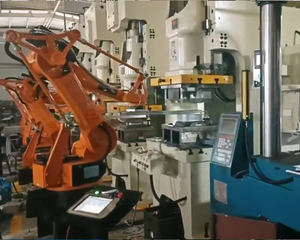
Professional High Performance Fully Automatic Assembly Line for Electric Motors

High-Performance Fully Automatic Electric Motor Assembly Line

Fully integrated smart production architecture with station-to-station robotic transfers, automatic paper insertion, commutator spot welding, and end-of-line electrical testing.

Explore Technical Details
Automatic Shaded-pole Motor Assembly and Inspection Assembly Line

Automatic Shaded-Pole Motor Assembly & Inspection Line

Precision dual-voltage (380V/220V) manufacturing cell built for household appliance fan motors, featuring real-time vision inspection and automated dynamic balancing.

Explore Technical Details
Industrial Automation & Robots PLC Motor Production Line for Nonstick Cookware and Electric Appliances

Industrial Robotic PLC Appliance Motor Production Line

Flexible PLC-controlled robotic automation unit designed for high-mix motor variants utilized in commercial appliance and precision kitchen equipment manufacturing.

Explore Technical Details
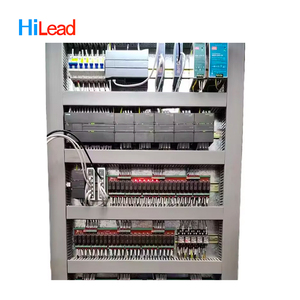
Production Line Intelligent Electronic Control System Electric Motor Automatic Production Line

Intelligent Electronic Control Unit for Motor Production Lines

Centralized Industry 4.0 control hardware incorporating real-time SCADA monitoring, closed-loop feedback control, data logging, and seamless MES software integration.

Explore Technical Details
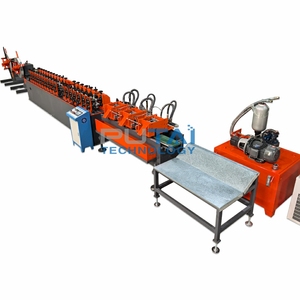
High-Speed Fully-Automated PLC-Controlled Motor Bearing Production Line

Automated High-Speed Motor Bearing & Component Line

High-speed, sub-millimeter accurate press-fitting and sleeve assembly system designed for motor bearings, structural housings, and precision ceiling grid hardware.

Explore Technical Details
Automatic Brushless Motor Production Line for Civilian FPV Drones

Custom Automatic BLDC Drone Motor Production Line

Ultra-compact needle winding and magnetic magnetizing line specifically tailored for high-KV drone brushless motors, micro-aviation actuators, and civilian FPV units.

Explore Technical Details
Precision Customized Automated Electronic Assembly Line Motor Engine PLC Pump Stainless Steel Aluminum Alloy 60KW

Precision 60KW Heavy Motor Engine & Pump Assembly Line

High-load automated production line constructed from premium stainless steel and aluminum alloy extrusions for high-power industrial pumps and 60KW drive engines.

Explore Technical Details
2012
Established in Suzhou
70+
R&D & Tech Staff
¥65M+
Annual Equipment Output
>99.5%
Target First-Pass Yield

■ Technical Guide: Engineering Modern Electric Motor Automation Lines

The global transition toward high-efficiency electrification—ranging from automotive Electric Vehicles (EVs) and industrial robotics to smart home appliances and brushless drone propulsion—has fundamentally transformed the engineering criteria for motor automation production lines. Sourcing high-yield, reliable, and flexible manufacturing equipment is no longer merely a capital equipment purchase; it is a strategic decision that directly influences unit manufacturing costs, Overall Equipment Effectiveness (OEE), and long-term product quality.

Key Engineering Benchmark: Modern automated motor production lines must achieve a balance between tight physical tolerances (stator slot wire fill factor > 78%), high speed (takt time under 10 seconds per armature/stator), and complete process traceability via digital Manufacturing Execution Systems (MES).

Evolutionary Shift: Brushed DC vs. Brushless DC (BLDC) Manufacturing Architecture

While traditional Brushed DC motor automation relied heavily on mechanical commutator spot welding, armature insulation paper inserting, and trickling varnishing, modern manufacturing facilities are rapidly retooling for Brushless DC (BLDC) and Permanent Magnet Synchronous Motors (PMSM). This technological transition introduces distinct automated process requirements:

Process Metric Brushed Motor Production Line Brushless (BLDC/PMSM) Production Line
Stator & Rotor Coils Armature flyers coil winding directly onto rotating rotor core slots. Inner/Outer needle winding direct to stationary laminated stators.
Commutator Connection High-temperature double-head hot-staking / spot welding. PCB soldering, terminal crimping, or insulation displacement (IDC).
Insulation Process Slot paper insertion, end-fiber sheet pressing, epoxy trickling. Plastic skeleton overmolding, slot paper inserting, electrostatic powder coating.
Magnet Assembly Stator casing magnetic tile insertion and adhesive gluing. Rotor surface magnet insertion (SPM) or interior magnet slotting (IPM) + post-magnetization.
Quality Control Criticality Commutator runout, bar-to-bar resistance, surge voltage withstand. Cogging torque minimization, back-EMF symmetry, resolver/Hall sensor alignment.

Future Technology Trends Shaping Motor Automation Lines (2025–2030)

Leading motor equipment manufacturers and industrial system integrators are actively embedding next-generation automation capabilities into turnkey production lines. Sourcing directors and plant managers should evaluate suppliers against these core technological trends:

  • Closed-Loop Servo Wire Tensioning: Traditional mechanical friction tensioners are being replaced by active electronic servo tensioners. This eliminates wire necking, insulation micro-cracks, and resistance variance during high-speed multi-station stator coil winding.
  • AI-Driven Computer Vision & In-Line Defect Detection: High-resolution CCD camera vision modules inspect slot insulation alignment, wire crossover errors, weld lug integrity, and surface scratches in under 200 milliseconds per station.
  • Digital Twin & Modular Tooling Changeover: Advanced lines utilize parameter-based digital recipe management. When changing motor stack heights or lamination diameters, servomotors adjust fixture stops automatically, reducing product changeover times from hours to under 15 minutes.
  • Hairpin Stator Technology Integration: For EV drive motors, rectangular copper wire (hairpin) technology provides higher slot fill factors (up to 85%) and superior thermal dissipation, requiring advanced CNC wire bending, laser stripping, insertion, twisting, and laser welding modules.

Core Modules of a High-Performance Motor Assembly Line

Every turnkey system supplied by industry leaders integrates five synchronized engineering sub-systems.

Automated Lamination & Insulation

High-speed precision paper inserting machines automatically fold, cut, and insert insulation paper into rotor or stator slots without edge tearing, maintaining dielectric strength.

Multi-Axis CNC Winding Units

Flyer and needle winding stations equipped with programmable tension controls and precision wire guides, accommodating wire diameters from micro-gauge 0.08mm to heavy 1.6mm industrial wires.

Precision Spot Welding & Joining

Inverter-based DC double-head spot welders deliver microsecond energy control to fuse copper wires to commutator lugs or terminal pins, preventing thermal degradation of surrounding enamels.

Dynamic Balancing & Trimming

Rotor balancing modules measure unbalance vectors dynamically at high rotational speeds, automatically removing excess weight via material milling or adding balance weights to sub-milligram precision.

End-of-Line (EOL) Testing Cells

Integrated electrical safety workstations conducting automated AC/DC withstand voltage, insulation resistance, surge testing, phase-to-phase resistance, and no-load/load speed characterization.

Palletized Workstation Transfer

Asynchronous conveyor tracks equipped with smart RFID chips on workpiece carriers, enabling dynamic routing, automated station bypass for high-mix batch runs, and full audit logs.

■ Strategic Sourcing Blueprint: Evaluating Motor Line Suppliers

Procuring industrial motor production lines requires evaluating both short-term capital expenditure (CAPEX) and long-term operational expenditure (OPEX). Qualified B2B buyers and technical sourcing managers should benchmark potential machine builders against five vital operational parameters:

1. Total Cost of Ownership (TCO) & Return on Investment (ROI)

Initial equipment purchasing price accounts for only ~35% of total lifecycle cost. A well-engineered automatic production line minimizes total operating cost by reducing manual labor overhead (shifting from 12 operators down to 1-2 line supervisors), decreasing power consumption through efficient servo drive hydraulics, and minimizing material scrap via high initial yield rates (>99.5%).

2. Machine Flexibility vs. High-Speed Output

High-volume single-model production demands dedicated high-speed rotary transfer lines capable of producing a finished part every 4 to 6 seconds. Conversely, OEM contract manufacturers producing multiple motor sizes require modular flexible lines featuring quick-change tooling fixtures, digital servo adjustments, and flexible software recipes.

3. Pre-Shipment Factory Acceptance Testing (FAT) Protocols

To mitigate risks associated with overseas equipment delivery, premier automation manufacturers conduct comprehensive Factory Acceptance Tests (FAT) in their facility prior to final sign-off. The supplier must run continuous batch trial runs using the customer's actual lamination stacks, copper wire spools, and insulation materials to verify cycle time, dimensional accuracy, electrical integrity, and Mean Time Between Failures (MTBF).

Why Choose Suzhou Haplin Automation Equipment Co., Ltd.

A technology-driven manufacturer delivering turn-key motor assembly innovation since 2012.

Founded in November 2012 in the advanced manufacturing hub of Suzhou, Jiangsu, China, Suzhou Haplin Automation Equipment Co., Ltd. has established itself as a premier global supplier of specialized equipment for electric motor production. Operating with a registered capital of RMB 15.2 million, a dedicated workforce of over 70 engineering specialists and assembly technicians, and an annual output value exceeding RMB 65 million, Haplin integrates R&D, precision manufacturing, global sales, and after-sales field support under one roof.

Custom Engineering Expertise

We don't force off-the-shelf catalog machinery. Every line layout, fixture clamp, and winding trajectory is engineered around your specific lamination drawings, wire specs, and plant constraints.

Complete Product Spectrum

From single standalone slot paper inserters and four-station coil winders to complete turnkey BLDC stator lines and magnetic tile assembly modules, we cover brushed and brushless topologies.

Rigorous Quality & FAT Testing

Prior to shipment from our Suzhou plant, every line undergoes prolonged full-speed trial runs using customer-supplied raw material samples to guarantee verified cycle times and zero-defect commissioning.

Global Field Support & Service

We provide comprehensive English technical documentation, remote PLC diagnostic access, fast spare parts dispatch, and on-site engineering commissioning to ensure uninterrupted 24/7 production worldwide.

Frequently Asked Questions (FAQ)

Common inquiries regarding motor automation procurement, technical capabilities, and global project delivery.

Q: Which specific electric motor types can Haplin production lines assemble?

Our equipment is engineered for both Brushed DC motors (armatures/rotors, stators, magnetic tile insertion) and Brushless DC motors (BLDC/PMSM) (inner-winding stators, outer-winding rotors, drone micro-motors, and complete motor final assembly). Systems are custom-configured based on your lamination diameter, stack height, wire gauge, and target output per shift.

Q: What engineering technical data is needed to obtain a quotation?

To provide an accurate layout proposal, cycle time estimate, and budget quotation, please share: 1) Motor or component drawings (laminations, rotor/stator stack dimensions), 2) Wire gauge and winding turns per coil, 3) Desired takt time / output capacity per shift, 4) Target automation level (semi-automated cell vs. fully automated robotic line), and 5) Local plant power standards (e.g., 380V/480V 3-Phase, 50/60Hz).

Q: Can a facility purchase standalone workstations first and integrate them into a full line later?

Yes, absolutely. Many of our clients start by automating bottleneck operations—such as investing in a standalone 4-station stator winder or high-speed paper inserting machine—and later connect these units using modular palletized conveyors, robotic pick-and-place modules, and centralized control systems as production volume scales.

Q: How is equipment quality and cycle time verified prior to international delivery?

All equipment undergoes mandatory Factory Acceptance Testing (FAT) at our Suzhou facility. We invite your engineering team to witness FAT testing in person or participate via live HD video streaming. The machine runs continuously with your supplied motor components to confirm dimensional tolerances, speed specs, electrical safety compliance, and overall stability before packing.

Q: What after-sales, commissioning, and warranty support is provided overseas?

We back our equipment with a comprehensive 12-month standard warranty. Overseas clients receive complete English technical manuals, electrical schematics, software backup files, and remote online PLC troubleshooting. Additionally, our field service engineers are available for international on-site installation, commissioning, operator training, and maintenance service.

Q: What standard delivery times apply to custom motor production equipment?

Standard single machines (e.g., spot welders, paper inserters) generally ship within 30 to 45 days following drawing approval. Complex, fully customized multi-station automatic production lines typically require 60 to 90 days, depending on station count, robotic integration, and special tooling complexity.
Ready to Upgrade Your Motor Manufacturing Efficiency?

Contact Suzhou Haplin Automation Equipment Co., Ltd. today to discuss your motor production requirements, request technical line proposals, or schedule a virtual factory inspection.

Inquire Now