Executive Industry Whitepaper: Stator Assembly Equipment Procurement
Modern electric motor manufacturing demands unprecedented levels of precision, slot fill efficiency, thermal endurance, and high-speed production capability. As global industries transition toward electrified automotive powertrains, high-efficiency HVAC systems, industrial robotics, and brushless power tools, the evaluation of Stator Assembly Equipment Manufacturers & Factories has shifted from standard machine acquisition to long-term strategic automation partnering.
This technical engineering guide examines the foundational architecture, performance indicators, and automated methodologies required to achieve zero-defect stator manufacturing. Incorporating real-world operational benchmarks from leading OEM integration lines, this document details how automated winding, paper inserting, spot welding, and end-of-line (EOL) electrical testing equipment drive competitive advantages for Tier-1 suppliers and motor manufacturers worldwide.
Featured Precision Stator & Motor Production Machinery
Explore our industrial-grade, fully automated production solutions engineered for high-volume brushed and brushless motor manufacturing lines. Each system integrates advanced PLC servo control, closed-loop tension monitoring, and rigid structural frameworks to guarantee long-term stability.
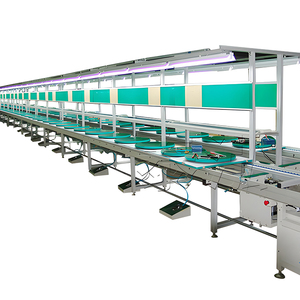
Double Speed Chain Conveyor Line for Electrical Motor Assembly
View Technical Specs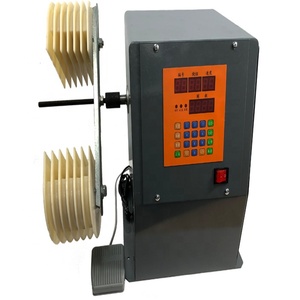
High-Efficiency ZX-C75 Electric Motor Winding Machine Equipment
View Technical Specs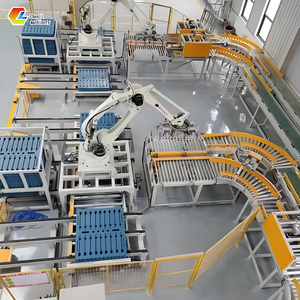
Industrial Environmental Protection Heavy-Duty Production Line
View Technical Specs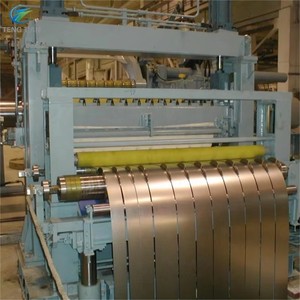
Automatic High-Rigidity Lamination Coil Slitting Machine Line
View Technical Specs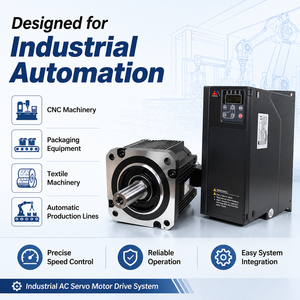
Industrial AC Servo Motor Drive System & Motion Controller
View Technical Specs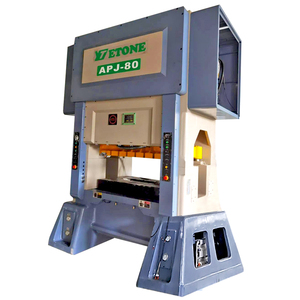
Fully Auto High-Speed Rotor & Stator Production Line with Power Press
View Technical Specs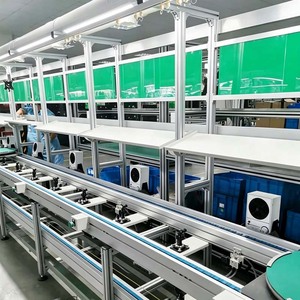
Professional High-Performance Fully Automatic Electric Motor Assembly Line
View Technical Specs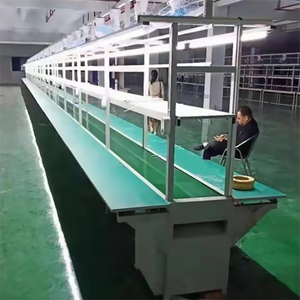
Automatic High-Speed Adjustable Motor & Component Assembly Line
View Technical SpecsCore Technological Modules in Modern Stator Assembly Equipment
An advanced automated stator production system operates through multiple integrated mechanical and electrical sub-assemblies. Achieving consistency across thousands of daily operational cycles requires precision tooling, closed-loop servo motion control, and high-precision sensors.
Automatic Slot Insulation Paper Insertion
Utilizes servo-driven feeding mechanisms, precision edge folding, and pneumatic cutting dies to insert insulation paper into stator slots with micro-level repeatability. Supports B, F, and H class thermal insulation materials without damaging paper edges.
High-Speed Servo Needle & Flying Winding
Equipped with multi-axis CNC servo synchronization to ensure exact copper wire distribution inside BLDC inner stators and slotted rotors. Integrated dynamic tension controllers eliminate wire stretching, enamel stripping, and slot crossover errors.
Mid-Point & Terminating Wire Forming
Automated wire routing, hooking, and trimming modules isolate lead wires into pre-designed terminal channels. Reduces manual labor dependencies while improving insulation clearance and mechanical retention against vibration stress.
Commutator & Terminal Resistance Spot Welding
Incorporate inverter DC or AC pulse spot welding technology with real-time displacement and current feedback. Ensures zero thermal damage to surrounding insulation while creating gas-tight, low-resistance mechanical joints.
End-of-Line (EOL) Electrical Testing Integration
Automated station testing for AC/DC withstand voltage (hipot), insulation resistance, surge testing, and phase-to-phase winding resistance. Data is logged via OPC-UA protocols for full factory MES traceability.
Technical Comparison Matrix: Stator Manufacturing Line Architectures
Selecting the optimal stator assembly setup depends directly on target production volume, wire gauge, slot geometry, and floor space restrictions. The engineering matrix below contrasts standard modular setups across key industry metrics.
| System Architecture | Applicable Motor Types | Typical Takt Time | Slot Fill Rate Capability | Automation Level | Changeover Time |
|---|---|---|---|---|---|
| BLDC Inner-Winding Stator Line | Brushless DC, Drone, E-Bike, HVAC Motors | 12 - 25 sec/pc | Up to 78% | Fully Automated (Robot/Pallet) | < 15 mins (Toolless) |
| Four-Station Flying Winding Unit | Universal Appliance & Power Tool Motors | 8 - 14 sec/pc | Up to 65% | Semi to Fully Automatic | approx. 30 mins |
| Armature & Brushed Stator Line | Automotive Wiper/Starter, Toy & DC Motors | 6 - 12 sec/pc | Up to 70% | Fully Integrated Double Chain | approx. 45 mins |
| High-Voltage EV Hairpin Assembly | Automotive Traction Drive Motors | 35 - 60 sec/pc | Up to 88% | Cellular Robotic Integration | Recipe Driven |
Strategic OEM Selection Checklist for Stator Equipment Buyers
When sourcing industrial stator manufacturing equipment from overseas suppliers, international procurement leaders and plant operations directors must evaluate vendor competence far beyond preliminary capital expenditure (CapEx). True total cost of ownership (TCO) efficiency requires thorough vetting across five critical operational vectors:
1. Mechanical Rigidity & Frame Damping
High-speed winding flyers spinning at 3,000+ RPM generate substantial harmonic vibrations. Equipment frames manufactured from stress-relieved heavy cast iron or thick-gauge structural steel prevent resonance chatter, maintaining tooling alignment across decades of 24/7 continuous operation.
2. Closed-Loop Servo Tension Control
Variations in wire tension lead to irregular resistance values, overheating, and premature motor burnouts. Leading manufacturers utilize active magnetic particle or optical servo tensioning units that dynamically adjust wire drag according to flyer position and winding speed.
3. Modular Quick-Changeover Tooling
In modern flexible manufacturing environments, lines must support multiple stack lengths and stator diameters. Quick-release fixtures with digital micro-adjusters enable operators to perform product changeovers in under 20 minutes without needing specialized maintenance tools.
4. Hardware Standardisation & Traceability
Integration of world-recognized industrial component brands (e.g., Siemens, Omron, Schneider, SMC pneumatic controls) ensures easy access to replacement spares anywhere globally, drastically cutting unscheduled plant downtime.
5. Remote Diagnostics & Industry 4.0 MES
Ethernet/IP, PROFINET, and MQTT communication capabilities allow factory controllers to track overall equipment effectiveness (OEE), monitor real-time yield rates, and enable remote software support via secure VPN connections.
Future Technology Trends in Stator Assembly & Electric Motor Manufacturing
The global industrial motor sector is undergoing rapid evolution driven by energy efficiency standards (such as IEC IE4/IE5 directives) and aggressive automotive electrification goals. Stator machinery builders are actively implementing several technological shifts:
Transition to Hairpin & Rectangular Wire Technology
Traditional round copper wire winding is increasingly giving way to solid rectangular copper conductors (hairpin technology) in high-power applications. This architectural shift increases slot fill rates beyond 80%, optimizes heat dissipation, and boosts power density—requiring highly specialized wire bending, stripping, slot insertion, and laser welding systems.
AI Vision-Guided Tool Alignment & QA
High-resolution industrial vision sensors connected to machine-learning models now inspect wire positioning, slot paper presence, and terminal weld seams in real time. Defective components are automatically ejected before downstream value-added processes take place.
Eco-Friendly Dry Insulating & Trickle Varnish Automation
Newer lines incorporate energy-efficient trickle varnish, resin impregnation, and ultraviolet curing modules that dramatically lower VOC emissions and shorten thermal curing cycles from hours to minutes.
Enterprise Capability Profile: Suzhou Haplin Automation Equipment Co., Ltd.
Established in November 2012 in Suzhou, Jiangsu Province, Suzhou Haplin Automation Equipment Co., Ltd. stands as a premier technology enterprise specializing in the research, development, custom manufacturing, and global commissioning of specialized electric motor production machinery.
With a registered capital of RMB 15.2 million, an expert engineering workforce of over 70 staff members, and an annual machinery output exceeding RMB 65 million, Haplin provides turnkey end-to-end solutions spanning brushed motor rotor/stator lines, BLDC inner/outer winding units, and magnetic tile automated assemblies.
Customized Engineering Design
We do not supply off-the-shelf static machinery. Every production line layout, station count, tooling fixture, and PLC program is engineered specifically around your stator drawing geometry, wire specs, and target shift output.
Rigorous Factory Acceptance Testing (FAT)
Prior to dispatch from our Suzhou manufacturing facility, every system undergoes continuous 72-hour full-load dry running and client sample production validation to guarantee seamless installation upon arrival at your site.
Global Commissioning & Lifetime Support
Haplin provides comprehensive English operational documentation, remote diagnostic software access, hands-on engineer training, and rapid worldwide spare-parts logistics support.
Step-by-Step Stator Equipment Turnkey Deployment
Our standardized project execution workflow eliminates technical risk, ensuring equipment delivery matches your exact project schedule and budget requirements.
Drawing & Sample Review
Evaluation of motor laminations, copper wire diameters, stack heights, and target takt times.
3D Line Architecture Design
Proposing full line layouts, workstation counts, tooling designs, and cycle-time calculations.
Precision Manufacturing
CNC machining of critical fixtures, assembly of control panels, and servo integration.
Factory Acceptance (FAT)
Trial running equipment using actual customer raw materials, confirmed on-site or via live video.
On-Site SAT & Commissioning
Global dispatch of engineering teams for final line tuning, operator training, and sign-off.
Frequently Asked Questions (FAQ) for Stator Line Procurement
Ready to Optimize Your Motor Manufacturing Productivity?
Contact our senior automation engineers today to evaluate your stator drawings, receive a custom cycle-time simulation, and obtain a competitive turnkey proposal for your production facility.