Featured Motor & Armature Production Equipment
Proven turnkey automation platforms engineered for high-precision motor component manufacturing
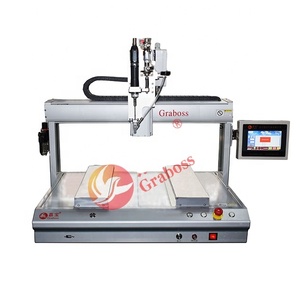
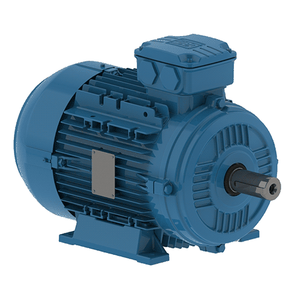
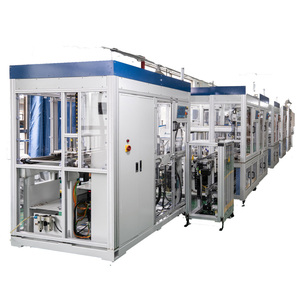
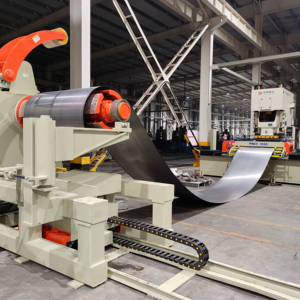
Executive Engineering Whitepaper: Automated Armature Production for Surabaya’s Evolving Manufacturing Sector
As the primary economic engine and industrial center of East Java (Jawa Timur), the greater Surabaya municipal area—encompassing strategic manufacturing corridors such as Rungkut (SIER), Karangpilang, Gresik (JIIPE), Sidoarjo, and Pasuruan (PIER)—is undergoing a massive structural transition toward high-throughput, energy-efficient electric motor manufacturing. Driven by national electrification mandates, the rapid adoption of electric two-wheelers (E2W), and the modernization of domestic home appliance and industrial pump production lines, regional OEMs face urgent requirements to update legacy assembly methods.
As a global specialist in motor manufacturing technology, Suzhou Haplin Automation Equipment Co., Ltd. (founded in November 2012 with a registered capital of RMB 15.2 million) delivers fully integrated, automated armature production lines specifically configured for Indonesian plant environments. By digitizing key stages—from lamination stack insulation paper insertion and high-speed flyer winding to commutator hot-staking spot welding, trickling resin impregnation, dynamic balancing, and automated electrical testing—Haplin enables motor factories serving East Java to eliminate operational bottlenecks, reduce direct labor expenses by up to 75%, and guarantee strict conformance to international ISO 9001 and CE quality standards.
Technical Architecture of the Haplin Automatic Armature Production Line
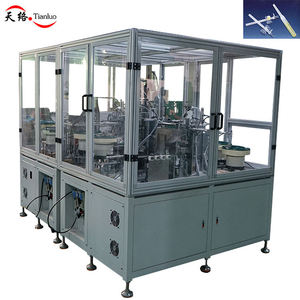
An armature (wound rotor) serves as the electro-mechanical heart of brushed DC motors, universal AC series motors, and hybrid automotive starters. Ensuring mechanical balance, high copper slot fill factors, and perfect insulation integrity requires a tightly synchronized multi-station kinematic architecture. Haplin’s turnkey production lines seamlessly link discrete sub-assembly stations via modular palletized conveyor tracks managed by centralized PLC and Touchscreen HMI control systems.
1. Lamination Stack & Paper Insertion Station
The line begins with high-precision feeder bowls and mechanical grippers loading armature core laminations. The automatic paper insertion module cuts, folds, and inserts Class F or Class H insulation paper (Nomex, DMD, or PET films) into the rotor slots at speeds reaching 0.5 seconds per slot. Dual-servo indexing guarantees 100% placement precision without tearing edge margins.
2. Dual-Flyer High-Speed Winding Station
Utilizing high-torque servo drives and active wire tensioners, the winding station executes symmetric multi-pole flyer winding. Wire tension control prevents enamel insulation scratching across enamelled copper wire diameters ranging from 0.08mm up to 1.6mm. Slot fill ratios of up to 78% are consistently achieved, optimizing flux density and electrical efficiency.
3. Commutator Wire Hooking & Hot-Staking (Spot Welding)
Wound coil leads are automatically routed and hooked into the commutator riser slots. The high-frequency inverter spot welding (hot staking) head applies regulated thermal energy and mechanical clamping force. Real-time dynamic resistance monitoring verifies copper-to-copper fusion quality, preventing cold welds, burning, or excessive voltage drop across commutator segments.
4. Armature Slot Wedge Insertion & Hot Staking
To prevent coil displacement under high rotational centrifugal forces (up to 30,000 RPM), high-density insulation slot wedges are automatically sheared and pressed over the slot openings. Integrated thermal staking locks the wedges rigidly in place prior to varnish application.
5. Automatic Trickling Resin Impregnation & Curing Tunnel
Unlike traditional dip-coating methods that waste resin and cause balance irregularities, Haplin’s precise resin trickling process applies thermosetting insulating varnish directly to the rotating coil overhangs. Controlled induction heating ensures rapid resin penetration into slot crevices followed by inline infrared curing, dramatically elevating thermal dissipation and dielectric strength.
6. High-Precision Commutator Turning & Undercutting
To ensure smooth carbon brush contact and minimize electrical arcing, the armature commutator is turned using diamond-tipped cutting tools. Integrated optical sensors guide high-speed mica undercutting blades to clean out slot segment gaps down to micron-level tolerances.
7. Dual-Plane Dynamic Balancing Station
Unbalance forces cause severe motor vibration and premature bearing failure. Haplin’s integrated balancing unit measures dynamic vector unbalance across two planes. CNC milling heads automatically remove micro-scale metal material from rotor core teeth, bringing dynamic unbalance down to ≤ 0.2 g·mm/kg (conforming to ISO 21940 standards).
8. Comprehensive Electrical Quality Inspection (E-Test Station)
Every completed armature undergoes mandatory 100% automated electrical testing before unloading:
- Winding Resistance Test: High-precision Kelvin 4-wire resistance measurement across all commutator segments.
- Surge / Inter-turn Insulation Test: High-voltage impulse wave analysis detecting subtle inter-turn short circuits.
- Hipot (Dielectric Withstand) Test: AC/DC insulation breakdown testing between armature shaft and copper coils (up to 3,000V).
Key Technical Parameters: Haplin Armature Automation Series
| Engineering Specification | Standard Configuration | High-Output Heavy Duty Edition |
|---|---|---|
| Armature Stack Diameter | Ø 15 mm – Ø 60 mm | Ø 40 mm – Ø 120 mm |
| Stack Length (Core Height) | 10 mm – 70 mm | 30 mm – 150 mm |
| Wire Diameter Range | 0.10 mm – 0.80 mm | 0.60 mm – 1.60 mm |
| Line Production Takt Time | 6 – 10 seconds / piece | 10 – 16 seconds / piece |
| Control Platform | Inovance / Siemens PLC + HMI Touchscreen | Siemens S7-1500 / Beckhoff EtherCAT Motion |
| Operating Power Standard | 380V / 440V AC, 3-Phase 50Hz (Surabayan Industrial Standard) | 380V / 440V AC, 3-Phase 50Hz |
| Air Supply Requirement | 0.5 MPa – 0.7 MPa (Filtered Dry Air) | 0.6 MPa – 0.8 MPa |
Localized Application Scenarios in Surabaya & Greater East Java Industrial Nodes
Surabaya acts as the maritime and industrial logistics gateway for East Indonesia. Machinery installed in this region must withstand specific tropical ambient factors—including high humidity, elevated factory ambient temperatures, and power quality fluctuations common in regional grids. Haplin's armature production systems are engineered with heavy-duty thermal heat sinks, IP54-rated control enclosures, and wide-tolerance voltage stabilizers.
Electric 2-Wheeler (E2W) Traction Motors
Deployed by EV assembly plants in Sidoarjo and Pasuruan producing hub motors, central drives, and starter-generators to support Indonesia's accelerated transition toward green urban mobility.
Industrial & Submersible Water Pumps
Utilized in Gresik and Rungkut (SIER) industrial pump manufacturing plants for assembling high-durability armature rotors operating in demanding agricultural and flood-control infrastructure.
Power Tools & Domestic Appliances
Configured for high-speed assembly of universal armatures used in angle grinders, rotary hammers, marble cutters, and commercial food processors distributed across domestic Indonesian markets.
By offering fast installation, localized spare parts kits, and intuitive English/Bahasa operator interfaces, Haplin guarantees smooth integration into Surabaya factories without requiring prolonged downtime or overseas specialized technicians for routine daily operation.
Strategic Industrial Trends Shaping Motor Manufacturing in East Java (2025–2030)
Procurement executives and operational leaders in Surabaya must align equipment purchases with evolving national policies and market realities. Key macro trends impacting armature production line investments include:
1. Compliance with TKDN (Domestic Component Level) Regulations
The Indonesian Ministry of Industry increasingly mandates higher Local Content Requirements (TKDN) for machinery, electronics, and electric vehicles sold domestically. Purchasing automated production lines allows local plants to mass-produce precision armatures inside East Java, qualifying their finished motors for high TKDN certification ratings necessary for government tenders.
2. Transition to Industry 4.0 & MES Connectivity
Modern factories in SIER and JIIPE are shifting away from standalone isolated machinery. Haplin’s armature lines feature native OPC-UA protocol interfaces, enabling direct connection to plant-wide Manufacturing Execution Systems (MES). Plant managers can remotely monitor real-time OEE (Overall Equipment Effectiveness), cycle times, yield rates, and maintenance alerts from anywhere.
3. Energy Efficiency Standard (MEPS) Adoption
With Indonesia enforcing Minimum Energy Performance Standards (MEPS) across commercial electric motors and household appliances, traditional loose winding practices are no longer viable. Haplin’s automated flyer winders maintain exact turn counts and uniform slot compression, ensuring minimal electrical copper losses ($I^2R$) and superior thermal behavior.
4. Upgrading from Manual Rewinding to High-Volume Automation
Rising local minimum wages (UMK Surabaya/Sidoarjo) make reliance on manual armature winding financially unsustainable. Automating the armature line reduces labor dependencies while eliminating human errors, such as mis-hooked wire leads or uneven varnish curing.
Suzhou Haplin Automation Equipment Co., Ltd.: Enterprise Advantages & Technical E-E-A-T
Selecting an equipment partner for a capital-intensive armature line requires complete confidence in machine durability, engineering depth, and post-commissioning support. Suzhou Haplin Automation Equipment Co., Ltd. stands out as an established market leader in motor automation equipment:
- Over 12 Years of Specialization: Founded in November 2012 in Suzhou, China, Haplin has focused continuously on electric motor production equipment R&D, growing to an annual output value exceeding RMB 65 million.
- Deep Engineering Talent: A dedicated workforce of over 70 staff members, including specialized mechanical designers, electrical control engineers, software developers, and assembly technicians.
- Complete Product Ecosystem: Comprehensive portfolio spanning brushed motor armature lines, BLDC inner/outer winding stator units, automatic paper inserters, spot welders, screw locking platforms, and custom non-standard assembly lines.
- End-to-End Quality Validation: Every custom line undergoes rigorous dry-running and actual customer-sample trial production in our Suzhou facility prior to shipment, allowing Surabaya clients to perform remote FAT (Factory Acceptance Testing) via live HD video streaming.
- Global Logistics & Commissioning Support: Extensive export experience across Southeast Asia, offering full technical documentation, English-language HMI interfaces, spare part kits, and remote or on-site commissioning services.
Frequently Asked Questions (FAQ) – Procurement & Engineering Guide for Surabaya Buyers
Ready to Upgrade Your Motor Manufacturing Plant in Surabaya?
Consult with Haplin’s senior automation engineering team today. Send us your armature technical drawings and target production capacities to receive a customized turnkey proposal within 24 hours.
Contact Us