Featured Motor Production Equipment
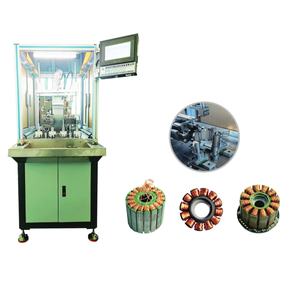
Explore our flagship automated solutions engineering high slot-fill armatures, precision winding, and turnkey motor manufacturing lines.
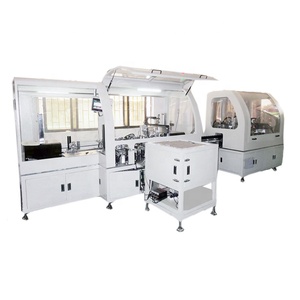
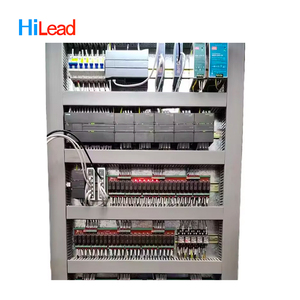
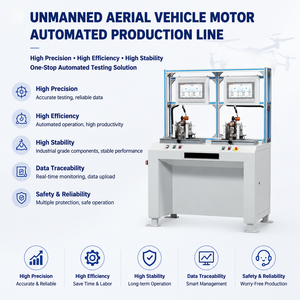
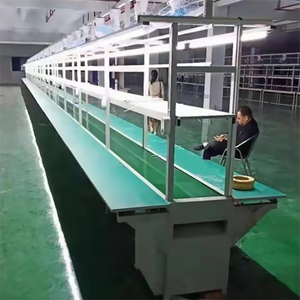
High-Efficiency Brushed Rotor Assembly: Technical Engineering & Toronto Industrial Landscape
In the evolving landscape of North American manufacturing, the demand for highly reliable, cost-efficient, and dense electric motors remains paramount. While brushless technology dominates low-maintenance digital applications, brushed DC (BDC) motors and classic armatures continue to anchor crucial industrial sectors—ranging from automotive power-seat actuators, wiper drives, and HVAC blowers to heavy-duty power tools, medical mobility equipment, and aerospace sub-systems across Ontario and the Greater Toronto Area (GTA).
For engineering leads, plant managers, and procurement officers searching for a top-tier brushed rotor assembly line factory & suppliers in Toronto, understanding the interplay between automated throughput, slot fill ratio, joint electrical resistance, and structural vibration is essential. Precision automation ensures consistent magnetic alignment, minimal copper stress, and long-term brush life even under heavy duty cycles.
Key Engineering Modules in Brushed Rotor Automation
Comprehensive automation modules designed to solve coil deformation, insulation breakdown, and micro-vibration issues.
Automatic Paper Inserting
Precision feeding, forming, and insertion of slot insulation paper (Nomex, DMD, or Kapton) into armature slots. Features digital stack height adjustment and 100% paper edge integrity check.
High-Speed Dual Flyer Winding
Servo-driven dual flyer head winding capable of up to 3,500 RPM. Closed-loop wire tension control prevents enamel micro-fractures, maintaining high slot-fill ratios without shorting.
Hot-Staking Commutator Fusing
Replaces legacy soldering with thermocompression hot-staking. Microprocessor-controlled current and displacement guarantee uniform solid copper welding joints with minimal voltage drop.
Trickle Varnish Impregnation
Controlled preheating, precise resin trickling, and infrared curing lock coil turns firmly in place, improving dielectric strength, heat dissipation, and mechanical rigidity under load.
Two-Plane Dynamic Balancing
Automatic unbalance detection with optical sensors and dual-head V-milling or drilling modules to remove targeted material, ensuring ultra-quiet motor operation and reduced bearing wear.
100% Electrical Safety Testing
Integrated end-of-line station checking surge voltage withstand, bar-to-bar resistance uniformity, insulation resistance (DC 500V/1000V), and hi-pot leakage before packaging.
Toronto & Southern Ontario: The Hub of Advanced Motor Integration
The Greater Toronto Area (GTA)—encompassing key manufacturing hubs like Mississauga, Brampton, Vaughan, Markham, Scarborough, and Oakville—stands at the epicenter of Canada's industrial automation sector. Coupled with the broader Southern Ontario automotive corridor stretching toward Kitchener-Waterloo, London, and Windsor, local plants face continuous pressure to modernize legacy assembly processes.
Local manufacturers in Ontario operate within a unique economic frame:
- High Labor Costs & Skilled Worker Shortages: Manual wire wrapping, manual commutator soldering, and visual inspection are no longer economically viable. Fully or semi-automated brushed rotor lines dramatically reduce required operator headcount from 12 down to 1 or 2 operators per shift.
- Electrical Safety Standards (CSA & ESA Compliance): Machinery deployed in Toronto facilities must meet strict Canadian Electrical Code standards, including CSA C22.2 standards, SPE-1000 field evaluation protocols, and Electrical Safety Authority (ESA) field approvals.
- Nearshoring & Automotive Tier 1/2 Rigor: Tier 1 automotive component suppliers supplying GM Oshawa, Ford Oakville, and Honda Alliston demand ISO/IATF 16949 level traceability. Every single rotor produced on our automated lines receives digital serial tracing for turn counts, resistance values, and balance offsets.
- Resilience to Extreme Temperature Fluctuations: Motors designed for Canadian operating conditions must endure cold winter startups (-40°C) and hot industrial enclosures. Automated resin trickle impregnation ensures zero void formation, preventing thermal cracking over time.
Anatomy of an End-to-End Brushed Rotor Assembly Line
Building a high-performance armature requires seamless coordination between mechanical, electrical, and pneumatic stations. Below is the full process flow engineered into Haplin Automation’s turnkey brushed rotor production lines:
1. Shaft Pressing & Lamination Stacking
Raw steel shafts are automatically fed via vibratory bowl or servo gantry into precision hydraulic or servo-press stations. Lamination core stacks are measured for height with linear optical encoders before being press-fitted onto the shaft with real-time force-vs-distance monitoring to prevent shaft distortion.
2. Commutator Pressing & Alignment
The copper commutator is pressed onto the shaft at a precise distance relative to the iron core. Laser orientation sensors align the commutator slots with the core arm slots to guarantee accurate winding angle indexing during subsequent steps.
3. Slot Insulation Paper Insertion
Strip insulation material is drawn, formed into an "S" or "U" shape profile, cut to length, and pushed into each armature slot simultaneously or sequentially. Mis-fed paper or incomplete insertion trips an automatic rejection gate.
4. High-Speed Armature Coil Winding
Utilizing double-flyer winding technology, insulated copper wire is wound tightly around the lamination teeth. Micro-processor controlled tensioners maintain constant wire tension regardless of reel diameter, protecting wire enamel while maximizing magnetic copper mass.
5. Commutator Hook Hot Staking (Fusing)
The leads of the wound coils are automatically hooked onto the commutator segments. Hot-staking heads clamp each hook, delivering a controlled electrical pulse that burns off enamel insulation and fuses copper wire to copper segment under high mechanical pressure, achieving near-zero joint resistance.
6. Resin Impregnation & Curing (Trickling / Dip)
The armature is preheated via induction, tilted to an angle, and trickled with electrical-grade resin while rotating. Capillary action draws the resin deep into the winding slots. Subsequent UV or IR baking channels cure the resin in minutes, eliminating internal coil movement.
7. Commutator Precision Turning & Slot Undercutting
To ensure smooth carbon brush contact and minimize electrical sparking, the commutator outer diameter is turned using diamond-tipped CNC lathe tools. Mica insulation between copper segments is undercut automatically, followed by high-speed air jet deburring.
8. Two-Plane Dynamic Balancing
The rotor is spun up on floating dynamic balance bearings. Laser sensors detect amplitude and phase angle of imbalance at both drive and non-drive ends. Integrated milling cutters trim micro-grams of steel from the core lamination stack until balance tolerances are achieved.
9. Final Electrical Testing & Sorting
Every rotor passes through a multi-function electrical tester verifying bar-to-bar resistance, winding inductance, surge impulse insulation integrity, and high-voltage breakdown strength. Approved rotors pass down the conveyor to automated packing; non-compliant parts are locked in a secure rejection bin.
Localized Application Scenarios in Toronto's Industrial Sectors
Supplying automated rotor production equipment to Toronto and broader Canadian manufacturers requires versatility across various motor sizes and performance duty cycles. Key applications include:
Automotive Auxiliary Drives
High-volume armatures for windshield wipers, window lifters, electronic seat adjusters, and ABS brake pumps operating under strict IATF quality norms.
Heavy-Duty Power Tools
Armatures designed for high torque density and resistance to heavy vibration in angle grinders, rotary hammers, and industrial saws widely used in Canadian construction.
Medical & Healthcare Equipment
Ultra-quiet, dynamically balanced brushed rotors for hospital beds, patient mobility lifts, wheelchair drives, and laboratory centrifugal systems.
HVAC & Commercial Ventilation
Continuous-duty blower rotors engineered for long service life, low electrical noise, and thermal endurance in harsh climate environments.
Aerospace & Defense Actuators
High-precision micro-armatures with specialty wire coatings and high-grade commutators designed for mission-critical aircraft control surface actuators.
Industrial Automation Conveyors
Brushed motors powering material handling lines, packaging machinery, and automated sorting centers throughout Ontario logistics corridors.
Engineering Excellence: Suzhou Haplin Automation Equipment Co., Ltd.
Founded in November 2012 and headquartered in the high-tech industrial cluster of Suzhou, Jiangsu, Suzhou Haplin Automation Equipment Co., Ltd. has established itself as a premier global manufacturer of automated production lines and specialized machinery for both brushed and brushless electric motors.
Haplin’s machinery portfolio encompasses complete brushed armature production lines, BLDC inner/outer stator winding lines, rotor assembly units, magnetic tile placement lines, and dozens of standalone specialty machines. We do not just build off-the-shelf catalog machinery; every assembly line is custom-engineered based on the client’s specific lamination stack dimensions, wire gauge, slot geometry, target cycle time, and local plant electrical specs.
Why Toronto & Global Manufacturers Partner with Haplin
- Custom Engineering Approach: We analyze customer sample motor armatures and CAD models before finalizing station layout, fixture design, and PLC programming.
- Strict Quality & Component Selection: Built with premium international pneumatics, servo drives (such as Panasonic/Yaskawa/Delta), PLC systems, and precision bearings to guarantee 24/7 industrial uptime.
- Factory Acceptance Testing (FAT) & SAT: Before shipping to Canada or overseas, every line undergoes exhaustive trial runs in our Suzhou factory using customer-supplied raw material. Clients participate via live HD video audit or in-person FAT acceptance.
- Comprehensive English Documentation & Support: All HMI screens, wiring diagrams, maintenance manuals, and PLC comments are delivered in clear technical English. We provide remote diagnostic access and on-site commissioning support.
Toronto Buyer Procurement FAQ
Answers to common technical, compliance, and logistics questions from Canadian factory managers and purchasing teams.
How do Haplin production lines ensure electrical safety compliance with Ontario (ESA / CSA) standards?
Our engineering team builds electrical cabinets and machine wiring in compliance with North American electrical standards. For installations in Toronto and Ontario, we configure systems for 575V/60Hz or 480V/60Hz 3-phase power, utilize CSA/UL certified components (Schneider, Siemens, Omron), and facilitate local SPE-1000 field evaluation or CSA field inspection upon arrival at your facility.
Can the assembly line accommodate multiple armature models with quick changeovers?
Yes. We design flexible tooling with quick-change modular fixtures, digital servo adjustments, and stored HMI recipe profiles. Model changeover for stack heights, slot counts, and winding parameters typically takes under 15 to 20 minutes with minimal hand tools.
What cycle times (takt times) can be achieved for brushed rotor production?
Depending on armature dimensions, turn counts, and wire gauge, our fully automated lines achieve cycle times between 8 seconds to 18 seconds per finished rotor. Semi-automatic standalone cells can be tailored for lower volume, high-mix requirements.
How are equipment shipping, customs duty, and delivery to Toronto handled?
We provide full EXW, FOB, or CIF/DDP terms to Toronto ports or directly to your factory door. Equipment is packed in export-grade fumigated wooden cases with moisture-proof vacuum wrapping. We collaborate with experienced Canadian customs brokers to streamline import duty clearance under standard machinery HS codes.
What after-sales service and spare parts availability do you provide in Canada?
Every line comes with an emergency spare parts package covering consumable wear items (winding flyers, paper cutters, hot-staking electrodes). We offer 24/7 remote technical support via encrypted VPN modules on the PLC, allowing our software engineers in Suzhou to diagnose and resolve control issues in real-time. On-site commissioning engineers can be dispatched whenever required.
What details are required to obtain a formal engineering proposal and quotation?
To prepare an accurate station layout and cycle time quote, please provide: 1) Armature technical drawings or physical samples; 2) Lamination stack height & outer diameter; 3) Wire diameter & turn count per slot; 4) Target daily/shift output; 5) Desired level of automation (semi-auto vs fully automatic line).
Ready to Automate Your Brushed Motor Manufacturing in Toronto?
Contact our automation engineering team today to review your motor drawings, calculate line throughput, and receive a complete turnkey project proposal.