Featured Stator & Rotor Production Equipment
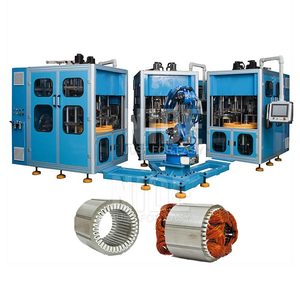
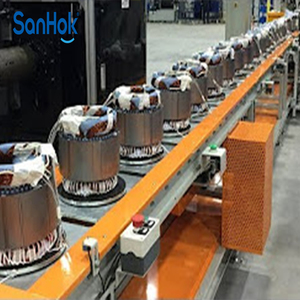
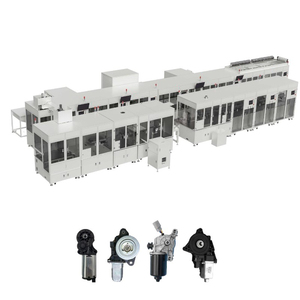
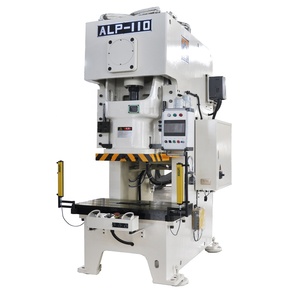
Precision-engineered automated systems tailored for low-to-high voltage brushless (BLDC), brushed, and new energy vehicle (NEV) hairpin electric motor manufacturing.
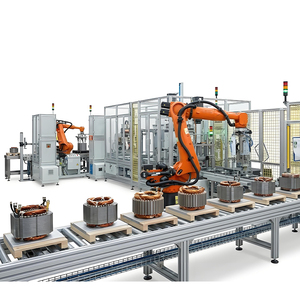
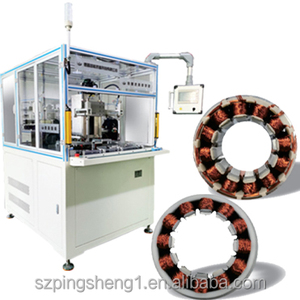
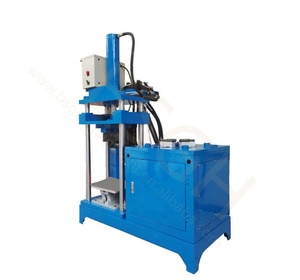
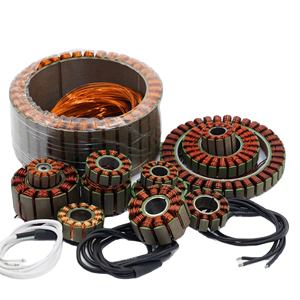
1. Strategic Synergy: Bridging Chinese Stator Manufacturing Mastery with Mexico City’s Nearshoring Ecosystem
The global electric motor manufacturing landscape is experiencing a structural realignment driven by supply chain resilience, nearshoring dynamics, and strict regional value content (RVC) mandates under the USMCA (United States-Mexico-Canada Agreement / T-MEC). As OEM and Tier-1 automotive, HVAC, power tool, and industrial pump manufacturers establish state-of-the-art production hubs within the Metropolitan Area of Mexico City (Zona Metropolitana del Valle de México - ZMVM), Estado de México (Toluca, Naucalpan, Tlalnepantla), and the adjoining Bajío corridor, the demand for ultra-reliable, high-takt-time electric motor stator production lines has surged exponentially.
As premier Chinese automation specialists headquartered in Suzhou, China’s industrial tech epicenter, top-tier manufacturers like Suzhou Haplin Automation Equipment Co., Ltd. serve as vital engineering partners for factories operating in Mexico City. Chinese stator assembly machinery leads the world in cost-efficiency, servo-driven mechanical precision, high slot fill rates, and modular line flexibility. By integrating Chinese-engineered automated stator production equipment into Mexican manufacturing facilities, enterprises achieve immediate capital expenditure (CapEx) savings of 35% to 50% compared to European or North American machinery alternatives, while simultaneously securing European-level tolerances, CE certifications, and full compliance with North American electrical standards.
Information Gain Key Metric: Incorporating servo-controlled multi-station winding along with real-time machine vision tracking can reduce stator cycle times (Takt Time) down to 12-18 seconds per unit while maintaining a coil insulation withstand voltage threshold exceeding 2,500V AC.
Furthermore, deploying automated stator manufacturing infrastructure in Greater Mexico City allows manufacturers to qualify for duty-free trade within the North American bloc. China's advanced stator production equipment enables local Mexican operations to perform complex core processing—including lamination stacking, slot paper insertion, precision needle or hairpin winding, mid-phase insulation, shaping, wire stripping, laser welding, and surge testing—entirely in-country, fulfilling strict T-MEC origin rules for electric traction drive units, industrial machinery motors, and consumer electronics.
2. Deep-Dive into Advanced Motor Stator Manufacturing Methodologies
Electric motor efficiency, thermal dissipation, torque density, and acoustic noise performance (NVH) are directly determined by the architecture of the stator production process. Modern stator manufacturing encompasses three primary topologies: Hairpin Stator Assembly (predominant in EV and traction applications), Inner/Outer Slot BLDC Needle Winding, and Conventional Fly-Winding with Automatic Slot Insertion.
A. Hairpin Stator Technology for New Energy Vehicles (NEV)
Hairpin technology replaces traditional round enamelled copper wire bundle coils with rectangular copper conductors shaped like hairpins. This process requires ultra-precise sequence execution:
- Paper Insertion: High-speed insertion of B-stage or NMN/TPI insulation paper into the open slots of the laminated steel core.
- Hairpin Forming & Insertion: Rectangular copper wire is CNC-bent, stripped of enamel via 3D fiber laser, and inserted simultaneously into slot matrices.
- End-Twisting & Shaping: The protruding crown pin ends are twisted mathematically to form precise pitch distances.
- Laser Welding & 3D Vision: 3D machine vision aligns the hairpin tips for high-energy fiber laser spot welding, ensuring electrical continuity with zero micro-cracking.
- Trickle Impregnation / Varnish: Automated resin impregnation under thermal cycling for structural rigidity and dielectric insulation.
B. BLDC Inner Winding & Multi-Station Needle Winding
For brushless DC (BLDC) motors utilized in HVAC blowers, domestic appliances, and industrial drives, multi-axis servo needle winding equipment guides enamelled wire directly onto internal stator teeth. Advanced nozzle trajectory algorithms maintain uniform tension control, eliminating cross-overs and achieving slot fill factors above 48%. This results in significantly lower copper resistance ($R_s$) and reduced thermal losses ($I^2R$).
3. Technical Comparison of Stator Line Configurations for Mexico City Operations
Selecting the optimal production line layout depends on production volume, product mix diversity, floor space limits, and workforce technical skill levels. Below is an engineering overview comparing major machine line configurations:
| Stator Technology Line | Target Motor Types | Typical Takt Time | Achievable Slot Fill | Automation Level | Optimal Production Volume |
|---|---|---|---|---|---|
| Fully Automatic Hairpin Line | NEV Traction, Commercial EV, Heavy Duty Drives | 15 - 35 sec / stator | 55% - 75% | Full (Industry 4.0 / MES Integration) | > 150,000 units / year |
| Multi-Station BLDC Needle Winder | HVAC, Pumps, Drone Motors, Power Tools | 12 - 25 sec / stator | 42% - 52% | High (Robotic Pallet Loading) | > 300,000 units / year |
| Large Motor Heavy Wire Line | Industrial Compressors, Mining Motors, Elevators | 45 - 90 sec / stator | 38% - 46% | Semi-Automated (Operator Assisted) | 10,000 - 80,000 units / year |
| Flexible Standalone Winding Unit | Custom Motors, Repair, Prototype Batches | 60 - 150 sec / stator | 35% - 44% | Standalone Machine | < 20,000 units / year |
4. Localized Application Scenarios across Mexico City & Greater Metropolitan Area
The industrial landscape around Mexico City features unique electrical grid parameters, climate conditions, and end-use market concentrations. China's top stator production line manufacturers customize machine setups specifically for operational environments across Central Mexico:
EV & E-Mobility in Toluca Corridor
Automated hairpin and BLDC stator lines deployed in the Toluca-Lerma industrial cluster supply high-torque electric powertrains and auxiliary pumps directly to global automotive assembly plants operating across Mexico.
HVAC & Refrigeration in Estado de México
Tlalnepantla, Naucalpan, and Cuautitlán Izcalli factories utilize 4-station and 6-station automated stator winding lines to produce high-efficiency fan motors and hermetic compressor stators complying with NOM standards.
Industrial Pumps & Power Tools
Robust semi-automatic and fully automatic copper-wire stator forming lines empower local machinery builders to assemble rugged, thermal-resistant stators capable of handling altitude-induced cooling variations in Mexico City (2,240m elevation).
5. Navigating Localized Industrial Trends & Mexican Electrical Grid Standards
Deploying automated stator production equipment in Mexico City requires strict adherence to local industrial infrastructure standards and regional energy compliance legislation:
A. Power Grid Compatibility (220V / 440V AC at 60Hz)
While domestic Chinese manufacturing facilities operate on a standard 380V 50Hz grid, Mexican industrial parks (such as Parque Industrial Naucalpan or Parque Industrial Toluca 2000) predominantly supply three-phase power at 220V or 440V AC at 60Hz. Leading Chinese OEM manufacturers custom-build power cabinets, transformer modules, servo drivers, and pneumatic solenoid banks to operate seamlessly under local 60Hz power conditions, protecting machine electronics against voltage fluctuations from the Comisión Federal de Electricidad (CFE) grid.
B. NOM Energy Efficiency Standards (NOM-016-ENER / NOM-014-ENER)
Mexico's Secretariat of Energy enforces rigorous minimum energy performance standards (MEPS) for electric motors sold or integrated into finished equipment. By utilizing Chinese stator production lines with computerized wire tension control and precision end-turn forming, manufacturers achieve tighter coil resistance symmetry and higher magnetic flux efficiency, ensuring completed motor units effortlessly clear IE3 (Premium Efficiency) and IE4 (Super Premium Efficiency) compliance audits.
C. Dual Spanish / English HMI Interfaces & Remote IoT Diagnostics
To reduce onboarding friction for plant technicians in Mexico City, machine HMIs (Human-Machine Interfaces) are equipped with dual-language touchscreens (Spanish/English), complete with visual step-by-step diagnostic workflows, graphical error prompts, and automated maintenance logs. Embedded VPN routers enable remote real-time troubleshooting directly from Chinese engineering teams, ensuring 98%+ equipment uptime.
6. Why Partner with Leading Chinese Stator Line Manufacturers: Enterprise Supremacy
With registered capital exceeding RMB 15.2 million, an operating area spanning tens of thousands of square meters in Suzhou, a dedicated R&D force of 70+ engineers, and an annual delivery value surpassing RMB 65 million, premier Chinese automation builders like Suzhou Haplin Automation Equipment Co., Ltd. set the gold standard in electric motor automation equipment.
Our comprehensive product portfolio encompasses complete brushless motor (BLDC) assembly lines, brushed motor rotor & stator production units, magnetic tile assembly automation, paper insertion machinery, spot welding stations, and end-of-line electrical testing rigs. Every automated stator line undergoes a rigorous Factory Acceptance Test (FAT) utilizing the client's exact laminations, magnet wire, and terminal connections prior to trans-Pacific shipment.
CE & ISO Quality Certification
Built with global safety components including Siemens PLCs, SMC pneumatics, and Omron sensors, conforming fully to CE low voltage and electromagnetic directives.
Pre-Shipment Sample Run-Off
We execute 1,000+ continuous cycle trial runs using customer-supplied raw material to guarantee Takt time, slot fill, and hipot insulation compliance before dispatch.
End-to-End Lifecycle Service
From floor layout 3D simulation to field commissioning in Mexico City, operator training, wearing parts stock holding, and software upgrades.
7. Frequently Asked Questions (FAQ) for Mexico City Procurement Managers
Accelerate Your Motor Stator Manufacturing in Mexico City
Partner with China's leading motor stator line manufacturer. Request a custom 3D line layout simulation, cycle time calculation, and turnkey quotation within 24 hours.
Inquire Now