Featured Vacuum Cleaner Motor & Winding Assembly Solutions
Precision-engineered automated machinery, stator winders, and complete assembly lines tailored for high-RPM brushed and brushless motor manufacturing.
Engineering Excellence in Vacuum Cleaner Motor Manufacturing: Bridging China's Automation Powerhouse with Japan's Precision Standards
The global floor care market is undergoing a rapid evolution, driven by demand for lightweight cordless stick vacuums, silent robotic cleaners, high-suction industrial wet/dry units, and smart home appliances. At the heart of every high-performance vacuum cleaner lies its electric motor—transitioning rapidly from traditional universal brushed motors to high-RPM Brushless DC (BLDC) digital motors reaching speeds upwards of 100,000 to 150,000 RPM.
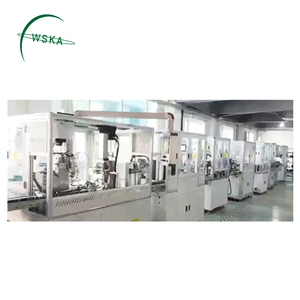
As Japanese original equipment manufacturers (OEMs) and Tier-1 brand suppliers seek to lower capital expenditures while preserving uncompromising quality, China has emerged as the premier global hub for custom motor assembly lines. Suzhou Haplin Automation Equipment Co., Ltd. stands at the forefront of this industrial transformation. Established in November 2012 in Suzhou, Jiangsu—China’s hub for high-precision mechatronics—Haplin combines specialized R&D, advanced manufacturing, strict quality assurance, and seamless export services into turnkey automated production solutions.
2012
Established in Suzhou
70+
R&D & Engineering Experts
¥65M+
Annual Equipment Output
100%
Customized for OEM/ODM
Information Gain Insight: Modern Japanese vacuum cleaner motor procurement focuses on three key metrics: dynamic balance tolerance (<0.5mg peak), high slot-fill copper density (>85%), and full production line traceability via integrated PLC systems. Suzhou Haplin lines incorporate closed-loop servo feedback to ensure zero-defect output for Japanese importers.
Localized Application Scenarios Across the Japanese Vacuum Market
Tailored production lines for Japanese compact residential living, high-density housing requirements, and rigorous noise-level restrictions.
Ultra-Lightweight Cordless Stick Vacuums
Japanese urban apartments require compact, light, and high-power handheld vacuums. Haplin builds high-speed BLDC inner-winding stator lines that handle micro-wire winding, precision slot insulation paper insertion, and compact rotor magnet bonding for 100k+ RPM motors under 200 grams.
Whisper-Quiet Robotic Vacuum Cleaners
Nighttime cleaning in multi-story wooden or concrete Japanese homes demands motor operating noise under 58 dB. Our assembly lines incorporate automated dynamic balancing stations, micro-bearing press fittings, and acoustic wave testing modules to guarantee near-silent operation.
Heavy-Duty Wet & Dry Commercial Cleaners
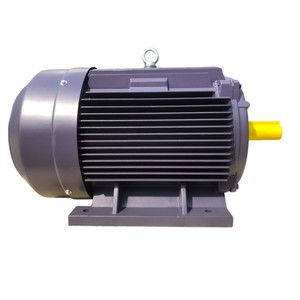
For Japanese industrial plants, hotel maintenance, and building care, high-power brushed AC and 3-phase asynchronous vacuum motors are essential. We manufacture fully automated armature winding, commutator spot welding, and resin trickling impregnation lines built for continuous 24/7 operation.
Smart Washer-Dryer Vacuum Combo Systems
Emerging Japanese household appliances integrate liquid extraction with vacuum suction. Haplin’s lines feature IP67 moisture-resistant potting stations, automatic gasket placement, and electrical safety testing (Hipot, insulation resistance, surge testing) meeting Japanese PSE requirements.
Futuristic Micro Air-Duster Motors
High-frequency electronics cleaning dusters demand ultra-compact motors with immediate start-stop torque response. Our sub-unit assembly machines assemble sensorless BLDC rotors and high-precision magnetic tile arrangements with micron-level concentricity.
Cleanroom Medical & HEPA Vacuum Drives
Japanese healthcare and laboratory vacuums require zero carbon-dust emissions. Haplin specializes in brushless cleanroom-class assembly equipment that eliminates carbon brush wear while integrating high-efficiency airflow impeller press-fit units.
Key Market & Technical Trends Driving Japanese Procurement Strategy
Navigating the Japanese electrical appliance supply chain demands an in-depth understanding of localized market trends. Japanese engineering heads and procurement teams prioritize supply chain stability, technical repeatability, and energy efficiency. Below are the key industry trends shaping vacuum cleaner motor manufacturing lines exported from China to Japan:
1. Transition to High-Slot-Fill Needle Winding Technology
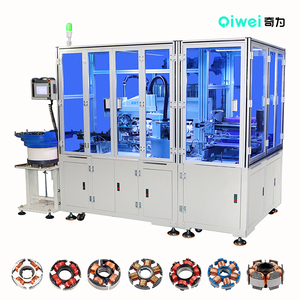
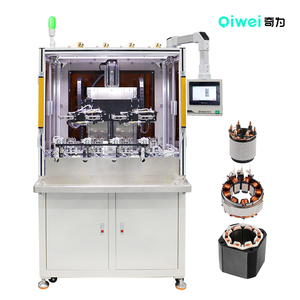
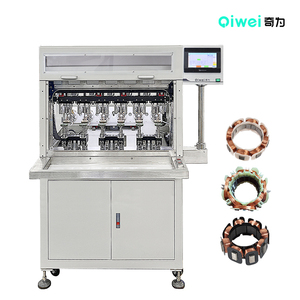
To achieve higher suction wattage without increasing motor physical footprint, Japanese manufacturers specify higher copper fill ratios inside stator slots. Haplin’s CNC Four-Station Inner-Winding Stator Production Line utilizes flying needle winding technology driven by multi-axis Mitsubishi servo systems. This achieves uniform wire layering, prevents wire overlap damage, and boosts slot fill ratios above 85%.
2. Integration of Industry 4.0 Traceability & MES Protocols
Quality control in Japanese plants relies heavily on data transparency. Haplin’s equipment integrates seamlessly with factory Manufacturing Execution Systems (MES). Every motor assembled receives a unique laser-etched QR code, recording stator resistance, winding turn count, spot-welding temperature curve, dynamic balance values, and end-of-line electrical test parameters.
3. Zero-Defect Commutator Spot Welding for Brushed Motors
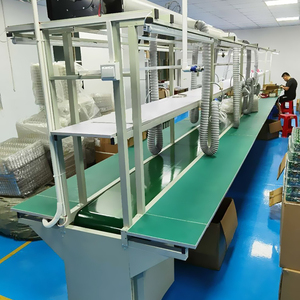
While BLDC adoption is rising, traditional brushed vacuum motors remain dominant in cost-sensitive markets. A primary failure point is improper commutator connection. Haplin’s Rotor Double Head Spot Welder with Conveyor Line employs real-time displacement monitoring and current feedback control to ensure 100% fuse joint consistency, completely eliminating cold welds and insulation burns.
Comparison Matrix: Production Line Paradigms for Vacuum Motors
| Technical Dimension | Traditional Semi-Auto Line | Japanese Domestic Custom Line | Suzhou Haplin Turnkey Automated Line |
|---|---|---|---|
| Takt Time (Sec/Unit) | 25.0 – 35.0s | 6.0 – 8.0s | 6.5 – 8.5s |
| Capital Cost (USD) | Low ($80k - $150k) | Very High ($1.2M - $2.5M) | Competitive ($250k - $550k) |
| PLC & Hardware | Generic Local PLC | Mitsubishi / Omron | Japanese Standard (Mitsubishi/Keyence) |
| Dynamic Balance Tolerance | < 3.0 mg | < 0.5 mg | < 0.5 mg (Automated Add/Remove Weight) |
| Traceability & MES | Manual Paper Logging | Full OPC-UA Data Access | Full MES Integration & Cloud Ready |
| Lead Time to Delivery | 6 – 8 Weeks | 24 – 36 Weeks | 10 – 14 Weeks (Accelerated OEM) |
Why Leading Japanese Appliance Brands Partner with Suzhou Haplin
Comprehensive R&D, robust manufacturing standards, and localized engineering support tailored for international buyers.
Custom Tooling & Quick Changeover Design
Our modular fixture platforms enable vacuum motor manufacturers to execute product changeovers in under 15 minutes. High-precision servo adjustments replace manual mechanical stop tweaking, guaranteeing high repeatability across different stack heights and lamination diameters.
Strict Compliance with Japanese Industrial Standards
All machinery built for Japanese exports adheres strictly to PSE safety norms, JIS standards, and Japanese electrical safety protocols. Electric control cabinets use Omron safety relays, Keyence sensors, and Japanese-language HMI control interfaces for seamless local operation.
Factory Acceptance Testing (FAT) & Sample Verification
Before shipment from our Suzhou facility, we run extensive trial runs using actual rotor laminations, copper wires, and commutators shipped from the client. Japanese buyers can witness FAT live in Suzhou or via high-definition multi-angle video inspection with full test data reports.
Comprehensive After-Sales Support & Overseas Service
We provide full English and Japanese technical documentation, step-by-step video operation guides, remote real-time diagnostics via PLC gateway, and rapid dispatch of high-wear spare parts to minimize line downtime.
Frequently Asked Questions (FAQ) for Japanese Procurement Managers
Addressing engineering specifications, electrical voltage compatibility, delivery workflows, and quality assurance.
Can Haplin customize production line electrical specifications for Japan’s 100V / 200V electrical grids?
Yes, absolutely. We fully adapt all electrical hardware, servo drives, transformers, and pneumatic valves to suit Japanese industrial power standards: single-phase 100V, three-phase 200V/220V at both 50Hz (Eastern Japan including Tokyo) and 60Hz (Western Japan including Osaka/Nagoya). Power control cabinets are built with Japanese-compliant breakers and wiring color coding.
Which vacuum cleaner motor types can Haplin production lines handle?
Our lines are engineered for both Brushed DC/AC Universal Motors (armature winding, paper insertion, commutator spot welding, resin trickling, dynamic balancing) and Brushless DC (BLDC) Digital Motors (inner stator needle winding, rotor magnet insertion and gluing, PCB soldering, end-cap assembly, and automated performance testing).
How does Suzhou Haplin guarantee dynamic balancing for high-speed BLDC vacuum motors exceeding 100,000 RPM?
Our automated rotor lines feature integrated 2-plane dynamic balancing stations equipped with high-precision piezoelectric sensors. The system automatically measures residual unbalance, calculates precise vector angles, and executes computer-controlled milling or weight-adding resin placement to reach dynamic balance tolerances of < 0.5 mg·mm.
What PLC controllers and safety components are installed on machines exported to Japan?
By default, we utilize Mitsubishi Electric (iQ-F / iQ-R series) or Omron PLCs paired with corresponding servo drives and Keyence optical safety light curtains. Human-Machine Interfaces (HMI) are programmed with dual Japanese and English user interfaces to ensure ease of operation for Japanese line technicians.
Can we start with individual standalone winding or spot-welding units and expand later to a full automated conveyor line?
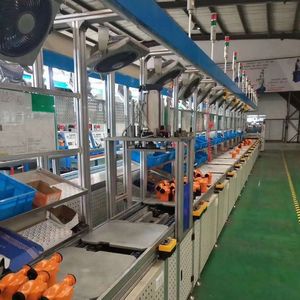
Yes. All Haplin single machines—such as our Stator Four-Station Winding Machine or Rotor Paper Inserter—are designed with standardized physical heights, standardized pallet transfer mechanisms, and modular PLC communication ports. You can deploy standalone units initially and later link them via automated belt conveyors and robot loading arms as production volumes expand.
What is the standard lead time and Factory Acceptance Test (FAT) protocol for custom orders?
Standard manufacturing and assembly lead time is between 10 to 14 weeks from drawing approval. Upon assembly completion, we run a continuous 48-hour FAT test using customer-provided motor laminations and components. Clients receive full Cpk capability reports, cycle time verification videos, and complete electrical test logs prior to container loading.