Precision Motor Manufacturing Equipment Portfolio
High-Performance Armature, Stator, & Rotor Automation Systems Engineered by Suzhou Haplin Automation Equipment Co., Ltd.
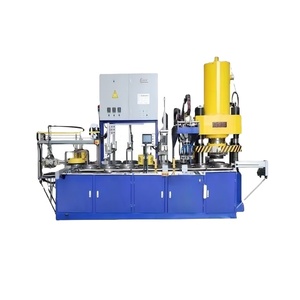
Superb Quality Wheel Forming Machine Electric Motor Manufacturing Production Line
View Details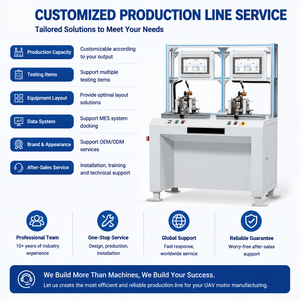
OEM ODM Custom Automatic Brushless Motor Production Line for Civilian FPV Drone Manufacturing
View Details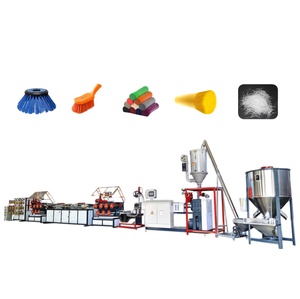
Plastic Monofilament Extruding Machinery Sweeper Brush Bristle Making Machine Production Line
View Details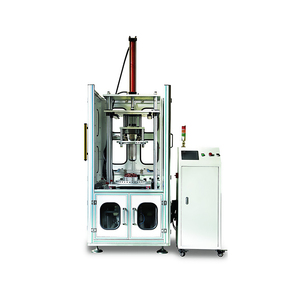
Stator Coil Winding Shape Forming Machine Automatic Fan Winding Motor Stator Full Line
View Details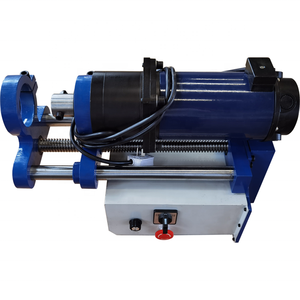
LTT-40 Brushed Motor Maintenance Machinery Portable Line Boring Machine
View Details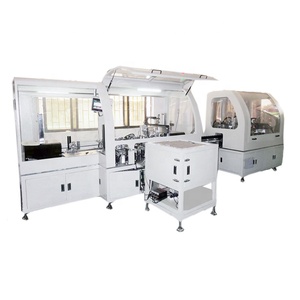
Fully Automatic Motor Case Assembly Machine Industrial Equipment for Auto Parts Manufacturing
View Details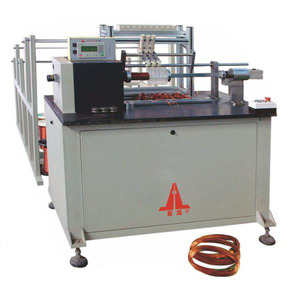
Electric Motor Armature Fully Automatic Production Line
View Details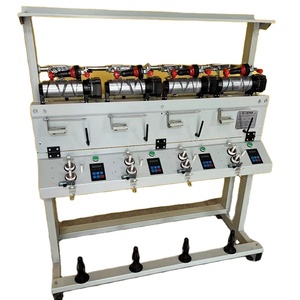
4-Head High Speed Cone to Cone Winding Machine Automatic Metal Motor Winder
View DetailsTechnical Whitepaper: Engineering Breakthroughs in Commutator Pressing Machines
In high-performance fractional horsepower (FHP) brushed electric motors—widely utilized in North American automotive subsystems, cordless power tools, heavy-duty industrial actuators, and household appliances—the precision of the armature commutator assembly dictates overall motor lifecycle, electrical commutation efficiency, thermal dissipation, and acoustic noise profiles. As specialized export equipment manufacturers supplying tier-1 and tier-2 motor production plants across North America, Suzhou Haplin Automation Equipment Co., Ltd. engineered its latest series of Commutator Pressing Machines to address the stringent micro-yield tolerances demanded by modern US manufacturing standards.
Commutator pressing is not merely a mechanical press-fit operation; it is a critical metallurgical and structural integration phase. The machine must press a multi-segment copper commutator (typically shell-type or hook-type with phenolic molding compound cores) onto an armature shaft stacked with electrical steel laminations, without inducing axial shaft deflection, bar distortion, segment tilt, or micro-fracturing of the internal resin insulation hub.
Core Engineering Insight: Traditional mechanical or unmonitored pneumatic presses exhibit up to 8% scrap rates in high-density armatures due to load overshooting and thermal expansion variance. Modern servo-electric commutator pressing systems implement dynamic force-displacement curves (press-fit profiles) that continuously evaluate load resistance at 1,000 samples per second, guaranteeing zero structural damage to copper riser bars.
1. Advanced Closed-Loop Servo Electric Driving Mechanics
Unlike legacy hydraulic presses that suffer from fluid temperature drift and pressure ripple, Haplin's export-grade Commutator Pressing Machines utilize high-torque AC servo motors coupled with pre-loaded planetary ball screws. This architecture provides micro-stepping displacement resolution down to 0.001 mm. The press force is dynamically regulated using in-line piezoelectric load cells installed directly inline with the press ram.
During the insertion sequence, the machine automatically executes a multi-stage velocity profile:
- Approach Phase: High-speed downward travel (up to 150 mm/s) to optimize overall cycle time (takt time < 4.5 seconds).
- Contact Detection Phase: Instantaneous force threshold sensing (< 20 N) to verify correct initial axial alignment of the commutator bore with the shaft knurling or journal zone.
- Controlled Insertion Phase: Constant-velocity pressing with real-time envelope monitoring of the Force vs. Distance (F-S) curve.
- Dwell & Final Positioning: Sub-micron positioning holding to ensure absolute height stack consistency across varying batch tolerances of armature cores.
Micro-Displacement TIR Control
Maintains Total Indicated Runout (TIR) of commutator copper segments under 0.005 mm post-assembly, eliminating premature brush wear and high-frequency arcing.
Force-Displacement Envelope Sensing
Integrated upper and lower limit curve envelopes automatically detect shaft interference anomalies, missing knurls, or soft commutator phenolic cores.
Anti-Tipping Fixture Tooling
Precision hardened tool-steel guide sleeves (60-62 HRC) prevent angular misalignment or commutator segment tilt during high-force press operations.
U.S. Market Application Scenarios & Regional Industrial Ecosystems
The manufacturing landscape in the United States demands specialized machine configurations adapted to regional industrial hubs, labor cost structures, and product compliance frameworks. As dedicated commutator pressing machine exporters, Haplin engineers equipment specifically tailored for the following key US industrial sectors:
Automotive OEM & Tier-1 Subsystems (Midwest Region)
Deployed in Michigan, Ohio, and Indiana motor assembly plants producing starter motors, windshield wiper drives, electric window lifters, electronic power steering (EPS) auxiliary motors, and HVAC blower assemblies requiring 24/7 continuous operation.
High-Torque Cordless Power Tools (Upper Midwest & South)
Engineered for suppliers producing heavy-duty commercial drills, angle grinders, impact wrenches, and saws. Handles high-density armatures with heavy copper wire gauges and micro-commutators subject to intense vibrational stress.
Medical Devices & Precision Micro-Actuators (East Coast & West Coast)
Utilized in Massachusetts, California, and Minnesota MedTech manufacturing hubs for surgical power tool armatures and micro-pumps requiring cleanroom-compatible, oil-free electric pressing mechanisms with ultra-precise displacement resolution.
Outdoor Power Equipment & Home Appliances (Southeast & Sunbelt)
Integrated into manufacturing facilities across the Carolinas, Georgia, and Texas assembling high-volume residential vacuum motors, lawn care equipment motors, and kitchen appliance drive units.
U.S. Manufacturing Localized Trends & Industry 4.0 Integration
Addressing the Macro Shifts in North American Motor Production
The United States industrial sector is currently undergoing a massive structural transformation driven by supply chain reshoring, the Inflation Reduction Act (IRA), and advanced automation mandates. Motor manufacturers operating within the US market are replacing standalone manual machinery with smart, networked, and compliant equipment that fulfills strict domestic requirements:
- Industrial Connectivity & Data Traceability (OPC UA / Ethernet/IP): US plant directors require every single pressed armature to have a unique serial barcode logged into MES (Manufacturing Execution System) databases. Haplin’s commutator pressing machines feature built-in industrial IPCs running Windows/Linux interfaces that automatically export force-displacement CSV reports via EtherNet/IP or MQTT protocols.
- NFPA 79 & ANSI B11.19 Electrical & Machine Safety Standards: North American factories strictly enforce safety regulations governed by OSHA and NFPA. Our machinery exported to the United States incorporates Allen-Bradley / Siemens safety PLCs, dual-channel light curtains, emergency stop relays, and standardized NEMA 12 rated enclosure panels wired for 480V 3-Phase 60Hz or 208V 60Hz utility grids.
- Fast Tooling Changeover for Low-Volume High-Mix (LVHM) Production: As US contract manufacturers balance multiple motor SKU lines, tooling changeover time is a major KPI. Haplin’s quick-change die assemblies feature magnetic positioning pins and digital height scale indicators, reducing fixture swap times to under 5 minutes without needing specialized toolmakers.
Engineering Comparison: Servo Commutator Press vs. Traditional Hydraulic Press
To help US manufacturing engineers evaluate ROI and technical merit, the matrix below details the performance differentials between traditional hydraulic pressing setups and Haplin's advanced Servo Electric Commutator Pressing Machines:
| Performance Parameter | Traditional Hydraulic / Pneumatic Press | Haplin Closed-Loop Servo Press | Impact on US Plant Operations |
|---|---|---|---|
| Positioning Accuracy | ±0.05 mm to ±0.10 mm | ±0.002 mm | Eliminates manual shimming; guarantees exact brush contact location. |
| Force Monitoring Capability | None or Peak Analog Gauge Only | 1,000 Hz Dynamic Envelope Curve | 100% in-line quality assurance; rejects cracked or loose commutators. |
| Energy Consumption | High (Continuous Hydraulic Pump Idle) | Low (Power Consumed Only During Stroke) | Reduces factory power costs by up to 65% per shift. |
| Cleanroom & Environmental Compatibility | Potential Oil Leaks & Thermal Noise | 100% Oil-Free Electric Servo Drive | Meets ISO Class 7/8 medical and clean manufacturing environment standards. |
| Data Export & MES Integration | Manual paper logs / Non-networked | EtherNet/IP, OPC UA, Database Export | Fulfills Industry 4.0 automotive supplier traceability mandates. |
| Scrap & Rejection Rate | 3.5% – 6.0% Average | < 0.1% Guaranteed | Saves thousands of dollars annually in expensive copper & lamination materials. |
Why Suzhou Haplin Automation is the Trusted Exporter for US Buyers
Founded in November 2012 in Suzhou, Jiangsu—China’s premier automation engineering cluster—Suzhou Haplin Automation Equipment Co., Ltd. has established itself as an authoritative global manufacturer of electric motor assembly solutions. Operating with a registered capital of RMB 15.2 million, a specialized R&D and manufacturing workforce of over 70 engineers and technicians, and an annual production value exceeding RMB 65 million, Haplin provides world-class design, export compliance, and technical support.
Turnkey R&D & Customization
We build customized station layouts and fixture dies directly engineered from customer shaft and commutator 3D CAD files.
Rigorous Pre-Shipment FAT
Every exporter machine undergoes a 72-hour continuous Factory Acceptance Test (FAT) using customer-supplied armature components before export.
North American Compliance
Full integration of US electrical standards (UL-marked components, NFPA 79 enclosure design, Imperial hardware options).
Comprehensive After-Sales Support
English engineering documentation, remote PLC diagnostic modules, rapid wear-parts dispatch, and video commissioning assistance.
Frequently Asked Questions (FAQ) for United States Buyers & Engineers
Direct answers to common technical, electrical, logistical, and compliance questions raised by US procurement directors and manufacturing engineers when importing Haplin Commutator Pressing Equipment.
How does Haplin ensure compliance with US electrical supply and UL/NFPA standards?
Our export machinery destined for the United States is engineered specifically for North American power grids (e.g., 480V 3-Phase 60Hz or 208V 3-Phase 60Hz). All control cabinets utilize UL-recognized industrial components (including Allen-Bradley or Siemens PLCs, Eaton/Schneider breakers, and Class 1 wiring). Electrical enclosures adhere to NEMA 12/IP54 standards, featuring NFPA 79 safety interlocks and main disconnect switches equipped with lock-out/tag-out (LOTO) provisions.
Can the machine press commutators on shafts with delicate insulating sleeves or pre-wound armatures?
Yes. The machine’s closed-loop servo mechanism allows multi-stage pressure setting and precise displacement limits. For pre-wound armatures, specialized lower anvil tooling supports the armature core laminations directly without applying axial force to the copper wire coils or slot insulation paper, preserving electrical insulation integrity.
How is real-time quality control monitored and logged during press fitting?
The system utilizes an inline load cell and optical/magnetic displacement encoder to record the exact force applied at every 0.001 mm increment. The machine compares the live press curve against a pre-calibrated master envelope. If the force rises too rapidly (indicating tight journal tolerances or bent shafts) or stays too low (indicating loose fit), the machine halts the cycle, flags an visual alert, and sends an NG (No Good) signal to the line master PLC.
What tool steel grades are used for the press dies and how long do they last?
All critical pressing dies, punches, and centering sleeves are manufactured from premium SKD11 or DC53 tool steels, vacuum heat-treated and cryogenic-treated to a hardness of 60–62 HRC. Under standard clean operating conditions, fixture tooling routinely exceeds 1.5 million press cycles before requiring precision re-grinding.
What is the lead time, shipping process, and commissioning protocol for US buyers?
Standard lead times for custom-tooled Commutator Pressing Machines range from 4 to 8 weeks depending on automation level. Machines are packed in export-certified ISPM-15 wooden crates with moisture-barrier vacuum foil wrapping. Acceptance testing (FAT) can be conducted via live HD video or in person at our Suzhou facility. Upon arrival in the US, our technical team provides remote setup assistance, English operating manuals, and step-by-step PLC parameter guides.
Can standalone commutator pressing machines be integrated into fully automatic armature lines later?
Absolutely. Haplin equipment is designed modularly. A standalone manual-load commutator pressing station can be upgraded at a later date with automated robotic pick-and-place arms, conveyor pass-through modules, and SMEMA interface protocols to integrate seamlessly into a fully automated brushed motor armature line.
Accelerate Your Motor Manufacturing Efficiency Today
Contact Suzhou Haplin Automation Equipment Co., Ltd. for engineering consultations, customized fixture tooling designs, cycle time evaluations, and complete factory automation quotations tailored for the US market.
Get Catalog