
Automated Machinery Range
Featured Equipment & Production Lines
High-performance armature, stator, rotor, and magnetic tile automated machinery engineered for zero-defect motor production.
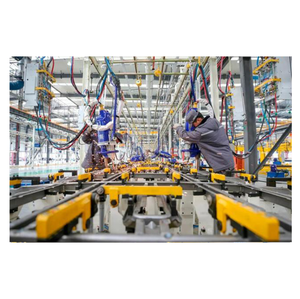
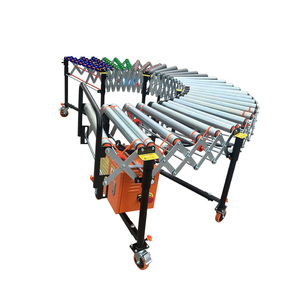
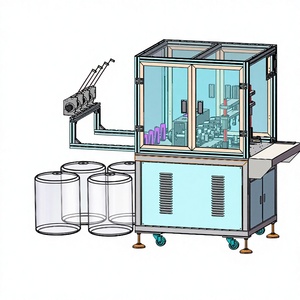
Industry Whitepaper
Next-Generation Magnetic Tile Assembly Technology for Kyoto Industry
Overcoming thermal displacement, glue line variance, and magnetic flux irregularities in high-density permanent magnet motors.
Technical Information Gain: Precision Adhesive & Flux Alignment
In modern micro-electric motor manufacturing, particularly within Kyoto’s high-precision robotics, medical device, and EV components industries, traditional manual or semi-automated magnetic tile insertion methods introduce subtle mechanical imbalance and uneven glue gap distribution. These micro-variations lead to heightened cogging torque, elevated acoustic noise, and premature insulation breakdown under harsh operational thermal cycles.
Suzhou Haplin Automation Equipment Co., Ltd. introduces an engineered, fully automatic magnetic tile assembly architecture that integrates multi-axis robotic ceramic magnet insertion, volumetric positive displacement adhesive metering, thermal UV/IR dual curing, and 100% in-line Gaussian magnetic flux mapping. By standardizing structural adhesive thickness within ±0.015mm tolerance, our systems achieve perfect structural integrity and magnetic alignment, ensuring Kyoto OEMs meet rigid Japanese Quality (Monozukuri) benchmarks.
High-Density NdFeB & Ferrite Magnet Handling
Specially designed non-magnetic end-effectors prevent micro-chipping during ultra-fast pick-and-place operation of sintered Neodymium-Iron-Boron (NdFeB) and hard ferrite arcs into stator housings or rotor sleeves.
Closed-Loop Dispensing Feedback
Real-time pressure monitoring and dynamic viscosity compensation ensure exact structural epoxy bead geometry, eliminating internal void formations and ensuring zero magnetic tile detachments under 20,000+ RPM centrifugal stress.
Automated In-Line Magnetization
Integrates high-energy pulse magnetizers directly downstream of tile insertion and adhesive pre-curing, permitting un-magnetized tile assembly to prevent iron filings contamination during insertion.
Localized Ecosystem Context
Kyoto’s Industrial Evolution & Automation Demand
How Kansai region motor manufacturers are upgrading production capabilities to satisfy carbon neutrality and ultra-compact robotics specs.
Kyoto is internationally recognized not only for its cultural heritage but as a global epicenter for high-precision electronics, advanced materials, precision sensors, and specialized electric motor technology. The Kansai industrial corridor (Kyoto, Osaka, Shiga) hosts pioneering manufacturers dedicated to automotive electrification (EV traction, electronic power steering, thermal management pumps), industrial automation servomotors, and medical micro-actuators.
Key Localized Trends Driving Assembly Line Automation in Kyoto:
- Transition from Brushed to High-Efficiency Brushless DC (BLDC) & PMSM Motors: Strict adherence to Japanese energy conservation standards and global net-zero targets mandates high-efficiency magnetic circuits utilizing segmented arc tiles with ultra-narrow air gaps.
- Shift Towards Un-magnetized Assembly Protocols: To maintain zero particulate contamination in high-end automotive actuators and cleanroom medical motors, Kyoto factories are migrating toward inserting raw, un-magnetized tiles, followed by integrated post-assembly pulse magnetizing.
- Full Traceability & Industry 4.0 Integration: Local manufacturing standard JIS B 8433 and automotive IATF 16949 standards demand complete data logging—tracking adhesive batch number, dispensing pressure curves, magnetizing voltage peak, and individual Gaussian flux curves tied to single product serial numbers.
- Labor Optimization & Ergonomic Automation: Facing shifting demographics, Kansai manufacturers are replacing repetitive manual gluing and hazardous tile press-fitting with fully automatic, compact conveyor assembly cells that run 24/7 with minimal operator supervision.
Haplin’s magnetic tile assembly production lines directly address these Kyoto-specific industrial imperatives. Designed with high flexibility, our machinery seamlessly interfaces with existing factory MES (Manufacturing Execution Systems) and local Omron, Mitsubishi, or Keyence control environments.
System Architecture
Turnkey Magnetic Tile Assembly Process Workflow
A modular, fully integrated engineering line engineered for maximum yield, structural stability, and minimal cycle times.
STATION 01
Housing / Rotor Cleaning & Plasma Prep
Automated atmospheric plasma surface treatment cleans motor steel housings or rotor stacks, increasing surface energy to ensure micro-molecular bonding strength for structural epoxies.
STATION 02
High-Precision Glue Dispensing
Dual-component servo-driven volumetric pumps apply continuous, repeatable epoxy beads into internal stator grooves or outer rotor surfaces with optical vision check.
STATION 03
Robotic Tile Selection & Insertion
Multi-axis SCARA/Cartesian robots with custom pneumatic grippers select tiles from vibratory bowl feeders or tray magazines, inserting them at precise radial spacing.
STATION 04
Radial Clamping & Thermal Pre-Curing
Expanding collets lock tiles radially against the steel back-iron while induction or UV quick-curing locks the magnets into position before final tunnel oven passage.
STATION 05
In-Line Pulse Magnetization
Water-cooled pulse magnetizing coils saturate the tiles with exact pole orientation (2-pole to 32-pole configurations) achieving peak remnant flux density (Br).
STATION 06
100% AOI & Magnetic Flux Mapping
Integrated 3D optical sensors verify tile height and concentricity, while multi-channel Hall sensors map 360-degree magnetic field profiles for immediate pass/fail sorting.
Data Visualization
Performance Benchmark: Manual vs. Haplin Automated Line
Empirical data reflecting production gains for a standard 4-tile BLDC motor stator manufacturing line.
| Performance Parameter | Traditional Manual / Semi-Auto Line | Haplin Turnkey Automated Line | Kyoto OEM Advantage |
|---|---|---|---|
| Line Takt Time (Per Stator/Rotor) | 45 - 65 seconds | 8 - 14 seconds | 400%+ Output Increase |
| Adhesive Bead Thickness Tolerance | ±0.080 mm (High risk of void/leak) | ±0.015 mm | Zero Cogging & Noise Reduction |
| Tile Angular Alignment Deviation | ±1.2 Degrees | ±0.15 Degrees | Optimal Back-EMF Waveform |
| Particulate & Chip Contamination Rate | 1.8% - 3.5% (Pre-magnetized handling) | <0.01% (Post-assembly pulse) | JIS Cleanroom Compliant |
| Data Traceability (MES Connectivity) | Manual paper log sampling | 100% Automated IoT Cloud/PLC Logging | Full IATF 16949 Compliance |
| Direct Labor Requirement | 6 - 8 Operators per shift | 1 Supervisor per 3 Lines | 75% Operating Cost Reduction |
Localized Application Fields
Serving Kyoto’s Core Precision Sectors
Our assembly systems are tailored for high-specification electric motor categories engineered in Japan.
Automotive Sub-System Micro-Motors
Assembly lines configured for Electronic Power Steering (EPS), brake actuators, coolant pumps, and HVAC blower motors requiring continuous 100% defect inspection and lifetime structural durability.
Industrial Servo & Robotic Joint Actuators
Customized for high-torque-density frameless motors and robotic joint drives used in Japanese industrial automation, requiring tight radial tolerances and zero magnetic skew.
Power Tools & Outdoor Power Equipment (OPE)
High-speed rotor magnetic tile insertion designed to withstand extreme vibration, high thermal loads, and severe shock forces typical of professional cordless power tools.
Why Partner With Us
Suzhou Haplin Automation: Engineering Authority
Combining over a decade of specialized motor manufacturing R&D with turnkey global deployment and dedicated support.
Dedicated Motor Automation Manufacturer Since 2012
Founded in November 2012 in the industrial technology hub of Suzhou, Jiangsu, Suzhou Haplin Automation Equipment Co., Ltd. has established itself as a premier global developer of specialized electric motor production machinery.
With a registered capital of RMB 15.2 million, an expert team exceeding 70 mechanical and electrical control engineers, and an annual production output exceeding RMB 65 million, we integrate full R&D, precision machining, assembly software programming, and global after-sales service under one rigorous quality umbrella.
ISO 9001 Certified
CE Compliant Safety
Custom Tooling & Fixtures
Our Turnkey Export Protocol for Kyoto Buyers:
- Sample & Drawing Review: Engineering evaluation of stator/rotor lamination dimensions, tile magnet shape, wire gauge, and takt target.
- Layout & Simulation: 3D station simulation with station-by-station timing breakdown and control logic proposal.
- Suzhou Trial Run & FAT: Pre-shipment Factory Acceptance Testing running customer’s sample batches to verify Cpk and takt time.
- On-Site Installation & Training: Remote or engineer-on-site commissioning, English/Japanese operator manual handovers, and PLC program validation.
Procurement & Technical FAQ
Frequently Asked Questions by Kyoto Manufacturers
Addressing critical concerns regarding customization, standards compliance, local installation, and operational maintenance.
Which types of magnetic tiles and motor layouts can Haplin lines accommodate?
+
Our assembly equipment processes both internal housing stators (inner-mounted magnetic arc tiles) and external rotor sleeves (outer-mounted magnets). We handle sintered Neodymium-Iron-Boron (NdFeB), SmCo, and hard ferrite arc tiles. The modular system can be rapidly adapted for stack heights ranging from 10mm to 200mm and housing outer diameters from 20mm up to 250mm.
How do your magnetic tile assembly lines comply with Japanese industrial standards (JIS & Japanese PLC protocols)?
+
We routinely build equipment tailored for Japanese manufacturing standards. All electrical systems comply with JIS B 8433 safety standards, utilizing industrial components such as Omron or Mitsubishi PLCs, Keyence optical sensors, SMC pneumatics, and Yaskawa servo control systems. Touchscreens provide dual English and Japanese language HMI interfaces for effortless operator navigation.
Can we assemble un-magnetized tiles first and magnetize them downstream on the same line?
+
Yes, this is our strongly recommended architecture for high-precision motors. Assembling raw, un-magnetized tiles prevents airborne metal dust and iron filings from clinging to magnetic surfaces during insertion. Downstream of dispensing and thermal curing, an automated high-energy pulse magnetizing station saturates the magnetic tiles to full Br capacity, followed immediately by 360-degree Hall sensor flux checking.
What technical information is required to receive a comprehensive proposal and quotation?
+
To provide an accurate technical proposal and station layout, please provide: (1) 2D/3D component drawings of your stator housing, rotor stack, and magnetic tiles; (2) Adhesive specification sheets (e.g., 1-part epoxy, 2-part acrylic, UV thermal hybrid); (3) Target takt time per unit or target output per shift; (4) Preferred PLC brand and operating voltage (e.g., 200V/220V/380V 3-phase, 50Hz/60Hz).
What after-sales commissioning and technical support are offered in the Kyoto and Kansai region?
+
Haplin provides complete end-to-end support. Prior to dispatch, complete Factory Acceptance Testing (FAT) is conducted at our Suzhou facility—either witnessed in person or via high-definition interactive video stream. Upon delivery to your Kyoto plant, our senior commissioning engineers assist with setup, integration into existing conveyor loops, calibration, and full operator training. Remote diagnostic modules are built into every control cabinet for immediate over-the-air engineering support.