Featured Industrial Motor Production & Testing Equipment
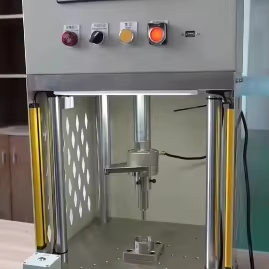
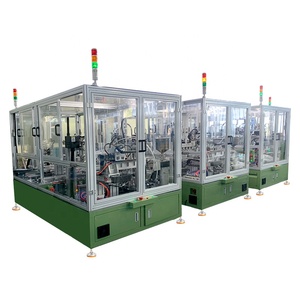
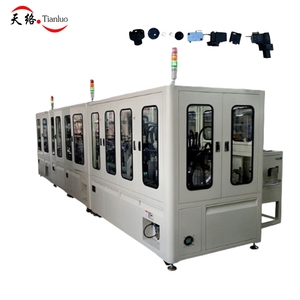
Explore our high-precision stator winding, servo press fitting, conveyorized assembly, and EOL test equipment tailored for B2B wholesalers and motor plant managers across São Paulo state.
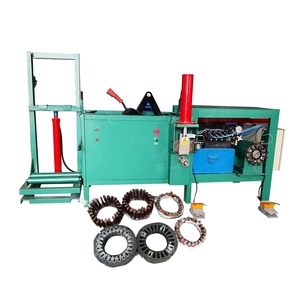
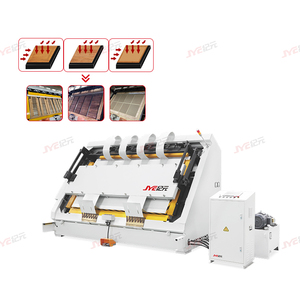
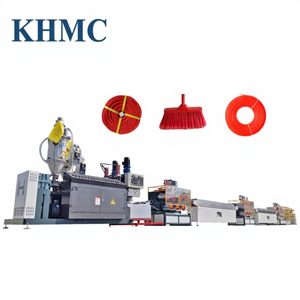
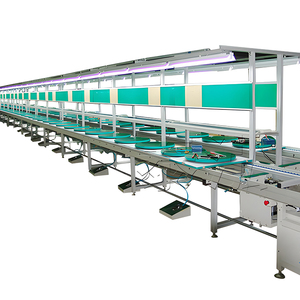
São Paulo’s Evolving Motor Manufacturing Ecosystem & Quality Inspection Imperatives
As Latin America’s undisputed industrial epicenter, the State of São Paulo—anchored by the key manufacturing hubs of ABC Paulista (Santo André, São Bernardo do Campo, São Caetano do Sul), Campinas, Sorocaba, and São José dos Campos—is undergoing an aggressive technological transformation. Driven by Brazil's national industrial modernization policies under the Nova Indústria Brasil (NIB) initiative, industrial plant operators, Tier-1 automotive component suppliers, and OEM equipment manufacturers are rapidly upgrading their quality control standardizations.
In this high-velocity manufacturing environment, electric motor failure carries severe financial consequences. Whether dealing with high-torque traction motors for electrified urban transit buses in SPTrans fleets, heavy-duty induction motors for sugarcane and ethanol processing plants, or micro-motors for automotive HVAC units, quality assurance can no longer rely on sample testing. Local manufacturers require 100% End-of-Line (EOL) automated motor testing equipment capable of executing multi-parameter insulation, electrical performance, and dynamic vibration diagnostics at line-speed takt times.
Automotive & E-Mobility Cluster Demand
With São Paulo state hosting major automotive plants (such as VW, GM, Scania, and Toyota), the shift toward Permanent Magnet Synchronous Motors (PMSM) and Brushless DC (BLDC) powertrains requires ultra-precise back-EMF, cogging torque, and high-voltage surge testing. Wholesalers and factory integrators demand systems that integrate seamlessly into SAP/MES industrial control backbones via OPC UA or EtherNet/IP.
- High-speed back-EMF & Hall sensor alignment verification
- Stator inter-turn surge test up to 5,000V peak voltage
- Partial Discharge (PD) isolation testing for high-voltage EV motors
Industrial Motors & Heavy Duty Pumps
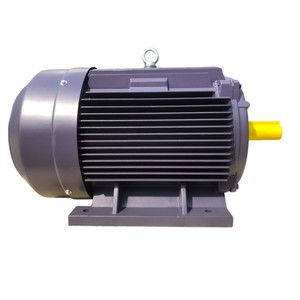
The agricultural and heavy industrial sectors around Ribeirão Preto, Piracicaba, and Santos port logistics rely heavily on 3-phase asynchronous induction motors operating in harsh environments. Testing systems must evaluate thermal rise endurance, insulation resistance under high humidity, and shaft runout tolerance to prevent field burnouts.
- Precision DC winding resistance measurement with temperature compensation
- AC Hipot dielectric strength testing up to 3,000V AC
- No-load and locked-rotor dynamic power characteristic analysis
Comprehensive EOL Motor Test Architecture & Diagnostic Parameters
As a dedicated engineer-led manufacturer, Suzhou Haplin Automation Equipment Co., Ltd. builds integrated testing architectures that consolidate multiple discrete electrical and mechanical test stations into a single automated bench. Below is an engineering overview of the core diagnostic modules integrated into our EOL test stations exported to São Paulo distributors and manufacturing facilities:
| Diagnostic Test Module | Technical Test Range | Measurement Accuracy | Defect Detection Capabilities |
|---|---|---|---|
| DC Winding Resistance | 10 µΩ to 20 kΩ (4-Wire Kelvin) | ±0.1% of reading | Unbalanced phase turns, cold solder joints, copper wire gauge mis-selection, broken strands. |
| Insulation Resistance (IR) | 100V to 2500V DC (Up to 10 GΩ) | ±2.0% of reading | Weak slot insulation, micro-fissures in ground paper, moisture contamination in slot liners. |
| AC/DC Hipot (Dielectric) | 0.1 kV to 5.0 kV AC/DC (0.01 - 20mA) | ±1.5% full scale | Dielectric breakdown, creepage distance failure, enamel coating pinhole defects. |
| Impulse Surge Insulation | 500V to 5000V (Fast-rising 100ns wave) | Area/Diff Area ±1.0% | Turn-to-turn insulation breakdown, phase-to-phase short circuits, varnish impregnation voids. |
| No-Load Power & Current | 0.5W to 60 kW (Voltage 0-600V AC) | ±0.2% Power Class | Stator/rotor air gap misalignment, bearing friction overload, core lamination iron losses. |
| Back-EMF & Waveform THD | 0.5V to 400V RMS (0-10,000 RPM) | ±0.2% Voltage RMS | Permanent magnet demagnetization, incorrect magnet skew angle, rotor pole asymmetry. |
Advanced High-Frequency Impulse Surge Test Technology
Traditional Hipot testing only detects leakage currents between the winding and the motor frame. However, over 75% of early-stage electrical failures in motors originate from inter-turn insulation breakdowns within the same coil winding phase. Haplin’s proprietary High-Voltage Surge Test module applies a high-speed, non-destructive voltage pulse to compare the resonant frequency attenuation waveform against a master baseline. By comparing the Area Difference (Area Diff) and Differential Area (Diff Area) algorithms in real time, our equipment flags sub-microscopic insulation defects before varnish curing or final motor encasement.
Tropicalization & Compliance for Brazilian Industrial Standards
NR-10 & NR-12 Operator Safety Integration
In Brazil, compliance with NR-10 (Electrical Safety in Installations) and NR-12 (Machinery Safety) is strictly enforced by the Ministry of Labor. Haplin motor testing stations exported to São Paulo are custom-retrofitted with dual-channel safety relay systems, Category 4 light curtains, emergency stop circuits, zero-energy state lockout-tagout switches, and fully shielded high-voltage test cages to ensure zero operator exposure during 5kV surge or Hipot discharges.
Tropical Ambient Conditions & Grid Resilience
São Paulo experiences elevated ambient relative humidity (often exceeding 85-95% RH during tropical summer months) alongside industrial grid voltage fluctuations. Haplin test cabinets feature industrial-grade IP54 dust and moisture sealing, internal air-conditioned climate control units for test instrumentation, and heavy-duty online double-conversion power conditioners to stabilize test measurement reference voltages across 220V, 380V, and 440V 60Hz Brazilian industrial grids.
Furthermore, our testing equipment aids motor manufacturers in certifying their products under INMETRO Ordinance 300/2012 and Portaria Interministerial n° 1/2017 (which dictates strict IE3 Premium Efficiency and IE4 Super Premium Efficiency minimum energy performance standards for three-phase electric induction motors sold in the Brazilian territory).
Why São Paulo Manufacturers Partner with Suzhou Haplin Automation
Founded in November 2012 in Suzhou, China, Suzhou Haplin Automation Equipment Co., Ltd. is a high-technology enterprise specializing in the R&D, structural design, custom fabrication, and international commissioning of automatic motor manufacturing and testing equipment. Operating with a registered capital of RMB 15.2 million and a modern industrial manufacturing complex, Haplin maintains a team of over 70 highly skilled engineers and technicians, delivering an annual output value exceeding RMB 65 million.
Engineering Rigor & Customization
We do not sell rigid off-the-shelf catalog units. Every motor testing system delivered to São Paulo is engineered directly around your motor's lamination stack size, slot design, wire gauge, rated torque, and shift capacity goals. Our team evaluates your CAD models and sample windings prior to machine fabrication.
Factory Acceptance & Remote FAT Support
Prior to shipping, all equipment undergoes rigorous Factory Acceptance Testing (FAT) at our Suzhou plant using your supplied motor components. Overseas buyers and engineering directors in São Paulo can witness acceptance testing in person or via high-definition real-time video telemetry and remote PLC diagnostic sessions.
Frequently Asked Questions: Purchasing Motor Testing Equipment in São Paulo
Clear answers to logistical, technical, and regulatory questions from Brazilian procurement teams and plant managers.
Q1: How do Haplin motor testing stations comply with Brazilian NR-10 and NR-12 industrial safety norms?
Our engineering team designs test benches specifically for Brazilian compliance. This includes dual-channel safety relays, Category 4 optical light curtains, interlocked acrylic or aluminum high-voltage safety enclosures, dual-hand initiation controls, and zero-voltage safety lockout switches. Complete electrical safety schematics and CE/NR certification support packages are provided with all exported machinery.
Q2: What calibration traceabilities are offered for INMETRO and RBC laboratory audits?
All test instruments within our EOL stations (such as digital power analyzers, surge generators, and micro-ohmmeters) undergo factory calibration traceable to international NIST/ISO17025 standards. We supply master calibration documentation and open-protocol software interfaces that allow local Brazilian calibration laboratories (accredited by RBC/INMETRO) to perform annual on-site recalibrations seamlessly.
Q3: Can the testing software integrate into our existing SAP or local MES factory systems in São Paulo?
Yes. Our testing software runs on robust industrial PC (IPC) platforms with Windows 10/11 IoT Enterprise. It natively supports TCP/IP, Modbus TCP, EtherNet/IP, and OPC UA protocols. Test data, barcode-linked motor serial numbers, pass/fail status, and raw waveform data can be automatically logged into SQL databases or pushed to your MES for 100% production traceability.
Q4: How is customs clearance (Siscomex) handled and what is the typical lead time to Santos Port?
We provide comprehensive export documentation tailored to Brazilian customs requirements, including detailed Commercial Invoices, Packing Lists with full NCM (HS Code) classifications, and Certificates of Origin. Manufacturing lead times typically range from 45 to 65 days depending on automation complexity, followed by sea freight to the Port of Santos (approx. 30-35 days transit time).
Q5: What technical support, spare parts, and warranty services are available for Brazilian plants?
Haplin offers a standard 12-month complete machine warranty. We supply a mandatory 2-year recommended spare parts kit with every shipment (including premium brand components from Siemens, Schneider, Omron, and SMC). Remote software debugging and diagnostic support are provided free of charge within 24 hours via secure VPN link, complemented by optional on-site installation and operator training assistance in São Paulo.
Accelerate Your Motor Quality Control in São Paulo
Partner with a trusted international OEM manufacturer. Send us your motor technical specifications, target takt times, or CAD drawings today for a detailed engineering proposal and competitive wholesale quote.