Precision Motor Manufacturing Equipment Portfolio
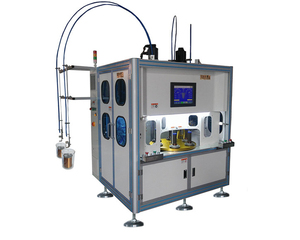
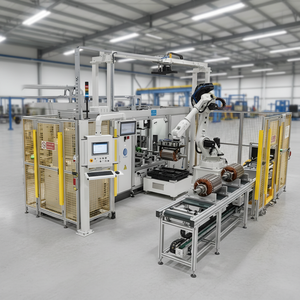
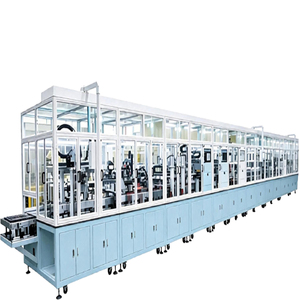
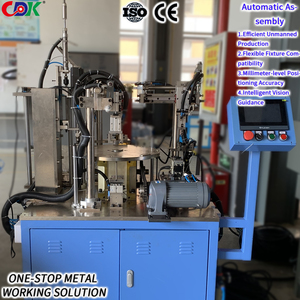
Explore our core automation machinery engineered for brushless stators, EV traction rotors, and high-fill-factor coil production.
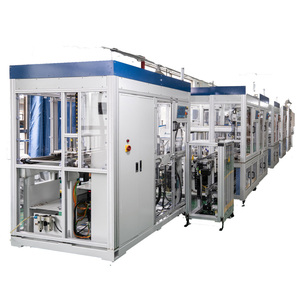
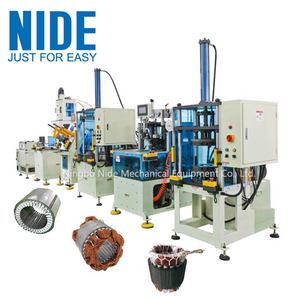
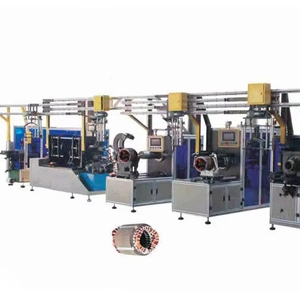
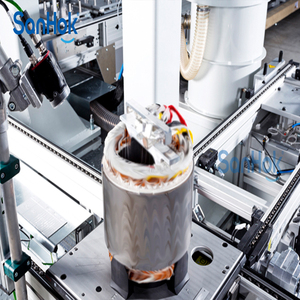
Technical White Paper: Precision Stator Flyer Winding Machine Engineering for High-Density BLDC Applications
As the capital of Aichi Prefecture and the epicenter of Japan's automotive, aerospace, and industrial robotics sectors, Nagoya demands unmatched mechanical engineering precision and uncompromising operational reliability. In the modern manufacturing landscape, electric motor topologies are transitioning toward higher energy densities, compact form factors, and elevated electromagnetic efficiency (matching IE4 and IE5 standards). Central to achieving these performance benchmarks is the electromagnetic stator assembly—specifically, the execution of the coil winding process.
A Stator Flyer Winding Machine operates on a specialized kinematic principle: while the stator core remains fixed or indexes incrementally, a high-speed rotating arm (the flyer or flyer-arm spindle) orbits around the stator pole or slot guide, dispensing magnet wire at velocity via precision wire guide nozzles. This methodology is particularly superior for outer-rotor BLDC stators, multi-pole stepper motors, universal brushed armature slots, and dedicated segment stators where needle-winding geometries face spatial constraints.
Core Mechanical & Electrical Architecture of Haplin Flyer Winders
Suzhou Haplin Automation Equipment Co., Ltd. custom engineers OEM/ODM stator flyer winding machines tailored for Tier-1 sub-contractors and motor manufacturers across the Greater Nagoya industrial area (including Kariya, Toyota City, Komaki, and Yokkaichi). Our architectural platform incorporates:
- Multi-Axis CNC Motion Synchronization: Utilizing Panasonic or Mitsubishi servo drive loops integrated with high-speed EtherCAT motion controllers, enabling sub-millisecond coordination between flyer rotation, indexing tables, and wire-laying axial z-slides.
- Closed-Loop Active Wire Tension Control: Dynamic magnetic hysteresis tensioners coupled with optical load-cell feedback keep wire tension within ±1.5% of set tolerances across acceleration and deceleration phases, preventing wire necking or loose end coils.
- Custom Tooling & Quick-Change Fixture Guides: Modular carbide-coated flyer nozzles and tungsten-steel stator tooth shaper guides engineered specifically for lamination stack heights ranging from 5mm to 180mm.
- Automatic Wire Stripping & Terminal Wrapping: Integrated secondary mechanism for automatic wire cutter, thermal insulation stripping, and pin-wrapping around terminal headers prior to lacing or welding.
Winding Process Comparison Matrix for Nagoya Motor Manufacturers
Selecting the optimal coil winding technology requires balancing slot fill factor, cycle time, tooling cost, and wire gauge compatibility. Below is an engineering comparison evaluated across standard industrial metrics:
| Performance Parameter | Haplin CNC Flyer Winding | Conventional Needle Winding | Hairpin / Flat-Wire Assembly |
|---|---|---|---|
| Target Motor Types | Outer-Rotor BLDC, Armatures, Segments | Inner-Rotor BLDC Stators (Narrow Slot) | High-Power EV Traction Stators |
| Maximum Winding Speed | Up to 3,000 RPM (High Efficiency) | 1,200 – 1,800 RPM | Non-Rotational Insertion Phase |
| Slot Fill Factor (Copper) | 48% – 62% (Layered Alignment) | 40% – 52% | 65% – 75% |
| Tooling & Setup Complexity | Moderate (Fast Changeover < 15 mins) | High (Precise Nozzle Clearance) | Extremely High (Capital Intensive) |
| Wire Insulation Integrity | Excellent (Non-Contact Trajectory) | Moderate Risk of Abrasion | Requires Strip & Laser Welding Integrity |
| Capital Investment ROI | Fast (High Throughput / Low Tooling Cost) | Medium | High Initial Capex Requirement |
Localized Application Scenarios Across Greater Nagoya’s Industrial Ecosystem
From automotive components in Aichi Prefecture to factory automation machinery in Gifu and Mie, our custom flyer winding machines drive critical manufacturing sectors.
Automotive EPS & Actuator Stators
In Toyota City and Kariya, automotive Tier-1 suppliers mandate zero-defect coil winding for Electric Power Steering (EPS) motors, electronic braking actuators, and throttle control BLDC stators. Haplin's flyer winders integrate optical vision check systems for coil layout verification prior to resin encapsulation.
EV Thermal Management & Air Compressors
Electrified powertrains require high-voltage electric AC compressors and coolant pump motors. Our automated flyer winding equipment processes concentrated winding stators with high dielectric breakdown insulation requirements, delivering high slot-fill ratios under tight mechanical tolerances.
Factory Automation Servomotors & CNC Spindles
Nagoya is famous for world-class machine tool builders and industrial robotics OEMs. We build custom multi-pole servo stator flyer winders that ensure ultra-low cogging torque and balanced phase resistance required for precise position-control motors.
High-RPM Cordless Power Tool Armatures
Power tool production facilities in the Chubu region demand rugged, compact armatures capable of enduring extreme centrifugal stresses. Our flyer winders support precise pattern winding and automatic commutator slot lacing for high-speed brushed and brushless power tool armatures.
Precision Drone & Gimbal Micro-BLDC Motors
Outer-rotor flyer winding is the industry standard for lightweight drone propulsion and camera gimbal motors. Haplin flyer winders handle ultra-fine copper wires down to 0.08mm diameter with delicate tension control to prevent stretching or microscopic insulation cracking.
Outdoor Power Equipment (OPE) & Mowers
Transitioning from petrol engines to lithium-battery lawncare machinery requires high-torque density outer-rotor motors. Our dual-flyer winding stations double production capacity per square meter, aligning with modern factory space optimization mandates.
Strategic Manufacturing Trends Shaping Motor Production Equipment in Nagoya
Nagoya’s manufacturing infrastructure is currently experiencing a technological shift propelled by carbon neutrality goals, workforce demographic changes, and the rapid electrification of transport systems. Purchasing departments and manufacturing engineering directors in Aichi Prefecture evaluate machinery based on specific macro-trends:
1. High-Efficiency Motor Mandates (IE4 / IE5)
Japanese industrial energy regulations demand higher efficiency classes. Achieving lower copper losses ($I^2R$) requires maximized slot fill factor. Haplin's flyer winding systems utilize precision wire layering algorithms to fit up to 12% more copper volume into limited stator slot dimensions compared to traditional manual or semi-automated winders.
2. Rapid Tooling Changeover for High-Mix Low-Volume (HMLV)
Nagoya motor wholesalers and OEM sub-contractors frequently handle diverse production runs for various Japanese domestic brands. Our flyer winding machines feature modular quick-release tooling plates and recipe-driven HMI control panels, reducing physical changeover times from hours down to under 15 minutes.
3. Industry 4.0 Traceability & MES Integration
Automation lines deployed in Japanese automotive supply chains must report real-time manufacturing data. Haplin PLC controls support OPC-UA, Modbus TCP, and MQTT protocols to continuously stream real-time tension graphs, turn counts, cycle times, and error logs directly to plant-wide Manufacturing Execution Systems (MES).
4. Ergonomics & Floor Space Optimization
With industrial real estate at a premium in central Japan, compact machine footprints with integrated safety light curtains, low noise emission levels (< 72 dB), and cleanroom compatibility (ISO Class 7 options) have become standard procurement requirements.
Founded in November 2012 in Suzhou, China | Registered Capital: RMB 15.2 Million | Annual Output: RMB 65M+
As a specialized engineering manufacturer of automatic production lines and dedicated equipment for brushed and brushless motors, Suzhou Haplin Automation integrates R&D, precision CNC machining, electrical assembly, and global technical service. Supported by a senior staff of 70+ engineers and automation specialists, we deliver turnkey manufacturing solutions that comply with international safety standards (CE / UL / JIS standards).
Our product portfolio spans 7 core machinery families: Brushless Motor Turnkey Lines, Brushless Stator Winding Units, Standalone Rotor Machines, Brushed Motor Lines, Magnetic Tile Assembly Lines, Brushed Stator Units, and High-Speed Rotor Production Units. Every machine dispatched to Nagoya undergoes stringent 72-hour continuous endurance testing and Factory Acceptance Testing (FAT) using the customer's actual stator laminations and magnet wire samples.
Frequently Asked Questions by Nagoya Procurement & Engineering Teams
Practical technical, commercial, and logistical guidance for Japanese buyers considering OEM/ODM stator flyer winding machinery from Suzhou Haplin Automation.
Q1: What are the primary advantages of choosing a Flyer Winding Machine over a Needle Winding Machine for BLDC stators?
+
Q2: Can Haplin customize the flyer winding tooling for non-standard Japanese motor lamination dimensions?
+
Q3: What wire tension control mechanism is utilized to prevent copper wire damage during high-speed flyer winding?
+
Q4: How do you conduct Factory Acceptance Testing (FAT) and delivery acceptance for buyers in Nagoya, Japan?
+
Q5: What electrical standards, voltage configurations, and safety certifications do your machines adhere to for installation in Japan?
+
Q6: What is the typical lead time for an OEM/ODM stator flyer winding machine and what after-sales support is provided in Japan?
+
Partner with a Premier Stator Winding Machine Manufacturer
Optimize your motor production line capacity, elevate slot fill ratios, and reduce unit manufacturing costs in Greater Nagoya. Contact our senior automation engineers today to receive detailed technical specifications, custom CAD layout proposals, and wholesale quotation packages.