Featured BLDC & Electric Motor Assembly Equipment
High-precision automated production lines, multi-station winding equipment, and custom rotor/stator assembly systems designed for scalable industrial output.
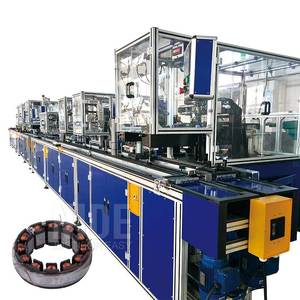
Full Auto BLDC Brushless Motor Stator Manufacturing Line
View Details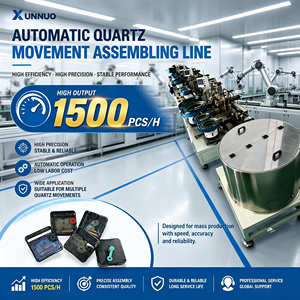
Customized PLC Controlled Micro Motor & Watch Movement Line
View Details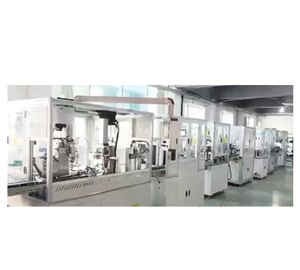
WS-N O02 Automatic Line for Brushless & Auto Motors
View Details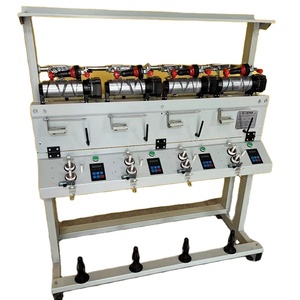
4-Head High-Speed Cone Winding Machine for Electric Motors
View Details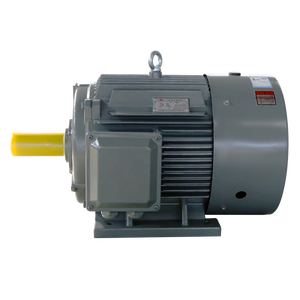
IE3 Heavy Induction Motor Production Line (30kw-35kw)
View Details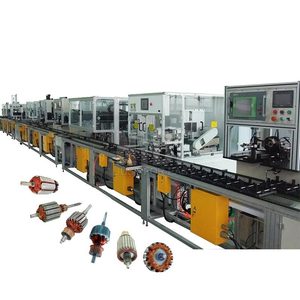
Armature Production Line & Rotor Assembly Equipment
View Details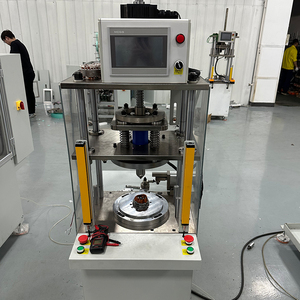
Stator Coil Forming Machine & Winding Shaping System
View Details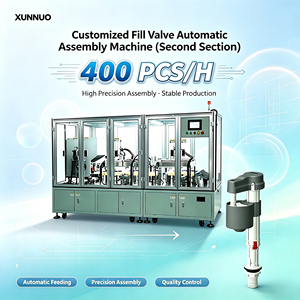
PLC Control Engine Fill Valve Automated Assembly Unit
View DetailsThe Evolution of BLDC Assembly Equipment in Kawasaki's Industrial Corridor
Empowering Kanagawa’s Advanced Manufacturing Hub with High-Speed, Closed-Loop Automation Engineering.
Kawasaki City, strategically anchored in the heart of Japan's prestigious Keihin Industrial Area between Tokyo and Yokohama, represents one of the world's highest concentrations of precision engineering, automotive component manufacturing, and heavy industrial innovation. As global supply chains shift toward electrification, carbon neutrality, and Industry 4.0 smart factory architectures, Kawasaki-based original equipment manufacturers (OEMs) and Tier-1 suppliers face an imperative: transitioning from legacy brushed DC motor production to ultra-efficient, high-density Brushless DC (BLDC) motor technology.
BLDC motors have become the primary driving force across Kawasaki's flagship industrial sectors—ranging from electric vehicle (EV) thermal management pumps and electronic power steering (EPS) to high-precision industrial robotics, medical actuators, and energy-saving HVAC blower systems. However, manufacturing BLDC motors at scale requires overcoming stringent technical bottlenecks: maximizing copper slot fill ratios, preventing enamelled wire tension degradation, maintaining sub-micron coaxial alignment during magnetic rotor insertion, and establishing full line traceability under strict Japanese Industrial Standards (JIS C 4034 & ISO 9001 compliance).
Information Gain Insight: Modern BLDC assembly in the Kawasaki industrial market demands a paradigm shift from semi-automated standalone machinery to fully integrated, servo-driven modular production lines equipped with real-time CCD vision verification and MES telemetry. Equipment suppliers must achieve continuous takt times under 12 seconds per stator while maintaining zero-defect copper slot fill accuracy above 75%.
To serve Kawasaki's discerning engineering buyers, leading equipment manufacturers must deliver turnkey solutions that integrate precision paper slot insertion, multi-axis CNC inner-winding (needle winding), dynamic rotor magnetic tile insertion, double-head spot welding, and automated end-of-line (EOL) electrical safety testing (hipot, surge, phase resistance, and partial discharge).
Evaluation Matrix: Top Vendors Serving the Kawasaki Market
A rigorous engineering comparison of technical capabilities required by Kawasaki procurement teams when sourcing BLDC motor production systems.
When evaluating foreign and domestic BLDC motor equipment machinery manufacturers, Kawasaki engineering directors prioritize key performance parameters including positioning repeatability, dynamic wire tension control, footprint efficiency, and adaptability for high-mix low-volume (HMLV) production. The table below highlights the technical benchmark criteria utilized by top-tier manufacturers serving Kanagawa Prefecture.
| Evaluation Vector | Traditional Equipment Standard | Advanced Kawasaki Market Standard (Haplin Level) | Impact on Manufacturing Performance |
|---|---|---|---|
| Winding Kinematics | Mechanical Flyer Winding (External) | CNC Multi-Axis Inner Needle Winding with Closed-Loop Servo Tensioning | Eliminates wire friction, increases slot fill factor up to 78%, and prevents insulation damage. |
| Quality Verification | Manual / Post-Assembly Sampling | In-Line 2D/3D CCD Vision Inspection & Dynamic Resistance Telemetry | Guarantees 100% real-time defect detection prior to stator encapsulation. |
| Changeover Flexibility | Mechanical Tooling Swap (4-6 Hours) | Recipe-Driven Digital Changeover + Quick-Release Fixtures (<15 Mins) | Drastically reduces downtime for high-mix automotive micro-motor runs. |
| Rotor Assembly Precision | Pneumatic Magnet Pressing | Controlled Servo Press-Fitting with Magnetic Flux Uniformity Testing | Prevents rotor lamination cracking and eliminates cogging torque anomalies. |
| Data Architecture | Standalone PLC Storage | OPC-UA / MQTT Industrial IoT Protocols for Complete MES Integration | Provides end-to-end component traceability required by global automotive OEMs. |
Why Suzhou Haplin Automation Leads in Global Motor Manufacturing
Established in November 2012, Suzhou Haplin combines engineering rigor, precision CNC fabrication, and comprehensive turnkey project support.
Turnkey Stator & Rotor Integration
Haplin engineers custom end-to-end lines—from insulating slot paper insertion and precision needle winding to commutator spot welding, varnish dipping, and automated housing press-fit assembly.
Multi-Station Parallel Winding
Our flagship 4-station and 6-station stator winders multiply output per square meter of floor space, enabling high throughput within compact footprint layouts optimized for Japanese facilities.
Robust PLC & Servo Control Systems
Utilizing premium industrial controls (Beckhoff, Siemens, Mitsubishi), our lines feature digital closed-loop tension regulation, maintaining wire gauge integrity down to fine wire diameters.
High Slot Fill Inner-Winding Expertise
Designed specifically for BLDC inner-slot stators, our needle winding nozzles achieve dense, uniform coil layering without scraping enamel insulation, maximizing torque density.
Experienced R&D & Engineering Team
With over 70 dedicated personnel, an annual production value exceeding RMB 65 million, and 12+ years of manufacturing experience, Haplin delivers customized solutions backed by deep technical expertise.
Global Validation & Acceptance Protocol
We perform rigorous factory acceptance testing (FAT) using the buyer's actual motor laminations, wire, and housing samples in our Suzhou facility before international shipment.
Localized Application Scenarios in Kanagawa & Kawasaki Sector Hubs
Tailored manufacturing workflows engineered for high-growth industrial and automotive applications.
1. Automotive Thermal Management & EPS Motors
The transition toward electric vehicles in Japan has accelerated demand for BLDC actuators, electronic power steering (EPS) motors, and battery cooling pumps. Haplin’s BLDC stator lines integrate automated pin terminal insertion, precision trickling insulation varnish, and 100% surge testing to satisfy rigorous automotive IATF 16949 quality metrics.
2. High-Precision Industrial Robotics & Servos
Kawasaki's advanced robotics integrators require ultra-compact BLDC servomotors featuring minimal cogging torque and high torque-to-weight ratios. Our needle-winding equipment handles frameless stators and segmented tooth cores, ensuring concentric winding layers that maintain stable electromagnetic symmetry.
3. Cleanroom HVAC & Semiconductor Blower Motors
Kanagawa's semiconductor processing plants rely on cleanroom air filtration systems powered by high-efficiency BLDC fan motors. Haplin provides complete assembly automation for outer-rotor and inner-rotor BLDC stators, ensuring ultra-quiet dynamic rotor balance and long service lifespans under continuous operational loads.
4. Medical Actuators & Cordless Power Tools
From high-RPM surgical drills to industrial cordless impact drivers, motor manufacturers require robust armatures capable of enduring high thermal stress. Our double-head spot welders and automatic paper inserters deliver tight mechanical tolerances, preventing insulation breakdown under peak electrical loads.
Key Manufacturing Trends Shaping the Kawasaki Motor Industry
Strategic technological evolutions driving equipment upgrades across Japanese industrial facilities.
A. High Slot Fill Factor via Segmented Tooth Stator Architecture
To maximize motor power density while reducing raw copper material costs, Kawasaki motor designers are increasingly adopting segmented stator tooth topologies. This design allows needle winding nozzles to lay wire directly onto open pole pieces, achieving slot fill ratios exceeding 78%. Equipment suppliers must provide high-speed index table automation that seamlessly press-fits segmented teeth into a rigid outer yoke after winding.
B. Transition to Hairpin Winding for Automotive E-Motors
While traditional round wire BLDC stators dominate micro-motor applications, traction and high-power auxiliary BLDC motors are adopting rectangular wire (hairpin) technology. Hairpin assembly lines require specialized CNC wire stripping, precision bending, slot insertion, twist shaping, and laser welding modules—areas where Haplin continues to expand its automation capabilities.
C. Smart Telemetry & Zero-Defect Industry 4.0 Integration
With labor markets tightening across Japan, motor production lines must operate with minimal human intervention. Modern BLDC lines incorporate sensor arrays tracking winding tension force, welding current curves, press-fitting tonnage, and ambient humidity. Any drift outside statistical process control (SPC) limits automatically triggers nozzle calibration or part rejection, maintaining absolute zero-defect delivery.
Frequently Asked Questions: Sourcing BLDC Equipment for Kawasaki
Direct technical and commercial answers to facilitate project planning, factory validation, and equipment deployment.
Ready to Optimize Your BLDC Motor Production in Kawasaki?
Consult with Suzhou Haplin's senior automation engineers today. Send us your motor technical drawings and target production capacity for a complete layout design, cycle time simulation, and competitive wholesale equipment quote within 24 hours.
Get Catalog