Featured Motor Production Systems
Explore high-precision stator, rotor, and automated assembly solutions designed for modern industrial and automotive brushless applications.
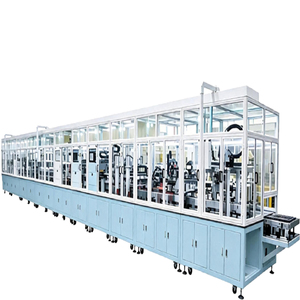
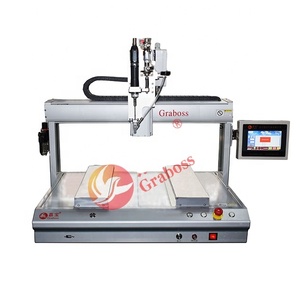
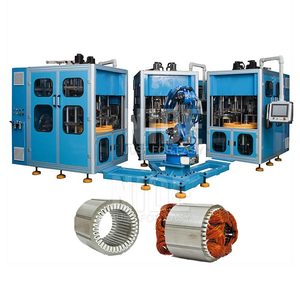
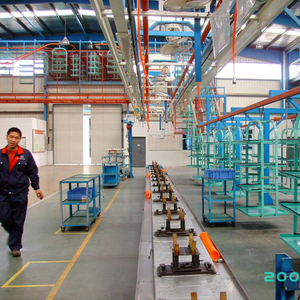
Yokohama's Industrial Motor Landscape: The Demand for High-Precision Stator Winding
As Kanagawa Prefecture’s industrial powerhouse, Yokohama stands at the strategic nexus of Japan's high-tech manufacturing corridor, encompassing world-class automotive tier-1 suppliers, advanced robotics integrators, and precision medical equipment OEMs. The regional shift toward electric mobility (EV/HEV), industrial automation, and carbon-neutral drive technology has triggered an unprecedented evolution in Brushless DC (BLDC) and Permanent Magnet Synchronous Motor (PMSM) manufacturing standards.
In modern brushless motor architecture, the stator winding machine serves as the ultimate determinant of motor efficiency, power density, and thermal management. A minor variance in wire tension, insulation layering, or needle trajectory can lead to phase-to-phase short circuits, high cogging torque, and excessive electromagnetic acoustic noise (NVH). Consequently, Yokohama-based procurement leads and engineering teams enforce strict operational criteria when selecting stator winding machinery partners: multi-axis servo synchronization, high slot fill factors (>85%), real-time tension feedback, and full traceability under Industry 4.0 paradigms.
Core Engineering Paradigms in Modern BLDC Stator Winding
Engineers evaluating stator manufacturing equipment must navigate complex trade-offs between kinetic speeds, copper fill ratios, and mechanical stress on magnet wires. Today's industrial landscape relies primarily on three automated stator winding methodologies, each tailored to specific tooth geometries and motor topology:
1. Needle Winding Technology
Ideal for inner-slot stators with narrow slot openings. The servo-driven nozzle moves axially and rotationally inside the lamination stack, laying copper wire precisely into designated slots without scratching wire insulation.
2. Flyer Winding Method
Optimized for outer-winding stators and segmented poles. A high-speed rotating flyer arm wraps copper wire around external teeth, offering rapid cycle times (takt time < 12s per stator) for mass consumer appliance motors.
3. Segmented Tooth Winding
Designed for maximum torque density. Individual stator teeth are stamped, insulated, and wound independently before automated ring assembly. Achieves extreme copper packing factors exceeding 85%.
Comparative Analysis: Top 10 Manufacturers Servicing Yokohama & Global Markets
When engineering executives in Yokohama build high-volume motor production lines, vendor selection depends on balancing technological sophistication, customization flexibility, and long-term cost of ownership (TCO). Below is an analytical benchmark of prominent manufacturers active in Japan and international markets:
| Manufacturer Name | Primary Technology Focus | Typical Slot Fill Rate | Servo Axis Precision | Regional Integration Support |
|---|---|---|---|---|
| Suzhou Haplin Automation | Turnkey BLDC Stator & Rotor Lines, Needle Winding | Up to 88% | ±0.01 mm / Servo Closed-Loop | Direct Asia-Pacific Export, Local Remote Support |
| Nidec-Read / Nidec Group | Ultra-High-Speed Automated Industrial Lines | 80% - 85% | High Precision (Proprietary) | Native Japanese Engineering Facilities |
| Odawara Engineering | Custom EV Traction Motor Hairpin & Stator Lines | 82% - 86% | High Precision Servo Control | Domestic Japan On-Site Support |
| Statimat / Schaeffler | Heavy Industrial & EV Drive Stator Systems | 82% - 87% | European CNC Standard | Global Distributive Network |
| Marsilli S.p.A. | Precision Micro-Winding & Coil Insertion | 78% - 84% | Ultra-Fine Wire Control | Global / Regional Hubs |
| Aumann AG | Segmented Stator & E-Mobility Production | 83% - 88% | Modular Multi-Axis CNC | European / Asian Integration Units |
| Kaido Manufacturing | Specialized Battery & Winding Machinery | 75% - 82% | Standard Industrial Motion | Native Japanese Service Base |
| Tanac Co., Ltd. | Multi-Spindle Automatic Coil Winders | 78% - 83% | High-Speed Multi-Spindle | Domestic Japan Facilities |
| SWA Automated Solutions | Custom Appliance Motor Assembly Modules | 75% - 80% | Pneumatic + Servo Hybrid | International Direct Export |
| Juno Automatic Equipment | Automotive Auxiliary Motor Winding Systems | 80% - 84% | Multi-Axis Motion Controller | Asia Regional Direct Engineering |
Localized Application Scenarios in Yokohama’s Ecosystem
Automation equipment installed across Kanagawa and Yokohama must be tailored to strict mechanical footprints, precise power input compliance, and continuous operational demands. Key application domains include:
1. Automotive PMSM Drive Motors
Yokohama’s automotive supply cluster utilizes fully automated stator winding, paper inserting, and trickling varnish lines for electric power steering (EPS), brake-by-wire actuators, and main EV traction drive units requiring zero defects.
2. Precision Industrial Robotics
Compact joint motors for articulated robotic arms manufactured in nearby industrial zones demand frameless stators with high copper fill rates to deliver maximum torque in restricted envelopes.
3. Port Logistics & Heavy Automation
Yokohama Port's heavy cranes and automated guided vehicles (AGVs) rely on industrial brushless motors engineered for 24/7 continuous duty cycle reliability under harsh maritime thermal conditions.
Yokohama Localized Procurement Trends & Technological Outlook
Sourcing strategies among Japanese engineering teams are rapidly changing. Historically reliant solely on domestic machine builders, Yokohama manufacturers increasingly form strategic partnerships with high-tier international automation specialists like Suzhou Haplin Automation Equipment Co., Ltd. This shift is driven by three main factors:
- Accelerated Delivery Cycles: Global suppliers offer modular machine architectures that reduce engineering lead times from 10 months down to 12–16 weeks.
- Open Controller Architecture: Moving away from black-box proprietary software to standard Siemens/Beckhoff PLC controls with multi-language HMI interfaces (Japanese/English/Chinese).
- Energy Efficiency & Carbon Offset: Servo-driven electronic tensioners replace traditional pneumatic friction systems, cutting factory air consumption by up to 35%.
Why Leading Global Motor Manufacturers Partner with Haplin Automation
Founded in 2012 in Suzhou, China, Suzhou Haplin Automation Equipment Co., Ltd. has established itself as an engineering-driven powerhouse in motor manufacturing automation. Operating with over 70 dedicated technical personnel and an annual equipment delivery value exceeding RMB 65 million, Haplin integrates R&D, precision manufacturing, PLC software customization, and overseas customer service.
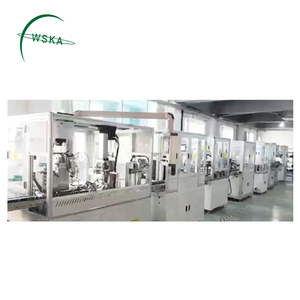
Haplin’s strategic engineering core focuses on delivering customized solutions rather than off-the-shelf compromises. Whether configuring a standalone Stator Four Station Winding Machine or an end-to-end 40-meter automated assembly production line, Haplin’s team calculates lamination wire clearance, thermal dissipation constraints, and target cycle times before initiating 3D CAD modeling.
Need a Custom Stator Winding Proposal for Your Yokohama Facility?
Send us your motor lamination drawings, wire diameter specifications, and target output per shift. Our senior engineering team will deliver a comprehensive station layout, cycle time simulation, and technical quote within 24 hours.
Get CatalogFrequently Asked Questions for Yokohama Procurement
Technical and logistical insights for engineers and purchasing directors evaluating brushless motor production lines.