Advanced Motor Assembly & Rotor Production Systems
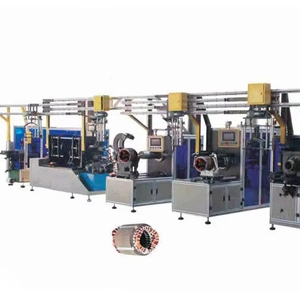
Featured automated production equipment optimized for high-volume rotor manufacturing, stator winding, and industrial line integration.
Engineering Whitepaper: Next-Generation Rotor Manufacturing in Central Texas
An operational analysis of high-speed armature assembly, BLDC inner/outer rotor production lines, and automated motor assembly serving Austin’s growing industrial ecosystem.
The Greater Austin metro area—spanning the Silicon Hills tech corridor, Del Valle, Round Rock, and San Marcos—has rapidly established itself as North America’s premier hub for advanced hardware manufacturing, electric mobility, robotics, and clean energy innovation. As Tier-1 OEMs and precision motor manufacturers scale up local facility operations, the demand for high-efficiency rotor production lines with low cycle times (takt time < 8s) and zero-defect quality control has reached an all-time high.
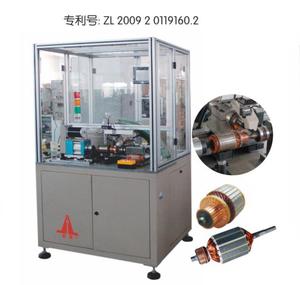
Automation in rotor manufacturing is no longer limited to basic wire winding. Modern rotor assembly lines require an integrated suite of high-precision operations: automatic slot insulation paper insertion, multi-station armature winding, high-frequency commutator hot-stack spot welding, dynamic balancing (ISO G2.5/G1.0 rating), commutator slotting/brushing, and comprehensive electrical safety testing (surge, hipot, and resistance testing).
Information Gain Insight: Upgrading from traditional semi-automated rotor stations to fully integrated, PLC-controlled turnkey rotor lines reduces direct labor costs per unit by up to 68% while elevating coil slot fill factors beyond 78%, yielding higher torque density and improved thermal performance for demanding motor applications in Austin.
At Suzhou Haplin Automation Equipment Co., Ltd., we specialize in end-to-end rotor and stator automation systems designed to meet North American manufacturing standards. Whether your plant in Austin produces brushed DC micro-motors, heavy-duty industrial pump motors, or brushless PMAC/BLDC rotors for electric vehicle subsystems, our custom-engineered assembly lines provide the modular flexibility required for rapid product changeover and 24/7 continuous output.
Local Industry Trends Shaping Austin’s Motor Automation Needs
Key technological and regulatory forces accelerating automated rotor production adoption across Texas.
1. Electrification & EV Supply Chain Acceleration
With major automotive gigafactories and EV suppliers expanding in Central Texas, local component suppliers must ramp up production of high-efficiency auxiliary motors (coolant pumps, HVAC blowers, electronic power steering actuators). Automated BLDC rotor lines featuring surface-mounted magnet insertion and automated magnetizing are critical for meeting strict automotive quality standards.
2. Industry 4.0 Telemetry & Real-Time Quality Tracking
Austin manufacturers are prioritizing Smart Factory connectivity. Modern rotor lines incorporate PLC controls (Siemens/Allen-Bradley), HMI touchscreens, and OPC-UA protocol capabilities. This allows engineers to track real-time winding tension, weld current graphs, and dynamic unbalance data for 100% traceabilty across every serial-numbered rotor shaft.
3. High-Slot-Fill & Thermal Optimization Demands
To satisfy energy efficiency mandates (DOE standards and NEMA Premium requirements), motor designers are pressing for maximum copper density within rotor slots. Advanced needle-winding and flyer-winding machines equipped with dynamic wire tension control prevent enamel insulation damage while pushing slot fill rates to competitive limits.
Technical Architecture: Brushed Armature vs. Brushless BLDC Rotor Lines
A comparative breakdown of line configurations offered for plant installations serving the Austin industrial zone.
| Process Parameter | Automatic Brushed Armature Rotor Line | Brushless BLDC / PMAC Rotor Production Line |
|---|---|---|
| Primary Target Applications | Power tools, automotive starters/wipers, appliance motors | EV traction auxiliary pumps, HVAC blowers, robotics, drones |
| Core Assembly Modules | Paper Inserter → Flyer Winder → Spot Welder → Slot Cutter → Balancer | Shaft Press → Laminating Stack → Magnet Assembly → Glue Curing → Balancer |
| Key Quality Controls | Commutator hook weld resistance, mica undercut depth, insulation resistance | Magnet polarity check, surface flux distribution, runout tolerance |
| Typical Cycle Time (Takt) | 4.5 to 8.0 seconds per armature | 8.0 to 15.0 seconds per rotor assembly |
| Dynamic Balancing Grade | ISO 1940 Grade G2.5 | ISO 1940 Grade G1.0 / G0.4 |
| Control & Automation Level | Full inline pallet conveyor with servo indexing | 6-Axis Robotic Pick-and-Place + Vision Inspection |
Localized Application Scenarios in Central Texas
How our rotor and motor production systems empower specialized engineering and manufacturing operations across Austin.
1. Electric Vehicle Subsystems (Del Valle Corridor)
Automated rotor shaft pressing and high-speed precision balancing lines designed for sub-assemblies including battery cooling pumps, seat positioning motors, and electric brake actuators. Engineered for high vibration resistance and strict automotive IATF quality compliance.
2. High-Durability Outdoor Power Tools
Heavy-duty universal rotor armature lines incorporating high-frequency double-head spot welders, commutator slotting machines, and automatic trickle varnishing. Tailored for lawn equipment OEMs and commercial power tool assembly plants operating in Central Texas.
3. Cleanroom & Semiconductor Auxiliary Equipment
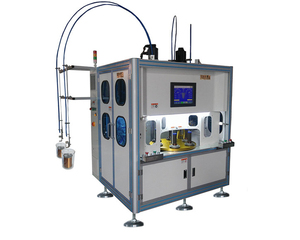
Ultra-precise BLDC rotor assembly lines featuring magnet bonding, vacuum impregnation, and precision runout check stations. Built to support vacuum pumps, cleanroom air filtration units, and automated material handling equipment in Round Rock and North Austin tech parks.
Why Leading Global Motor Manufacturers Partner with Haplin Automation
Proven engineering expertise, rigorous quality control standards, and full lifecycle support for international buyers.
Solid Corporate Foundation & Technical Scale
Founded in November 2012 in Suzhou, Jiangsu, Suzhou Haplin Automation Equipment Co., Ltd. operates with a registered capital of RMB 15.2 million. Supported by a skilled team of over 70 specialized engineers and technicians, we generate an annual equipment output value exceeding RMB 65 million.
Integrated R&D, Manufacturing & International Sales
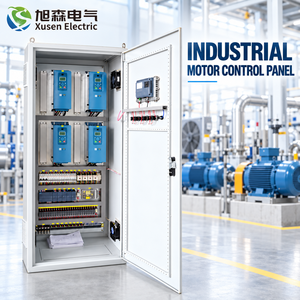
We combine design, precision tooling fabrication, assembly, PLC software programming, sales, and global after-sales service under one management system. Our catalog spans turnkey motor assembly lines, brushed rotor/stator production units, brushless BLDC rotor/stator machines, and custom PLC/VFD control panels.
Strict Factory Acceptance Testing (FAT) Protocol
Before shipping any line to North America, equipment undergoes rigorous trial runs at our Suzhou facility using the client’s actual rotor laminations, shafts, and wire specifications. We provide complete FAT documentation and live video verification so Austin engineers sign off on cycle time and CPK values with total confidence.
Comprehensive Technical Support for Overseas Operations
We back all exports with English PLC interfaces, electrical schematics compliant with North American standards (480V 60Hz adaptation options), remote IP-gateway diagnostics, spare parts delivery, and on-site commissioning support upon request.
Frequently Asked Questions by Austin Procurement & Engineering Teams
Clear, direct answers regarding equipment lead times, electrical compatibility, sample testing, and export logistics.
Are Haplin rotor production lines compatible with US 480V 60Hz electrical standards?
Yes. All automated machinery exported to North American manufacturing plants can be custom-configured for 480V AC 3-Phase 60Hz power input (or 208V/240V depending on facility specs). We integrate UL-certified electrical control components, safety light curtains, and emergency stop circuits that meet OSHA and ANSI safety guidelines.
What technical data is required to receive a formal turnkey quote?
To prepare an accurate station layout and takt time calculation, our engineering team requires: 1) Rotor/armature technical drawings (lamination outer diameter, stack height, shaft dimensions), 2) Wire gauge, slot count, and turn count per coil, 3) Desired daily output per shift, and 4) Preferred PLC brand (e.g., Siemens, Mitsubishi, Allen-Bradley).
Can we send sample rotor components to your Suzhou factory for pre-production testing?
We strongly encourage sample submission. We run test winding, spot welding, slot cutting, and balancing trials directly on your sample components during the prototype tool design phase. This guarantees process repeatability and confirms CPK performance prior to final machinery shipment.
How are product model changeovers handled on your automated rotor lines?
Our lines utilize quick-change tooling fixtures, modular magnetic grippers, and digital servo parameter storage on the HMI interface. Tooling changeovers between similar rotor stack heights or shaft sizes can typically be completed in under 15 to 30 minutes with minimal mechanical adjustment.
What after-sales service and spare parts support do you provide to Texas clients?
We provide comprehensive English operation manuals, wiring diagrams, and PLC source code backups. Technical support is offered 24/7 via remote diagnostic ethernet modules. Critical wear-and-tear replacement parts (such as winding flyers, welding electrodes, and cutter blades) are clearly cataloged for fast dispatch via international express.
Can we start with standalone rotor processing machines and expand into a full line later?
Yes. Many motor manufacturers begin by automating bottleneck processes—such as upgrading to a four-station winding machine or a high-speed spot welder. All Haplin single machines are designed with standardized conveyor height interfaces and PLC handshaking signals for seamless future integration into full inline systems.